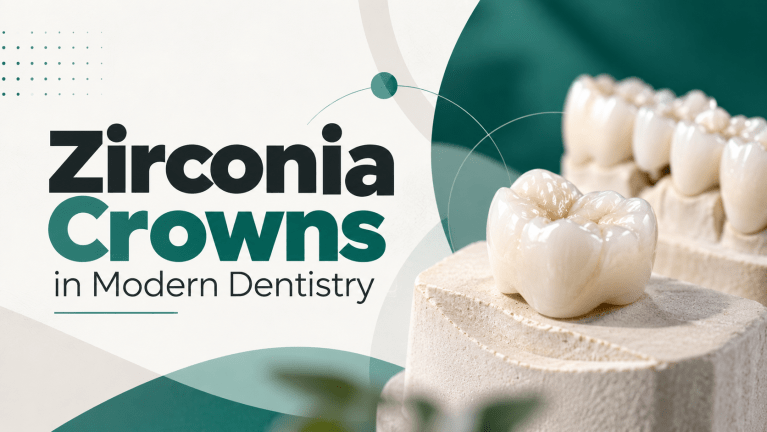
Zirconia has become an important material in modern restorative dentistry because it combines high strength, ceramic aesthetics and compatibility with digital manufacturing. For dentists and patients considering restorative treatment, understanding zirconia crowns, their types and applications can make the conversation around material selection more informed. The right choice, however, depends on the individual tooth, functional demands, aesthetic expectations and overall treatment plan.
What Are Zirconia Crowns?
Zirconia crowns are full-coverage dental restorations made from zirconium dioxide, a high-strength ceramic material. Unlike porcelain-fused-to-metal restorations, zirconia crowns do not require a metal substructure.
Modern zirconia is also closely connected with CAD/CAM dentistry. Digital impressions or scans can be used to create a virtual model, design the restoration and manufacture it through computer-controlled milling.
This combination of material properties and digital workflows has made zirconia an important option in contemporary restorative dentistry.
Why Has Zirconia Become So Popular?
One of the main reasons zirconia is widely used is its strength. Dental crowns need to withstand repeated chewing forces, and posterior teeth can experience particularly high functional loads.
Zirconia is known for high fracture resistance and can be considered for restorations where durability is an important requirement. Its metal-free composition is another reason it may be selected when a patient or clinician prefers a ceramic restorative material.
Modern zirconia also offers improved optical properties compared with earlier generations. Newer formulations can provide greater translucency, giving laboratories more flexibility when aesthetics are important.
However, zirconia should not automatically be considered the best material for every crown. Material selection should be based on the clinical situation.
Different Types of Zirconia
Zirconia is not a single material with identical characteristics. Different formulations can offer different combinations of strength and translucency.
Monolithic Zirconia
Monolithic zirconia crowns are manufactured from a single zirconia material rather than having a separate veneering porcelain layer.
Because there is no veneering ceramic layer, monolithic restorations can reduce concerns associated with porcelain chipping. They can be particularly useful in situations where strength and durability are important.
Posterior restorations are one common application, especially when the restoration needs to withstand substantial chewing forces.
Layered Zirconia
Layered zirconia combines a zirconia substructure with an aesthetic ceramic layer.
This approach can provide additional characterisation and visual detail. It may be considered in situations where aesthetics are particularly important.
At the same time, the veneering layer introduces its own considerations, including the potential for ceramic chipping. Proper case selection, design and laboratory execution therefore remain important.
High-Translucency and Multilayer Zirconia
Advances in zirconia manufacturing have resulted in materials with improved translucency and colour gradation.
Multilayer zirconia blocks can contain different shades or levels of translucency within the same block, allowing the restoration to transition more naturally from the cervical region toward the incisal area.
These developments have expanded the aesthetic possibilities of zirconia, particularly for selected visible restorations.
Strength and Aesthetics Must Be Balanced
It can be tempting to select a crown material based on one characteristic, such as maximum strength or maximum translucency. In practice, restorative planning is more complex.
A posterior molar may require a material that can tolerate significant functional forces. An anterior tooth, on the other hand, may place greater emphasis on optical properties and natural integration with neighbouring teeth.
Different zirconia formulations can help clinicians and laboratories balance these requirements.
This is why the question should not simply be, “Which zirconia is strongest?” A more useful question is, “Which zirconia is appropriate for this particular restoration?”
The Role of Digital Dentistry
The development of zirconia has gone hand in hand with the growth of digital dentistry.
A digital zirconia workflow can involve several stages:
1. Digital impression or intraoral scanning
2. Creation of a digital model
3. CAD-based restoration design
4. Computer-controlled milling
5. Sintering
6. Surface finishing and characterisation
7. Final quality control
This process can provide greater consistency and improve communication between the dental practice and laboratory.
Digital technology can also make it easier to adjust the restoration virtually before manufacturing begins. However, digital tools do not eliminate the need for clinical knowledge or skilled laboratory work.
The quality of the final restoration still depends on the accuracy of the scan, preparation, design, milling, sintering, finishing and clinical verification.
Tooth Preparation and Case Planning
The success of a zirconia crown does not depend on the material alone.
Before a crown is fabricated, the dentist needs to evaluate the remaining tooth structure, preparation requirements, occlusion, available space and overall clinical condition.
Adequate space must be available for the selected restoration, while the preparation should allow the laboratory to create appropriate contours, contacts and margins.
The specific preparation approach can vary depending on the zirconia system and restoration design.
This is why a strong material cannot compensate for inadequate clinical planning. The material, preparation and restoration design need to work together.
Where Are Zirconia Crowns Used?
Zirconia can be considered for a variety of restorative applications.
Depending on the specific material and clinical indication, applications can include:
- Single-tooth crowns
- Posterior crowns
- Selected anterior crowns
- Dental bridges
- Implant-supported restorations
- Full-arch restorative treatments
Zirconia's versatility is one reason it has become widely used in modern dental laboratories.
However, suitability still depends on the patient's individual circumstances. Tooth position, bite forces, aesthetic requirements, available space and restoration design all influence material selection.
Zirconia Compared With Other Crown Materials
Zirconia is one of several materials available for dental crowns.
PFM crowns combine a metal framework with porcelain and have a long history of clinical use. They can provide a balance between strength and aesthetics.
Glass-ceramic materials such as lithium disilicate are also commonly considered where optical properties are especially important.
Zirconia offers a different combination of characteristics, particularly its high strength, metal-free composition and compatibility with CAD/CAM workflows.
Therefore, choosing a crown material should not be based solely on which material is currently popular. The clinical requirements of the individual case should guide the decision. ADE's crown-material comparison also highlights that zirconia, PFM and other materials have different strengths, limitations and applications. Advance Dental Export
The Importance of Finishing and Polishing
Once a zirconia crown has been milled and sintered, the restoration may still require additional laboratory work.
Depending on the restoration, this can include staining, glazing, polishing or other characterisation procedures.
Surface finishing is not simply an aesthetic step. The quality of the final surface can also matter when the restoration comes into contact with opposing teeth.
Careful finishing and polishing can therefore be an important part of the laboratory workflow.
How Long Can Zirconia Crowns Last?
Patients often ask how long a zirconia crown will last. There is no single lifespan that applies to every restoration.
Long-term performance can be influenced by:
- Material selection
- Crown design
- Tooth preparation
- Occlusion
- Bruxism or clenching
- Cementation
- Laboratory manufacturing
- Oral hygiene
- Regular dental care
ADE's published zirconia guidance notes that zirconia crowns can provide long-term service, while also emphasising that performance depends on factors such as case selection, design and care. Advance Dental Export
For this reason, a zirconia crown should not be described as permanent or guaranteed to last for a particular number of years in every patient.
The Dental Laboratory's Role
The dental laboratory plays an important role in transforming clinical information into the final restoration.
Accurate scans, clear communication, appropriate CAD design and controlled manufacturing processes can all influence the final result.
The technician may also be responsible for shade characterisation, surface finishing, occlusal considerations and quality control.
Although digital technology can automate many parts of the workflow, skilled human oversight remains important.
A successful zirconia restoration is therefore the result of collaboration between the dentist, laboratory and patient.
Questions Patients Can Ask About Zirconia
Patients do not need to understand every technical detail of zirconia before treatment. However, asking the right questions can help them understand why a particular material has been recommended.
Useful questions include:
- Why do I need a crown?
- Why is zirconia being considered?
- Which type of zirconia is appropriate for my tooth?
- Is the priority strength, aesthetics or both?
- Are other crown materials suitable?
- How will the crown be designed and manufactured?
- What maintenance will be required?
- What limitations should I know about?
These questions can help patients make decisions based on their individual needs rather than choosing a material simply because it is described as strong or premium.
The Future of Zirconia in Dentistry
Zirconia continues to develop alongside digital dentistry.
New material formulations are providing different combinations of strength and translucency, while multilayer blocks and advanced CAD/CAM systems are giving laboratories greater control over restoration design.
The future is therefore unlikely to be about one crown material replacing every other option.
Instead, modern restorative dentistry is moving toward more precise case selection, better digital planning and material selection based on the specific requirements of each restoration.
Conclusion
Zirconia has become an important part of modern restorative dentistry because it offers a combination of strength, ceramic aesthetics and digital manufacturing compatibility.
But the success of a zirconia crown depends on much more than the material itself.
Clinical diagnosis, case selection, tooth preparation, restoration design, digital accuracy, laboratory expertise and long-term maintenance all contribute to the final outcome.
The most appropriate zirconia crown is therefore not necessarily the strongest or most expensive option. It is the one whose properties and design are appropriately matched to the patient's clinical needs.
Good restorative dentistry is ultimately about choosing the right material, the right design and the right workflow for the right case.