Wound Suture Techniques: A Complete Guide for Effective Wound Closure
By triage_meditech 07-03-2026 160
Proper wound closure is a critical step in medical care. Among the various methods used by healthcare professionals, wound suture techniques remain one of the most reliable ways to promote healing, reduce infection risk, and minimize scarring. Suturing is commonly used in surgical procedures, traumatic injuries, and deep cuts where simple dressings or adhesives are not sufficient.
In this guide, we will explore the most common wound suture techniques, their applications, advantages, and best practices to ensure safe and effective wound management.
What Are Wound Suture Techniques?
Wound suture techniques refer to the methods used by medical professionals to stitch tissues together after an injury or surgical incision. The primary purpose of suturing is to bring the wound edges together so the body can heal properly.
Sutures help in:
Closing deep or large wounds
Controlling bleeding
Reducing infection risk
Supporting faster tissue healing
Minimizing scar formation
Different techniques are selected based on the type, location, and severity of the wound.
Types of Wound Suture Techniques
There are several suturing methods used in clinical practice. Each technique has its own advantages depending on the wound type.
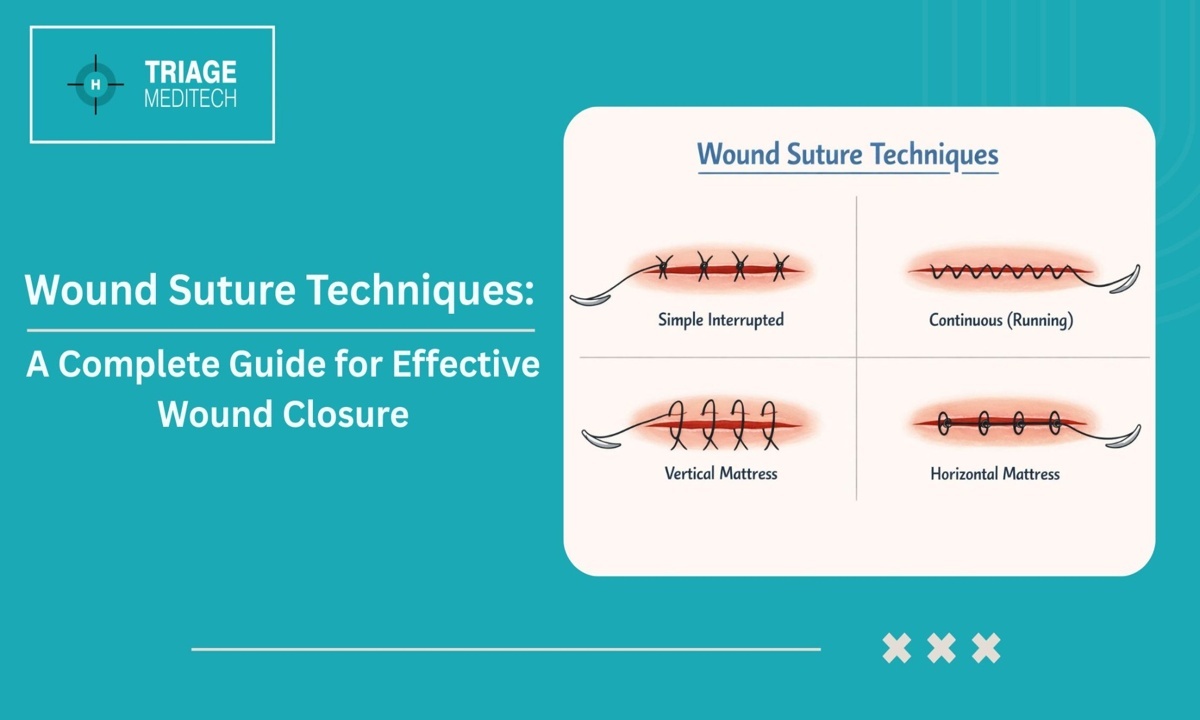
1. Simple Interrupted Sutures
The simple interrupted suture is one of the most widely used techniques in wound closure.
Key Features
Each stitch is placed and tied separately
Easy to learn and perform
Allows precise wound edge alignment
Advantages
If one stitch fails, the rest remain intact
Good for irregular wounds
Common Uses
Skin lacerations
Emergency wound repair
General surgical closures
2. Continuous (Running) Sutures
A continuous suture technique uses a single thread that runs along the wound without tying knots between stitches.
Key Features
Faster than interrupted sutures
Even distribution of tension
Advantages
Efficient for long surgical incisions
Requires less suture material
Common Uses
Surgical wounds
Long linear incisions
However, if the thread breaks, the entire closure may loosen.
3. Mattress Sutures
Mattress sutures are commonly used when extra wound support is required.
Types of Mattress Sutures
Vertical Mattress Sutures
Provides strong wound edge eversion
Ideal for areas under tension
Horizontal Mattress Sutures
Distributes tension across the wound
Useful for fragile skin
Benefits
Strong wound closure
Reduces wound edge inversion
4. Subcuticular Sutures
Subcuticular sutures are placed just beneath the skin surface.
Key Features
Hidden stitches
Cosmetic closure
Advantages
Minimal visible scarring
No external sutures to remove in some cases
Common Uses
Cosmetic procedures
Plastic surgery
Facial wounds
5. Purse-String Sutures
The purse-string technique creates a circular closure around a wound or opening.
Key Features
Tightens like a drawstring
Used to close round wounds
Common Uses
Surgical drains
Gastrointestinal surgery
Circular skin defects
Choosing the Right Suture Technique
Selecting the appropriate wound suture technique depends on several factors.
1. Wound Location
Certain body areas require specialized techniques to maintain function and cosmetic appearance.
2. Wound Depth
Deep wounds may require layered suturing to close both internal and external tissues.
3. Skin Tension
High-tension areas benefit from mattress sutures or reinforced techniques.
4. Cosmetic Outcome
For visible areas like the face, subcuticular sutures are often preferred.
Healthcare professionals evaluate these factors to choose the safest and most effective method.
Materials Used in Wound Suturing
The effectiveness of wound suture techniques also depends on the type of suture material used.
Absorbable Sutures
These sutures dissolve naturally in the body over time.
Examples include:
Vicryl
Monocryl
Polyglycolic acid sutures
Used in:
Internal tissues
Deep layers of wounds
Non-Absorbable Sutures
These sutures remain in place until removed by a medical professional.
Examples include:
Nylon
Silk
Polypropylene
Used in:
Skin closure
External wounds
Best Practices for Effective Suturing
To achieve optimal wound healing, medical professionals follow several best practices.
Proper Wound Cleaning
Before suturing, the wound must be cleaned thoroughly to remove debris and bacteria.
Adequate Anesthesia
Local anesthesia ensures patient comfort during the suturing process.
Correct Needle Handling
Proper needle angles help reduce tissue damage and ensure accurate stitch placement.
Maintaining Sterility
Using sterile instruments and gloves prevents infection.
Timely Suture Removal
Sutures should be removed according to the wound location and healing time.
Typical removal timelines include:
Face: 5–7 days
Scalp: 7–10 days
Arms and legs: 10–14 days
Complications Associated with Suturing
While suturing is a common medical procedure, complications can occur if proper technique is not followed.
Possible complications include:
Infection
Wound dehiscence (reopening)
Scarring
Tissue necrosis
Proper technique, sterile practices, and follow-up care help reduce these risks.
Importance of Training in Wound Suture Techniques
Mastering wound suture techniques is an essential skill for doctors, nurses, and medical trainees. Proper training ensures:
Safe wound closure
Faster healing
Reduced complications
Better cosmetic outcomes
Medical education programs and simulation training are commonly used to develop these skills.
Conclusion
Wound suturing is a fundamental medical procedure that plays a vital role in patient care. Understanding different wound suture techniques allows healthcare professionals to choose the most appropriate method for each type of injury.
From simple interrupted sutures to subcuticular and mattress techniques, each method serves a specific purpose in wound management. When performed correctly with proper materials and sterile techniques, suturing helps promote faster healing, prevent infection, and achieve optimal cosmetic results.
Continuous training and adherence to best practices ensure that medical professionals deliver safe and effective wound care for patients in both emergency and surgical settings.