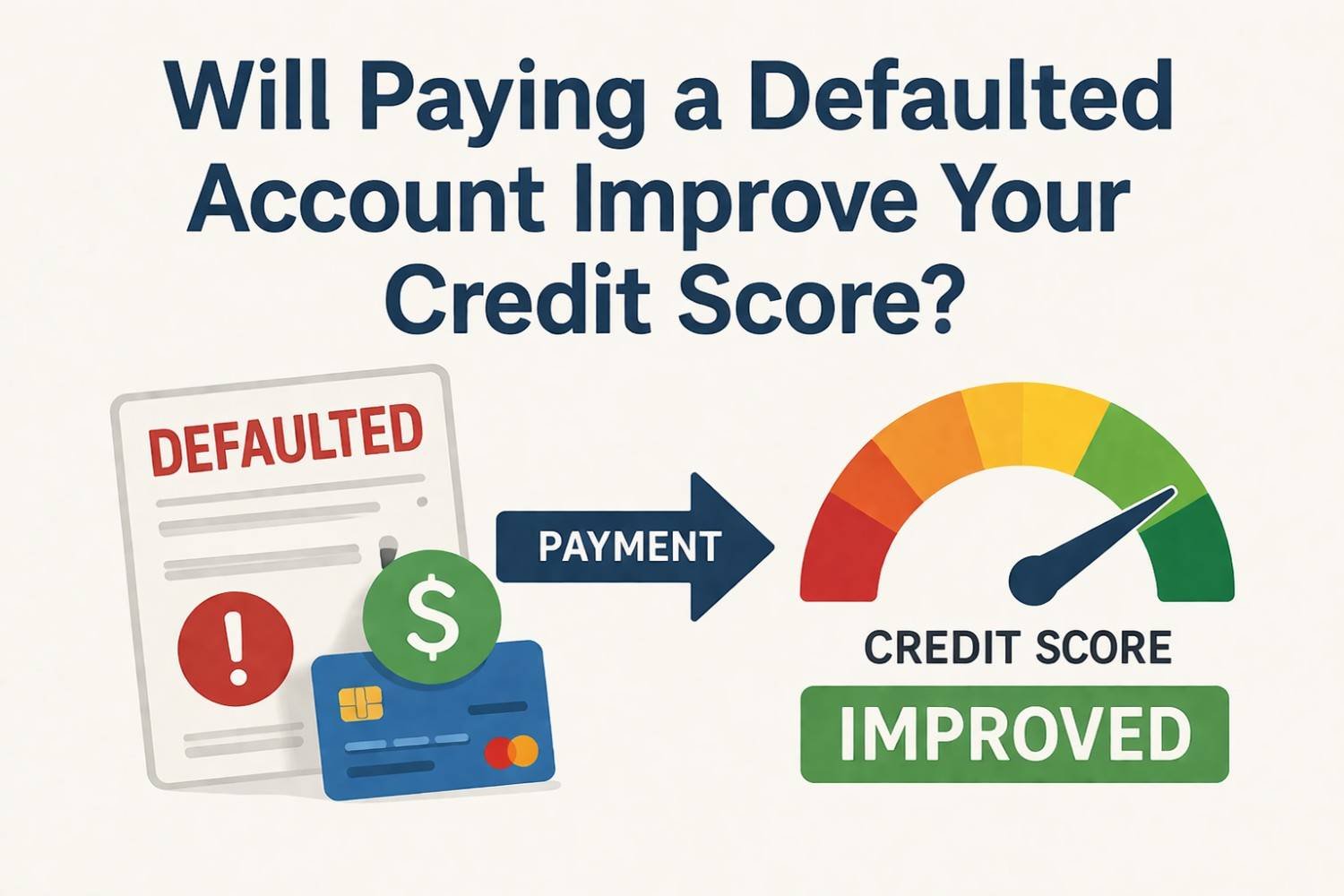
Defaulted accounts are those that are overdue. When you miss payments, you are generally obligated to settle the overdue payment within a month to stop lenders from informing credit bureaus of your delinquency. If negligence continues to reflect in your demeanour, your account becomes defaulted, which happens between three and six months. A lender will send you a notice of intent before a formal default is registered so that you can catch up on arrears.
Once the default is registered, the full balance becomes due immediately, or your account goes to the collection agency. Bear in mind that the default will show up on your credit report for six years, and hence your chances of qualifying for a loan at competitive interest rates will be slim. You might be able to qualify for very bad credit loans from direct lenders, but lenders will charge very high interest rates.
Undoubtedly, defaulted accounts will ruin your credit score, but many borrowers often wonder if paying off defaulted accounts can ameliorate their credit score.
- Clearing defaulted debts will enhance your credit situation as a whole. It will make it easier for you to take out mortgages, auto loans, personal loans and the like. Your credit score is not the be-all and end-all.
- However, if there are debts that you have still been paying as per schedule, you had better try paying them first and continue paying the minimum amount on defaulted accounts. This is because dealing with defaulted accounts later or paying little towards them will not cause any further damage, as this has already been done.
Defaults will disappear after six years
Defaults will remain on your credit file for up to six years from the date they are recorded. Once six years have passed, this will disappear from your credit report whether you settle the debt entirely or partially. Even if you do not pay anything, you will no longer see the default in your credit report.
There are certain things that you need to bear in mind:
There is nothing to worry about multiple default dates of the same debt | When the debt is defaulted, your credit report will record the default every month. This may look terrible, but the first default date is what matters. The rest dates will never worsen your credit file. After six years, the whole debt will disappear from your credit report. |
If your debt is statute-barred | A statute-barred debt is the one which is not enforceable provided you have not made any payments. After six years your lender will not be able to take any legal action as it is barred. Then, you can ask your lender to backdate the default to when it originally happened, as they might have reported it after some time back then. But do not do this until the default is dropped off, as it will reset the clock, and six years will start counting from the revised date. |
Under no circumstances is it recommended that you do not clear defaulted accounts. Bear in mind, they become statute-barred only after six years from the date of default. In the meantime, if a lender takes you to court, you will be liable to pay them back. In that case, the statute-barred rule is not applicable. Once the county court judgment is issued against you, your credit score will be severely damaged.
Can your credit score become better than before?
This question does not have a simplified answer. You know that default accounts are taken down from your credit file within six years. Your credit score might improve, even though you do not pay off defaulted debts. However, it is hard to determine by how many points it will increase. It generally depends on how much worse your credit score is. Other credit information also plays a crucial role. If your credit report already shows a lot of debt, you will hardly see any difference.
But there is more to it than meets the eye. A period of six years is quite long. Making it to six years without paying off debts is not always possible because lenders will not let you walk away. It has been observed that collection agencies may contact you after five years and threaten you with a CCJ if you do not discharge the debt in full.
Once the CCJ is issued against you, it will stay on your credit file for another six years. Bear in mind that a CCJ is considered worse than default. Your credit score will plummet. It will take many years to fix your credit score.
Changing your address and contact details without keeping your lenders in the loop will also never work to your advantage, as they will be forced to send a CCJ to your previous address.
Debt settlement cannot help you ameliorate your credit score fast either
Do not expect that the settlement of defaulted debts will immediately boost your credit score. You cannot brush off defaulted debts, as they will be removed from your credit report after six years. This is because a CCJ will further take a toll on your credit rating. Most lenders find them worse and do not accept applications from such borrowers.
Lenders will evaluate your overall credit profile, not just a credit score. A settled default is much less of a problem than a CCJ, as it will increase your chances of being approved for a new loan.
Do not forget that you will struggle to receive approval for a mortgage with unpaid defaults. The sooner you pay them off, the better.
How about low payments to defaulted accounts?
You can agree with your lenders to start paying a minimum payment on defaulted accounts. At least, you will be less likely to get a CCJ, but they cannot help improve your credit score.
The final word
The bottom line is that the settlement of defaulted debts cannot improve your credit score immediately. You should focus on the real picture. While there are some lenders who would still find you a risky borrower, some might be willing to approve your application for a new loan if previous outstanding debts are settled.