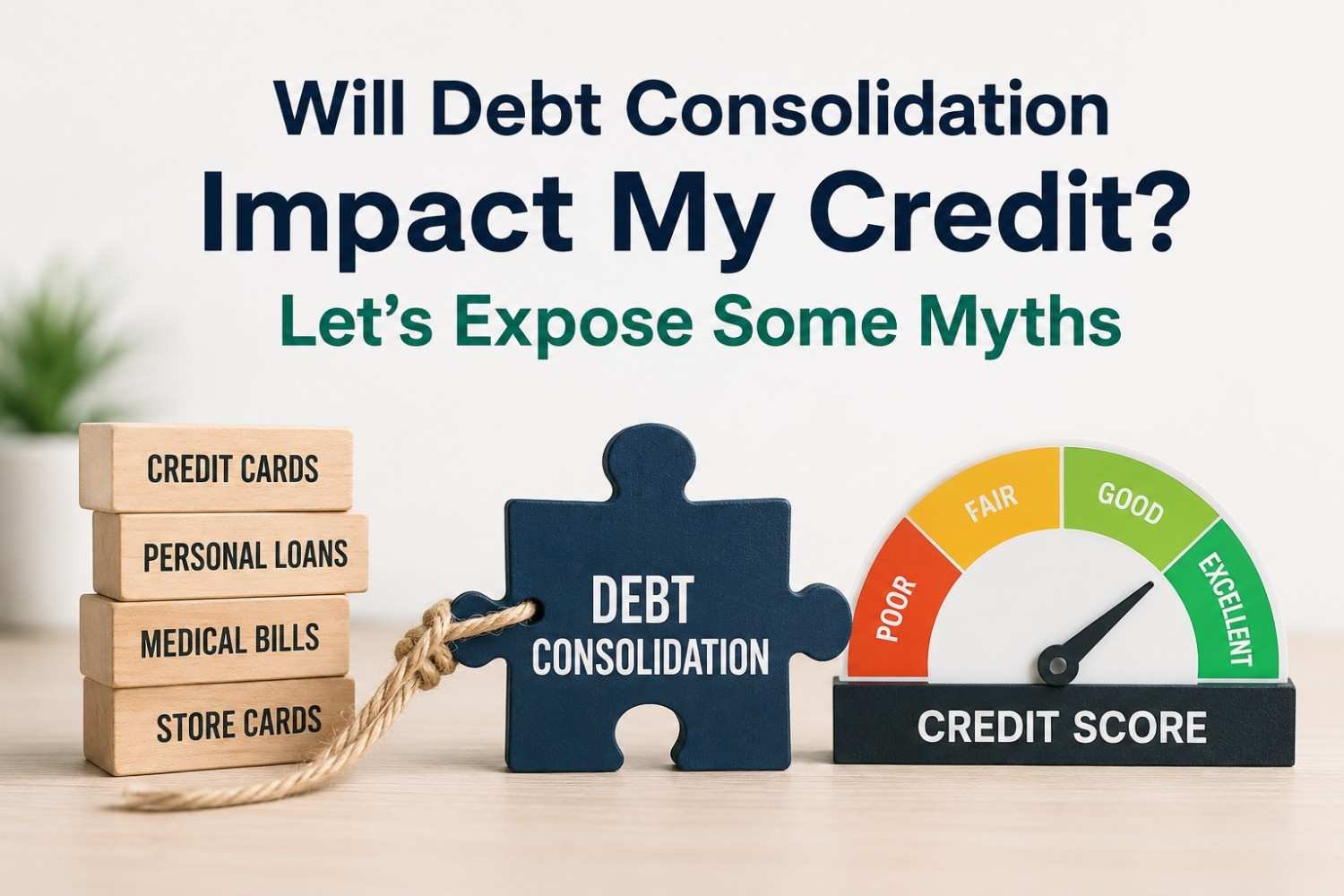
Managing multiple credit cards, personal loans, and store accounts can be an irresistible financial challenge. There have been unstable interest rates and multiple due dates for debt consolidation. Therefore, taking out a new loan to settle several smaller ones can often be the solution.
Nevertheless, many are uncertain of its effect. They question whether this move could negatively affect their credit. "Will this hurt my score?" is often their major worry.
What would be the answer? In the short term, consolidation through another loan could help. On the other hand, in the long term, it probably will not.
When done right, a debt consolidation loan for bad credit in the UK can actually help your credit score over time. It may become one of the best tools available for enhancing it.
To understand why consolidation works so effectively, we need to dispel some myths about new inquiries and closing old accounts.
Fear of "Hard Inquiries: Can One Search Be Detrimental to Consolidation"
One of the key hurdles to debt consolidation is the application process. Lenders perform what is known as a "Hard Inquiries," or a hard pull on your credit report. They perform this search process for consolidation loans and balance transfer credit cards.
Many individuals wrongly believe that even a single hard inquiry can damage their credit score by 50 to 100 points. They fear that seeking assistance makes them desperate to lenders.
Reality Struck
A hard inquiry typically only lowers your score by 5-10 points, which is usually negligible and temporary for most. Credit reference agencies see inquiries as part of financial management and do not view individual inquiries negatively. This is because such events can have long-term ramifications on one's financial health.
Once your consolidation loan arrives and pays off those high-interest credit cards, you'll need to decide:
Do you keep those old accounts open, or close them for good?
Myth:
The common belief is that closing "risky" credit accounts as part of financial responsibility would improve one's score. However, closing one or more old accounts can actually harm it for two specific reasons.
Realities:
1. Credit Utilisation Ratio: Your utilisation ratio measures how much credit is being utilised relative to its available limit. For instance, if you had £10,000 across three cards but closed two, your available credit would decrease considerably. Your utilisation percentage would rise, potentially leading to a drop in your score.
2. Average Time of Accounts: 15% of your credit score relies on how long you've had credit accounts. Closing one that dates back to university can reduce this figure. It makes you appear less experienced to lenders.
Strategy to follow: After consolidation, keep all old cards open but stored in a drawer. Use one every few months for small purchases (like coffee). You pay off immediately to maintain an active account and protect both your utilisation ratio and credit age. This practice helps preserve both.
Consolidation Can Actually Increase Your Score
While consolidation might bring risks, its rewards often outweigh a five-point dip from an inquiry. Here's how consolidation could work to your benefit:
1. "Utilisation Reset"
Credit cards are considered "revolving debt", with any high balances considered a potential threat to one's credit scores. By paying off those balances with instalment debt such as personal loans (known as instalment debt), your revolving utilisation drops closer and closer to zero.
Instalment debt is more easily viewed as an asset than revolving debt. Many see their credit scores skyrocket within 30-60 days after consolidating. It is simply because having credit cards with £0 balances shows.
2. Establish A Diversified Credit Mix
Lenders appreciate applicants who demonstrate they can manage multiple types of credit effectively. Therefore, adding personal instalment loans improves your "Credit Mix." This component accounts for about 10% of your score. It further shows lenders that you are a responsible borrower who can handle various loans effectively.
3. Eliminate Late Payments
Payment history accounts for 35% of your credit score. Handling multiple due dates increases your odds of missing at least one deadline. It can create "mental overload".
Consolidating into a single monthly payment makes managing due dates much more relaxing. Systematising it would also help confirm payments more efficiently, rather than handling multiple ones on different dates.
Let's solve some common myths surrounding debt consolidation:
Myths | Realities |
| Debt settlement can damage your credit | Consolidation transfers your debt to another account |
| "I can't get a loan with bad credit." | While rates will likely be higher than usual for consolidation loans for people with less-than-ideal credit scores. Some lenders provide loans that might still prove advantageous compared to compounding credit card interest charges. |
| "I can't get a loan with bad credit." | Unfortunately, not true! Your debt has moved. You need to take steps to address the spending habits that caused the original debts. You will end up with a consolidation loan PLUS new credit card debt. |
Warning Signs: When Consolidation Could Harm
There's only one instance when consolidation may actually do more harm than good: the "Double-Dip Trap."
Once a consolidation loan has paid off £15,000 of credit card debt, each card now has a zero balance. Still for some consumers, the temptation to use those cards becomes overwhelming. It charges pile back on without thinking. Should this occur and payments on both debts increase simultaneously. You will double your debt.
Step-by-Step Guide to Consolidation
To protect your credit while consolidating, follow this roadmap:
1. Review Your Score First: To see where you stand when consolidating debt, explore free tools. They review your score first to assess which lenders might approve you before applying.
2. Seek "Pre-Qualification: Many lenders provide soft pull pre-qualification checks, so you can access potential rates without impacting your credit score. With this, you can see which loan would offer the lowest monthly payment without negatively affecting it in any way.
3. Compare APR: Consolidate only if the Annual Percentage Rate (APR) on your new loan is less than the average of current debts.
4. Automate Immediately: As soon as your new loan becomes active, set up automatic payment. This way, you ensure consistency as you build your score back over time.
5. Keep Your Old Accounts Open: Debt consolidation does not provide immediate relief from financial issues. Instead, it serves as a precious way to reorganise financial life and improve it for years to come.
Final Thoughts:
Does debt consolidation harm my credit history? Only temporarily. Hard inquiries might temporarily damage your score. Any short-term discomfort from these inquiries and shifts in account age is a small cost. It is in the comparison to the advantages they bring. For example, a lower utilisation ratio and an on-time payment history!
By shattering myths and creating long-term habits, consolidation can transform an unruly financial history into an orderly future with high scores. Your goal should not simply be moving debt around; rather, it should be mastering it!