Most people facing a cancer diagnosis pour their energy into questions about treatment. Which drugs? Which hospital? Which doctor? Their one thing they seldom consider until sometime later, if at all, is that first surgery sets the tone for subsequent surgeries.
Surgeons talk openly about this with one another, but patients are seldom told outright that a cancer operation without clean margins, or which cuts through the wrong layers of tissue, or which cannot achieve a zero margin of error will make the next stages of treatment more difficult. In a few instances, it takes away options that would have been offered if the surgery were performed differently the initial time.
That's why you should not view working with a specialist Surgical Oncologist as a luxury or formality. It's the decision that everything else is built on.
What Clean Margins Mean in Practice
When a tumor is removed, the tissue around it is examined under a microscope. The goal is a clear rim of healthy, cancer-free tissue encircling the specimen. In surgical terms, that rim is called a margin.
A positive margin, where cancer cells are found at or near the edge of what was removed, usually means some disease has been left behind. The consequences are not trivial. Re-operation on a previously operated site, radiation into already-disturbed tissue, or a significant change in the treatment plan, these are not easy fixes. They carry their own risks and set recovery back in ways the original surgery wouldn't have.
Getting clean margins sounds straightforward. In reality, it demands knowing exactly how far a given tumor type tends to extend, which tissue planes to follow and which to protect, and when to go wider versus when precision matters more than aggressiveness. That kind of surgical judgment isn't built in a general training program. It develops over years of subspecialty practice in cancer surgery specifically.
What Makes Revision Surgery Harder Than People Expect
Cancer surgery that has to be redone is not simply a second chance at the same procedure. The anatomy has changed. Scar tissue has formed. Tissue planes that were clear and distinct the first time around have now collapsed or adhered to surrounding structures. Blood supply in the area has reorganized around the previous disruption.
The effects of this are specific and significant. In head and neck cancers, revision surgery may have impacts on speech, swallowing and facial nerve function that the initial surgery would not have. A first attempt sphincter-sparing resection and revision surgery after an incomplete initial resection is often a permanent stoma for rectal cancer. In breast cancer, a suboptimal initial resection usually indicates a need to resect more breast tissue later than that which could have been resected in the first place.
This is not about everything being about blame if things go wrong. Being clear that the first surgical decision has ramifications that may not be apparent right away but are going to affect the whole treatment journey.
What Robotic Surgery Actually Offers
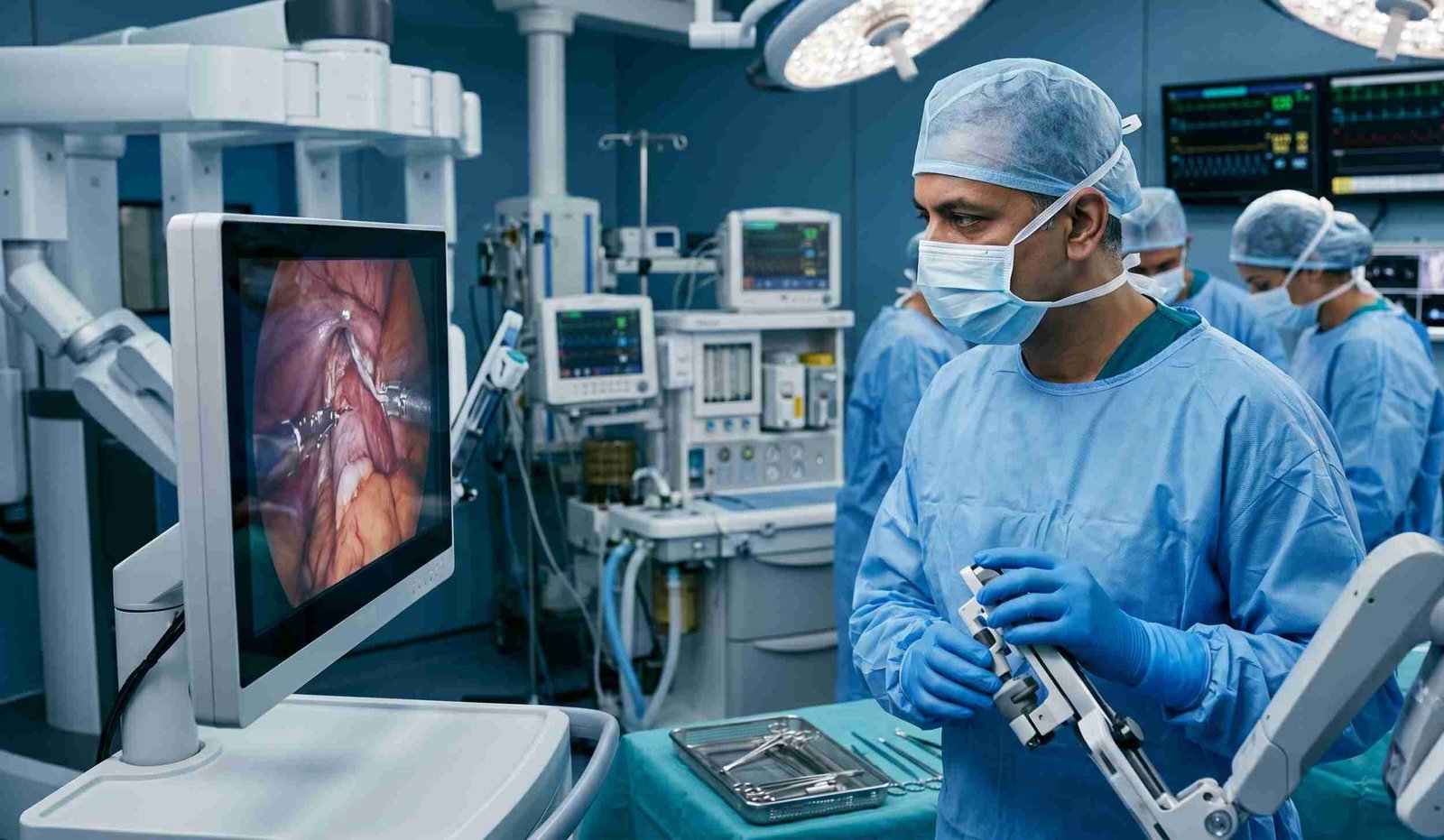
The shift toward robotic and laparoscopic techniques in cancer surgery changed more than just the size of the incision. It changed the quality of visualization and surgical access in anatomical spaces where that difference genuinely matters.
In head and neck surgery, robotic platforms can reach the throat and base of the tongue entirely through the mouth, removing the need for the large external incisions that were once unavoidable for cancers in those locations. For thyroid surgery, a surgery done through the armpit is done without any scar visible in the neck area. The robotic system provides the surgeon performing rectal surgery a magnified, detailed 3-D view from deep inside the pelvis that open surgery can't achieve.
Improved visualisation, improved decisions at the moment. The critical margin between preserving a nerve and damaging it, and the margin between maintaining bowel continuity and creating a stoma is a few millimeters, and the surgeon's vision and dexterity of handling tissues shouldn't be a second thought. It is at the core of the patient's experience post event.
The Questions That Deserve Answers Before Any Decision
Most patients walk into a surgical consultation ready to hear a plan. Far fewer walk in ready to ask about it. That gap can matter more than people realize.
A few questions worth raising before agreeing to any procedure: How many times has this specific operation been performed by this surgeon, not cancer surgery broadly, but this tumor type and this stage? What is the planned surgical margin, and what is the intraoperative plan if clean margins turn out to be harder to achieve than the imaging suggested? Is a minimally invasive approach viable for this case, and if not, what rules it out? Will this case be reviewed by a multidisciplinary tumor board before a surgical date is confirmed?
These are not combative questions. Experienced surgical oncologists expect them from patients who are taking their care seriously. The answers reveal how thoroughly the surgery has been thought through before anyone steps into the operating room.
The Plan Determines What Is Possible in the Room
Surgery happens on the table. But what is actually achievable there is determined well before that moment.
A well-planned cancer surgery begins with imaging reviewed by someone who understands surgical anatomy, not just how to read a scan. It includes a biopsy placed so that the approach won't compromise the definitive procedure later. It accounts for reconstruction from the very beginning rather than treating it as a problem to solve after the tumor is out. And it draws on multidisciplinary input when the complexity of the case calls for it.
None of that happens by default. It happens when the right expertise is involved before the plan is finalized, before commitments are made, and before the first incision.
Getting that part right is the decision that sets the tone for everything that comes after it.
Tags : .....