Why So Many Construction Projects Struggle Long After the Crews Go Home
By Hitendra Panchal 07-05-2026 159
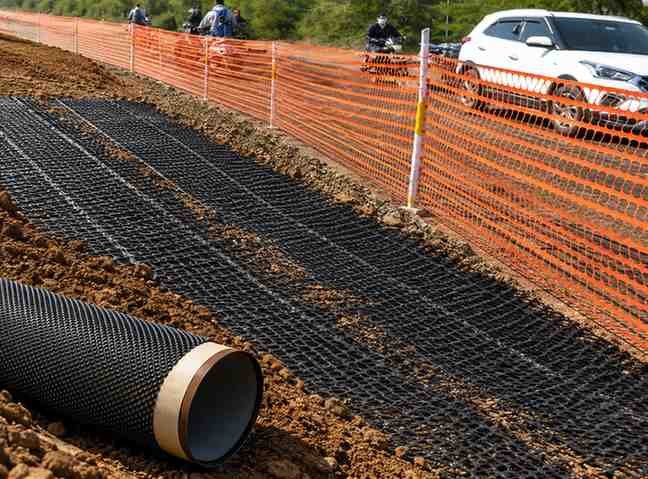
There's a pattern that shows up across large-scale construction projects - infrastructure that looks finished, signed off, and handed over, only to start showing problems within a few years. Retaining walls that shift. Drainage that backs up after heavy rain. Access roads that develop sink patches nobody can explain.
Most of these aren't design failures in the traditional sense. The structural math was right. The materials were certified. The project passed inspection. What tends to go wrong is subtler - decisions made under time pressure, on-site compromises that seemed minor at the time, and a general underestimation of how the ground itself behaves once the construction phase ends.
This isn't a new problem. It's also not one that better regulations alone will fix.
The Ground Never Stops Moving
Civil engineers understand soil mechanics, but site-level teams - the ones making daily calls about drainage, slope reinforcement, and material placement - don't always have the same depth of knowledge. That gap is where a lot of long-term problems begin.
Saturated soil loses bearing capacity. When water has no controlled path to move through or away from a structure, it finds its own route. That route is usually through the structure itself, or underneath it. Frost cycles make it worse in colder climates. In tropical and subtropical regions, monsoon-level rainfall events do the same thing faster.
The engineering community has spent decades developing materials that address exactly this - products designed to manage water movement, soil separation, and pressure distribution within the ground itself rather than relying entirely on surface drainage. But specifying the right product and actually deploying it correctly on-site are two different things.
When Drainage Gets Treated as an Afterthought
In project budgeting and scheduling conversations, drainage systems rarely get the attention they deserve. They're invisible once the site is finished. Nobody photographs the drainage layer for the project portfolio. That invisibility creates a bias toward underspecifying.
The result is that many projects end up with drainage systems that work fine under normal load and normal rainfall - and start failing the moment conditions move outside that narrow band. A drainage layer that handles 20mm of rain per hour but was never tested against 80mm of rain in a six-hour window is a liability that won't show up until conditions are right for it to fail.
This is part of why the geosynthetics industry has grown significantly over the past two decades. The materials - geonets being one of the widely used categories - offer more predictable, long-term drainage performance compared to traditional granular layers, particularly in applications where access for future maintenance is limited or impossible.
The engineering case for these materials is well-established. The challenge is still cultural: getting project managers and budget holders to treat subsurface drainage as a structural decision rather than a line item to trim.
Safety on Site Gets Talked About. It Doesn't Always Get Done Right.
Workplace safety in construction has improved enormously over the past 30 years. The injury and fatality rates from the 1980s and 1990s would be unacceptable by today's standards, and regulatory frameworks in most countries have tightened significantly.
But there's still a persistent gap between what's specified in project safety plans and what actually happens on-site, especially on mid-scale projects where safety oversight isn't as intensive as it would be on a major public infrastructure job.
Falls remain the leading cause of construction fatalities globally. That statistic hasn't moved as much as other categories. The reason is partially about compliance culture, but it's also about how safety systems are integrated - or not integrated - into how work actually flows on a site.
The Practical Problem with Safety Systems That Slow Work Down
When safety systems feel cumbersome or interrupt the rhythm of work, crews find workarounds. This is human nature, not malice. If rigging a harness system takes 15 minutes and the task at hand takes 10 minutes, the calculus on a busy site under deadline pressure isn't always going to favor the 15-minute setup.
This is where passive safety systems - ones that don't require workers to remember, clip in, or adjust their behavior - tend to outperform active systems in real-world conditions. Construction safety nets are one of the clearest examples: they protect without requiring workers to do anything different. If someone falls, the net is already there.
That distinction -passive versus active protection - matters a lot when you're thinking about how safety actually functions on a site with 50 or 100 workers moving through different areas, under different supervisors, at different points in the build. Relying entirely on active systems (harnesses, personal arrest systems) means relying on consistent behavior from every worker, every time. That's a high bar.
The most effective site safety programs tend to layer both -active systems where they're the right tool, passive systems where coverage needs to be broad and consistent.
The Handover Problem Nobody Talks About
One of the most underexamined moments in any construction project is the handover from the construction team to the operations team. At that point, the people who know what's actually in the ground, what compromises were made, and where the system is most vulnerable often walk away from the project.
What gets handed over is documentation - and documentation is rarely complete or accurate. Site conditions change during construction. A drainage layer gets modified because the specified material wasn't available on time. A retaining structure gets adjusted because the survey data was slightly off. These changes get made, the project moves forward, and the record may or may not be updated.
This creates a future operations team that's working from an imperfect map. When something starts failing - and the "when" is usually a matter of years, not decades- the diagnostic process is harder than it should be because nobody really knows what's down there.
What Better Project Practices Look Like
The answer isn't a new technology or a new regulation. It's a set of habits that better-run projects already follow and that others haven't adopted yet.
Detailed material records - not just specification documents, but records of what was actually installed, where, and when - are the baseline. Site photos and drone surveys at key construction stages preserve a visual record that no amount of written documentation can replace.
For drainage systems specifically, commissioning tests before final cover is laid are standard practice on well-run projects and optional on many others. A simple permeability or flow rate check at the drainage layer before it's buried can identify installation problems that would otherwise remain hidden for years.
On the safety side, post-project audits that review near-miss incidents (not just injuries and fatalities) build institutional knowledge. Most near-misses don't get documented with the same rigor as actual incidents. The information they contain - about where systems are working and where they're creating risk - is some of the most useful data a safety program can have.
Why Material Selection Still Matters More Than Contractors Admit
There's an uncomfortable truth at the center of a lot of construction industry conversations about quality: material selection decisions are often made to win bids, not to build the best project.
The gap between what's optimal and what's specified is usually explained by cost pressure, which is real. But it's also sometimes explained by a knowledge gap at the specification stage. People specify what they know. If a specifier hasn't worked with geosynthetic drainage systems, they'll default to granular fill because that's what they've always used. If a safety manager hasn't run a detailed analysis of passive versus active fall protection options, they'll specify harnesses because that's the familiar choice.
Getting better outcomes from construction projects- longer service life, fewer post-handover problems, lower maintenance costs - isn't mainly about new materials or new regulations. It's about making sure the people with the authority to specify materials and systems have access to current knowledge about what those materials and systems actually do in the field.
That knowledge transfer happens slowly in the construction industry. Trade publications help. Academic research helps. On-the-ground experience helps most. But it requires the industry to treat knowledge-sharing as a priority rather than an afterthought - the same way it needs to treat drainage and safety.
The projects that hold up well ten years after completion aren't usually the ones with the biggest budgets. They're the ones where somebody, early in the process, asked the right questions about what goes underground and what keeps people safe on the way there.
Tags : construction safety nets geonets