Why PWAs Are a Smart Choice for Businesses Expanding Across Multiple Devices
By Sandhya Singh 26-08-2026 75
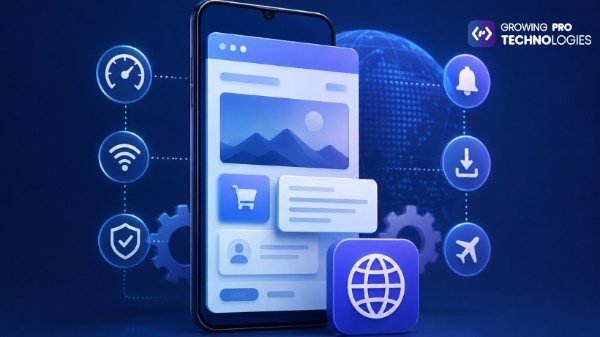
Businesses today need to deliver consistent digital experiences across smartphones, tablets, desktops, and other connected devices. Customers expect websites and applications to load quickly, work smoothly, and remain accessible regardless of the device they use. This growing demand has made Progressive Web Apps (PWAs) an attractive solution for companies looking to expand their digital presence.
A progressive web app agency can help businesses develop scalable PWAs that combine the accessibility of websites with many of the capabilities traditionally associated with native mobile applications. By using modern web technologies, PWAs can provide fast, responsive, and engaging experiences while reducing the complexity of maintaining separate applications for different platforms.
What Is a Progressive Web App?
A Progressive Web App is a web application designed to provide an app-like experience through a browser. PWAs use technologies such as service workers, web app manifests, responsive design, and secure HTTPS connections to deliver reliable and engaging experiences.
Unlike traditional mobile applications, users generally do not need to download a PWA from an app store before accessing it. They can visit the website through a compatible browser and, where supported, add the application to their device's home screen.
This flexibility makes PWAs particularly useful for businesses that want to reach customers across multiple devices without creating completely separate experiences for every platform.
Why Businesses Need Cross-Device Experiences
Customers rarely interact with a business using only one device. Someone might discover a brand on a smartphone, browse products on a tablet, and complete a purchase using a desktop computer. If the experience changes dramatically between these devices, customers may become frustrated or leave the website.
A cross-device strategy helps businesses maintain consistency throughout the customer journey. PWAs can support this strategy by adapting their interfaces to different screen sizes and device capabilities.
Responsive design allows content, navigation, images, and interactive elements to adjust according to the user's screen. This helps create a smoother experience whether visitors access the PWA from a mobile phone, tablet, laptop, or desktop.
1. One Web Experience Across Multiple Devices
One of the biggest advantages of PWAs is their ability to provide a unified experience across supported devices. Instead of maintaining completely separate mobile websites and applications, businesses can build a web-based application that adapts to different environments.
This can simplify development and maintenance while helping businesses maintain consistent branding, functionality, and content.
For companies expanding into new markets or serving customers across multiple device categories, this flexibility can be particularly valuable.
2. Faster and More Reliable Experiences
Website performance directly affects user experience. Slow-loading pages can increase abandonment rates and make it harder for businesses to convert visitors into customers.
PWAs can use service workers to cache selected resources and support improved loading and reliability in situations where network connectivity is limited. Once relevant resources have been cached, returning users may experience faster interactions.
A professional progressive web app agency can optimize a PWA's architecture, caching strategy, assets, and performance to help deliver a smoother experience.
3. App-Like User Experience
PWAs can offer many features that make a website feel more like a traditional application. Depending on browser and operating-system support, these can include home-screen installation, offline functionality, push notifications, background processes, and standalone display modes.
This app-like experience can encourage customers to interact with a business more frequently.
For example, an e-commerce company could allow customers to install its PWA on their devices and return to the shopping experience without repeatedly navigating through a browser.
4. Reduced Development Complexity
Developing separate native applications for Android, iOS, and other platforms can require different development environments, teams, testing processes, and maintenance schedules.
PWAs can reduce some of this complexity by using web technologies to create a single application that can serve users across multiple platforms.
This does not mean PWAs eliminate every platform-specific consideration. Businesses still need to evaluate browser compatibility, device capabilities, performance requirements, and feature availability. However, a PWA can provide a practical alternative when a business does not need every capability offered by fully native applications.
5. Better Scalability for Growing Businesses
As businesses grow, their digital infrastructure needs to scale with them. A PWA can provide a flexible foundation for expanding product catalogs, services, content, and customer interactions.
Because PWAs are built using web technologies, developers can continuously improve the application without requiring users to manually download every update in the traditional way.
A progressive web app agency can also design the architecture with scalability in mind, helping businesses prepare for increasing traffic, new functionality, and additional integrations.
6. Improved Customer Engagement
Customer engagement is another important reason businesses consider PWAs. Features such as push notifications, when supported and appropriately implemented, can help businesses communicate timely information to users.
Retailers could send updates about promotions or order status. Travel companies could provide relevant booking information. Publishers could notify subscribers about new content.
However, notifications should be used strategically. Excessive or irrelevant notifications can negatively affect user experience. Businesses should focus on useful, permission-based communication that provides genuine value.
7. Stronger E-Commerce Opportunities
PWAs can be particularly beneficial for e-commerce companies targeting customers across multiple devices.
A customer may discover a product through mobile search, research it later on a tablet, and eventually purchase it through a desktop. A responsive PWA can help maintain a consistent shopping experience throughout this journey.
Fast product pages, intuitive navigation, efficient checkout experiences, and mobile-friendly interfaces can help reduce friction.
Businesses can also combine PWAs with modern e-commerce platforms, APIs, payment systems, analytics tools, and customer management technologies to create a connected digital ecosystem.
8. SEO Benefits of a Web-Based Approach
Because PWAs use web technologies, businesses can potentially benefit from search engine visibility when their content is properly structured and accessible to search engine crawlers.
However, simply converting a website into a PWA does not automatically improve rankings. Technical SEO, crawlability, indexability, page performance, content quality, structured data, internal linking, and mobile usability still matter.
Businesses should therefore work with developers and SEO professionals to ensure that the PWA architecture supports both users and search engines.
9. Lower Long-Term Maintenance Requirements
Maintaining multiple applications can become challenging as features, security requirements, operating systems, and customer expectations evolve.
A PWA can provide a more centralized approach to managing the digital experience. Updates to web-based functionality can generally be deployed from the server rather than requiring users to install a new application version manually.
This can make ongoing maintenance more efficient, although businesses should still invest in testing, security monitoring, performance optimization, and regular technical improvements.
10. Security and Reliability Matter
Security should be a core consideration when developing any modern web application. PWAs are typically delivered over HTTPS, helping protect data transmitted between users and servers.
Businesses should also implement appropriate authentication, authorization, secure APIs, data protection practices, dependency management, and regular security testing.
Working with an experienced progressive web app agency can help organizations identify technical risks during architecture and development rather than attempting to address them after deployment.
How to Choose a Progressive Web App Agency
Choosing the right development partner can significantly influence the success of a PWA project. Businesses should evaluate an agency's experience with responsive web development, PWA technologies, API integrations, performance optimization, security, and scalable application architecture.
It is also useful to review previous projects and determine whether the agency understands the company's industry, customer journey, business objectives, and technical requirements.
A strong development partner should focus not only on building the application but also on performance, usability, scalability, testing, analytics, and long-term maintenance.
The Future of Multi-Device Business Experiences
As customers continue using multiple devices throughout their digital journeys, businesses need flexible technologies that can adapt to changing expectations. Progressive Web Apps provide an approach that combines the reach of the web with many application-like capabilities.
For startups, e-commerce businesses, service providers, and established enterprises, PWAs can support a scalable digital strategy without necessarily requiring separate experiences for every device.
The right technology choice ultimately depends on the business's objectives, audience, required features, budget, and technical environment. For organizations seeking a flexible and modern solution, partnering with a progressive web app agency can help transform these requirements into a high-performing digital experience.
Conclusion
Progressive Web Apps offer businesses a practical way to deliver fast, responsive, and engaging experiences across multiple devices. From improved accessibility and performance to simplified maintenance and app-like functionality, PWAs can support businesses as their digital presence grows.
Whether you are building a new customer platform, upgrading an existing website, or expanding an e-commerce operation, a carefully planned PWA can provide a strong foundation for long-term digital growth.
If you're looking to build a scalable and device-friendly Progressive Web App, Growing Pro Technologies can help you plan, develop, and optimize a solution aligned with your business goals. Explore our Progressive Web Development services to learn more.
Tags : progressive web app agency