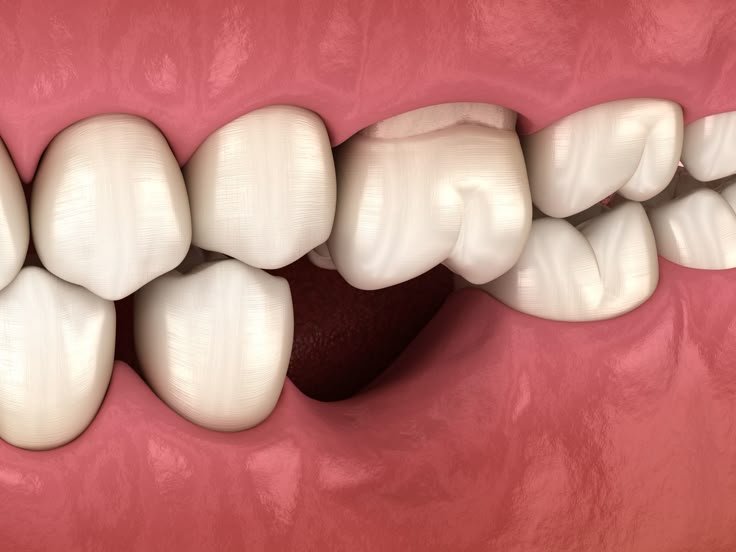
Most people treat a missing tooth as a cosmetic inconvenience. It affects how the smile looks, perhaps how certain sounds are formed, and leaves a gap that feels unfamiliar for a while before becoming routine. What does not become routine is what happens beneath the surface. A Best Dentist will tell you that a missing tooth is a ticking clock, and the longer it is left unaddressed, the more complex and expensive the solution becomes.
The visible gap is the least significant part of what tooth loss sets in motion. Within months of an extraction or tooth loss, the surrounding bone begins to resorb. The jawbone exists to support teeth. When a tooth root is no longer present to stimulate the bone through the forces of biting and chewing, the body responds by reabsorbing that bone tissue and redirecting resources elsewhere. This is not a gradual, imperceptible change. Within the first year, measurable bone loss occurs at the site of the missing tooth.
Dr. Jaydev Matapathi, a UK-trained dental specialist holding the prestigious MFD RCSI and MFDS RCPS qualifications and a member of the Royal College of Surgeons in both Ireland and Glasgow, leads a clinical practice built around addressing exactly this category of problem. Trusted by patients and prominently listed on Practo and Clinicspots, Dr. Jaydev Matapathi is recognised for his expertise in complex implant cases and full mouth rehabilitation, including patients whose bone loss had advanced significantly before they sought specialist intervention.
What Does Bone Loss Actually Do Over Time?
The consequences of jawbone resorption extend beyond the extraction site. As the bone diminishes, adjacent teeth begin to shift. Without the structural support and spacing that the missing tooth provided, neighbouring teeth tilt inward to fill the gap. This misalignment changes the bite, creates new areas of excessive pressure on remaining teeth, and over time contributes to additional tooth wear, fractures, and loss.
Facial structure is also affected. The lower third of the face is partially supported by the jawbone and the teeth it holds. As bone volume decreases, the face begins to appear sunken in the cheek and jaw area. Patients who have been edentulous, meaning without natural teeth, for extended periods often notice significant changes to their facial profile that were not present immediately after tooth loss.
This cascade is predictable and it is preventable. The intervention that best addresses it is the dental implant, which is the only tooth replacement option that preserves bone rather than simply replacing the visible crown.
Why Dental Implants Address the Root Cause?
A dental implant is a titanium post placed into the jawbone to replicate the function of a natural tooth root. Because it integrates with the bone through a process called osseointegration, the implant provides the mechanical stimulation that bone tissue needs to remain dense and intact. Chewing forces transmitted through the implant into the bone replicate what a natural tooth root would have done.
The visible crown placed over the implant restores aesthetics and function. The integration of the post into the bone restores and maintains the structural foundation beneath. This is what distinguishes an implant from a bridge or a denture: the latter two replace the crown but leave the underlying bone without stimulation.
For patients who have lost multiple teeth, or who have been without teeth for an extended period, options including All-on-4 and All-on-6 implant systems allow a full arch of teeth to be supported by a smaller number of strategically placed implants. In cases where three-dimensional imaging and guided placement are used, the procedure can be completed with a high degree of precision even in patients with complex anatomy.
Full Mouth Rehabilitation for Advanced Cases
When tooth loss has been left untreated for years, the challenge is not simply replacing the missing teeth. It involves restoring the bite relationship, rebuilding lost bone where possible, correcting the shifts and tilting that occurred in remaining teeth, and achieving an outcome that is both functionally sound and aesthetically natural.
Full mouth rehabilitation integrates implant dentistry, restorative procedures, and in many cases cosmetic techniques to comprehensively rebuild the mouth. It is a process that requires precise planning, digital imaging, and a surgeon experienced in the full range of what the case demands.
Frequently Asked Questions
How soon should a missing tooth be replaced?
As early as possible. Bone resorption begins within weeks of tooth loss. Early placement of a dental implant or a bone-preserving measure prevents the cascade of structural changes that follow.
Are dental implants suitable for everyone?
Most adults in reasonable general health are candidates. Adequate bone volume is necessary, though bone grafting can address deficiency in many cases. A thorough assessment determines suitability.
What is the difference between All-on-4 and All-on-6 implants?
Both support a full arch of prosthetic teeth using fewer implants than individual replacement. All-on-4 uses four implants per arch, All-on-6 uses six. The choice depends on bone volume, load distribution requirements, and clinical assessment.
Can bone loss from a missing tooth be reversed?
Once bone has resorbed it cannot be fully restored to its original volume, though bone grafting procedures can rebuild adequate bone to support an implant in many cases. This is why early treatment is always preferable.
What is microscopic root canal treatment?
Microscopic root canal treatment uses high-powered magnification to visualise and treat the internal anatomy of the tooth with precision not achievable under standard magnification. It significantly improves success rates in complex or retreatment cases.
Tags : .....