Why Industrial Minerals Still Shape Manufacturing Decisions
Industrial minerals rarely get attention outside procurement teams and plant managers, yet they quietly influence product quality, process stability, and operating costs across manufacturing sectors. From glass furnaces and foundries to ceramics and paints, the choice of raw mineral inputs often determines whether a process runs smoothly or becomes a source of recurring defects.
Over the years, conversations with production heads and quality teams tend to circle back to the same issue: mineral consistency. Particle size drift, impurity variation, or unreliable supply can ripple through an entire operation. Understanding how different industrial minerals behave, where risks typically emerge, and how sourcing decisions affect downstream performance is often more valuable than chasing the lowest quoted price.
This article looks at industrial minerals from a practical, operations-focused lens. Instead of product promotion, it explores why background knowledge around sourcing, processing, and application matters for manufacturers who depend on stable inputs.
The Hidden Cost of Inconsistent Raw Materials
Manufacturing problems are rarely traced back to raw materials at first glance. When output quality slips, teams often adjust process parameters, recalibrate equipment, or increase inspection frequency. Only later does the root cause become clear: a small change in mineral input characteristics.
In mineral-dependent industries, inconsistency can show up in subtle ways:
- Variations in melting behavior in glass and fiberglass production
- Unpredictable mold strength or surface finish in foundries
- Changes in viscosity or opacity in coatings and ceramics
- Increased wear on machinery due to unexpected hardness or contaminants
These issues are rarely dramatic enough to halt production, but they accumulate. Scrap rates creep up. Energy consumption rises. Operators compensate manually, which introduces further variability. Over time, these hidden costs can outweigh any savings gained from cheaper sourcing.
Why Processing Quality Matters as Much as the Mineral Itself
Industrial minerals are often discussed as if they are uniform commodities. In practice, processing quality plays a decisive role in performance. Washing, grading, milling, and classification steps determine how a mineral behaves once it enters a production line.
For example, particle shape and size distribution influence packing density, flowability, and reaction rates. Trace impurities such as iron, organic matter, or moisture can interfere with chemical reactions or thermal processes. Even storage and handling conditions can alter usability if moisture pickup or segregation occurs.
This is why experienced manufacturers tend to look beyond basic specifications. They ask questions about beneficiation methods, quality control checkpoints, and batch-to-batch variation. These factors often explain why two supplies that look similar on paper behave very differently in practice.
Silica-Based Inputs Across Industrial Applications
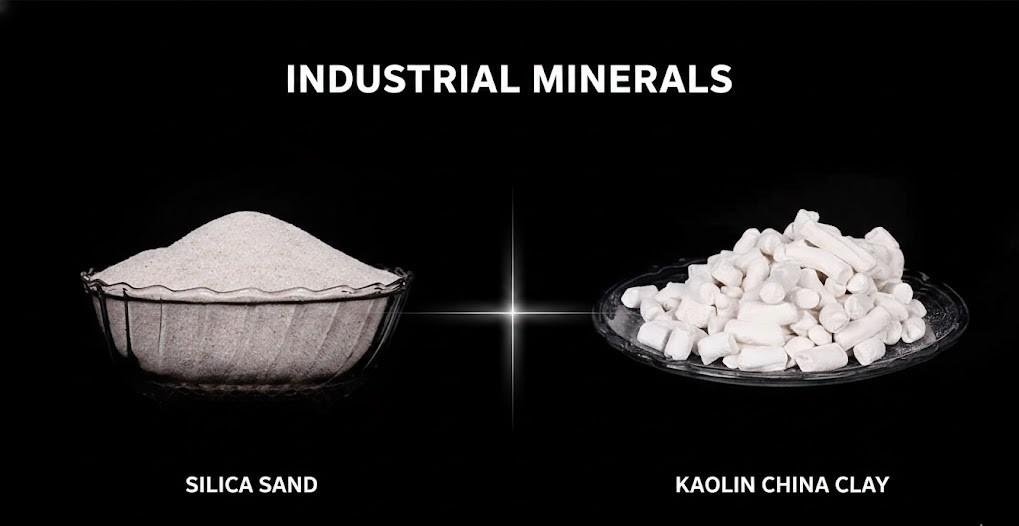
Silica-based minerals are among the most widely used industrial inputs. Their applications span glassmaking, construction materials, foundry molds, filtration media, and electronics. While silica itself is chemically simple, its industrial behavior is anything but.
In glass manufacturing, grain size uniformity and low impurity levels are critical for consistent melting. In foundries, the thermal stability and angularity of grains affect mold strength and casting finish. Filtration applications depend on precise grading to control flow rates and capture efficiency.
Procurement teams sourcing from silica sand manufacturers in india often focus on these downstream requirements rather than headline purity numbers alone. Matching the right grade to the right application reduces process adjustments later and lowers the risk of quality deviations that only become visible after production has begun.
Clay Minerals and Their Functional Role
Clay minerals occupy a different niche in industrial manufacturing. Rather than acting as structural or abrasive components, they often influence rheology, surface finish, and binding behavior. Their layered structure and fine particle size give them properties that are difficult to replicate with synthetic alternatives.
In ceramics, clay minerals contribute to plasticity and green strength before firing. In paints and coatings, they help control viscosity, opacity, and suspension stability. Paper, rubber, and adhesives rely on similar functional characteristics.
Sourcing from reliable china clay manufacturers in india is often less about volume and more about consistency in mineralogy and particle morphology. Slight shifts in composition can change how a formulation behaves, forcing reformulation or process tweaks that disrupt production schedules.
Supply Reliability and Its Impact on Production Planning
Beyond technical specifications, supply reliability plays a critical role in mineral sourcing decisions. Industrial minerals are bulky, relatively low-value materials compared to finished goods, which makes logistics and inventory management especially important.
Interruptions in supply can trigger a cascade of problems:
- Emergency sourcing at higher cost
- Line stoppages due to incompatible substitute materials
- Increased testing and validation time for new batches
- Customer delivery delays
Manufacturers who depend on steady mineral inputs often prioritize long-term supplier relationships over short-term price advantages. Predictable delivery schedules and transparent communication about quality changes help production planners maintain stability.
Environmental and Regulatory Pressures
Industrial mineral sourcing is increasingly shaped by environmental and regulatory considerations. Water usage, land rehabilitation, and emissions control are now part of supplier evaluations, not just compliance checklists.
For manufacturers, this matters in two ways. First, regulatory disruptions at the mining or processing stage can affect availability and pricing. Second, downstream companies are under growing pressure to demonstrate responsible sourcing within their own supply chains.
Understanding how suppliers manage environmental risks allows manufacturers to anticipate potential disruptions and align procurement with broader sustainability goals, without compromising material performance.
Testing and Validation as Ongoing Processes
Many companies treat raw material testing as a one-time qualification step. In reality, ongoing validation is essential when dealing with natural minerals. Geological variability means that even well-managed operations can experience gradual shifts in material characteristics.
Best practices observed across industries include:
- Retaining reference samples from approved batches
- Periodic re-testing against internal performance benchmarks
- Close coordination between procurement, quality, and production teams
- Clear protocols for handling out-of-spec material
These practices turn raw material management into a controlled process rather than a reactive one. They also reduce the likelihood that small changes escalate into costly production issues.
The Value of Contextual Knowledge in Sourcing Decisions
Technical datasheets provide essential information, but they rarely capture how a mineral will behave in a specific process environment. Contextual knowledge-gained through experience, dialogue with suppliers, and internal testing-often makes the difference.
Manufacturers who invest time in understanding the origin, processing, and limitations of their mineral inputs tend to respond faster when issues arise. They know which variables matter and which adjustments are likely to work. This practical insight often outweighs marginal cost differences when evaluating suppliers.
Industry Trends Shaping Mineral Use
Several broader trends are influencing how industrial minerals are sourced and used:
- Tighter quality tolerances driven by automation and advanced manufacturing
- Increased demand for traceability in raw material supply chains
- Pressure to reduce waste and rework linked to input variability
- Greater collaboration between suppliers and end users on application-specific grades
These trends suggest that mineral sourcing is becoming more integrated with process engineering rather than remaining a purely procurement-driven function.
Viewing Industrial Minerals as Process Partners
Industrial minerals may sit at the beginning of the manufacturing chain, but their influence extends far beyond the warehouse. Treating them as interchangeable commodities often leads to hidden inefficiencies that surface later in production.
By understanding how mineral properties interact with specific processes, manufacturers can make more informed sourcing decisions. This perspective shifts the focus from short-term pricing to long-term operational stability, which is often where real cost control is achieved.
When mineral inputs are chosen with context, consistency, and application needs in mind, they stop being a variable to manage and become a stable foundation for manufacturing performance.
Tags : .....