Most workplace inefficiencies are easy to recognize.
Missed coordination between teams.
Delayed operational response.
Meetings that begin later than expected.
But some disruptions develop quietly in the background—especially near entry points where movement begins every day.
In many facilities, employees spend small amounts of time waiting near entrances without anyone fully noticing the long-term operational impact. A few seconds during peak hours may not seem important in isolation, but repeated across hundreds of people every day, those delays gradually influence workplace rhythm, coordination, and productivity.
This is one reason organizations are paying closer attention to movement flow inside high-traffic environments.
Entry Delays Often Start Before Work Begins
For many workplaces, the first operational pressure point appears at the entrance itself.
Morning rush periods, shift transitions, and visitor movement can quickly create congestion when entry systems are not designed to support continuous flow efficiently.
This often leads to situations where:
- Employees gather near access points
- Queue formation slows surrounding movement
- Manual supervision increases during busy periods
- Entry processing becomes inconsistent under pressure
The issue is not always a lack of security infrastructure.
In many cases, the real problem is unmanaged movement flow.
Interestingly, many organizations investigate productivity slowdowns inside the workplace while overlooking the delays that begin before employees even reach their workstations.
Why Small Delays Become Larger Operational Problems
Operational slowdowns rarely feel dramatic at first.
That’s part of the reason they’re ignored.
A delayed entry lane here. A slightly longer queue there. Most organizations gradually adapt to these small disruptions until they quietly become part of the daily routine.
Over time, however, those repeated friction points begin influencing:
- Workforce timing
- Staff coordination
- Employee experience
- Overall operational consistency
Facilities with heavy daily movement often feel these effects most strongly because congestion compounds quickly during high-volume periods.
Movement Flow Is Part of Operational Efficiency
Many organizations evaluate access systems primarily through security performance.
But movement efficiency is equally important in high-traffic environments.
Questions that increasingly matter include:
- How smoothly do people move through entry points?
- Where do delays consistently occur?
- Which areas experience the highest congestion during peak periods?
These observations help facilities improve operational reliability, not just access enforcement.
Structured Movement Reduces Operational Friction
Open or loosely managed entry spaces often create unpredictable movement patterns.
As traffic volume increases, those inconsistencies become more visible.
Structured entry environments help reduce this by creating:
- More organized lane-based movement
- Better distribution of user flow
- Consistent entry processing during peak demand
- Reduced dependency on manual coordination
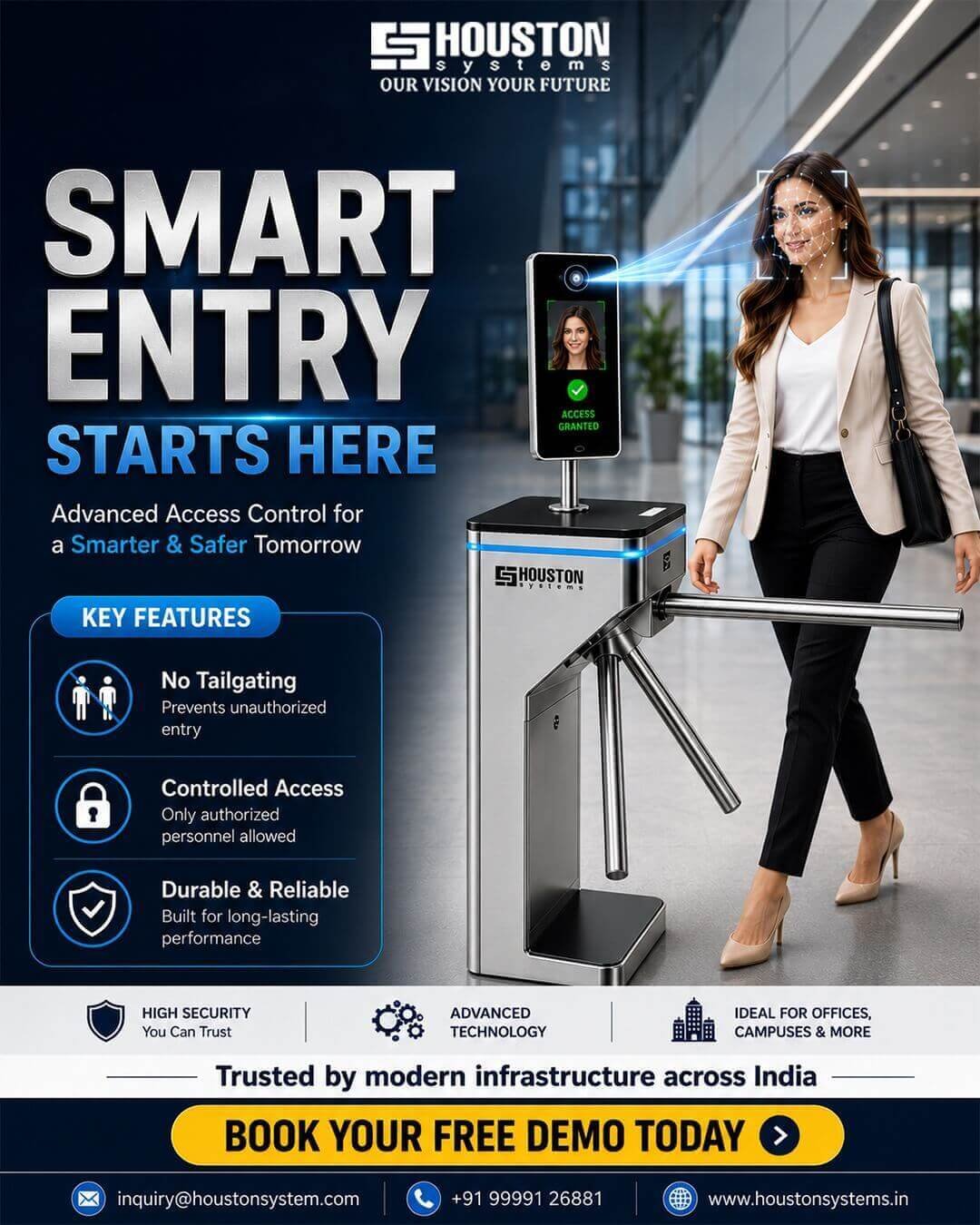
Many facilities implement structured entry systems because they help maintain controlled movement without interrupting operational flow.
The benefit is not simply tighter access control.
It is creating a workplace environment that functions more predictably under pressure.
High-Traffic Facilities Require Consistent Flow
Facilities handling continuous movement face different challenges than low-volume environments.
In many office buildings, congestion becomes most noticeable between 8:30 and 9:15 AM, when large volumes of employees attempt to enter within a short time window.
In large offices, industrial sites, or multi-tenant buildings, entry systems must support:
- Speed during peak movement periods
- Consistency across multiple access points
- Reliable processing under continuous load
Without that consistency, congestion begins affecting surrounding operations far beyond the entrance itself.
Why Organizations Are Rethinking Entry Infrastructure
Movement flow is increasingly becoming part of operational planning rather than isolated security management.
Organizations are now paying more attention to:
- Entry lane design
- Congestion reduction strategies
- Predictable workforce movement
- Scalable access infrastructure for future growth
The goal is no longer just restricting access.
It is maintaining smooth and reliable movement throughout the facility.
Final Perspective
Entry bottlenecks are often dismissed as minor inconveniences.
In reality, they quietly influence how efficiently workplaces operate every day.
When movement slows at entry points, the effects spread across staffing coordination, workforce timing, and operational consistency.
Organizations that improve movement flow at entrances frequently improve more than access management alone.
They create environments that function with greater stability, predictability, and efficiency under continuous operational pressure.