Why Copper for Sale Like Ingots Is the Next Big Thing in Investing in Copper
By Nancy Ajram 03-03-2026 95
A shift is happening in the UK metals community, and it's not subtle once you start paying attention. Copper long overlooked in favour of gold and silver, is getting a serious second look from investors and collectors alike. The trigger isn't one big event. It's a slow accumulation of factors: tightening supply from copper mining regions, surging industrial demand, and a growing number of people who simply want something physical they can hold and verify.
If you've been sitting on the fence about whether copper for sale in physical form is worth your time and money, this is a good moment to work through the question properly. Investing in copper doesn't need to be complicated, but it does reward people who understand a few fundamentals before they buy.
Copper Prices and Market Trends: Reading the Signals That Actually Matter
Copper prices don't move in a vacuum. They respond to a specific set of inputs and once you understand what those are, the market becomes a lot less mysterious. The biggest driver right now is the tension between copper mining output and industrial demand. Electrification is eating through copper at a pace that mining operations are genuinely struggling to match, and that supply pressure feeds directly into the copper price per pound and the price of copper per kg that UK buyers see day to day.
On r/UKInvesting and r/CopperStackers, this has been a recurring theme. Community members tracking copper companies have noted that major producers are flagging output constraints while demand forecasts for EV battery systems and grid infrastructure keep climbing. The takeaway from those threads is consistent: the structural case for copper prices trending upward over the medium term looks stronger than it has in years.
For practical buyers, the copper price per pound is worth bookmarking alongside a live currency converter since LME pricing comes through in US figures; the actual cost in pounds shifts with the exchange rate. Ingots We Trust displays pricing relative to live copper prices, which takes the mental arithmetic out of the equation entirely.
Investing in Copper Through Physical Ingots: Why the Format Makes a Difference
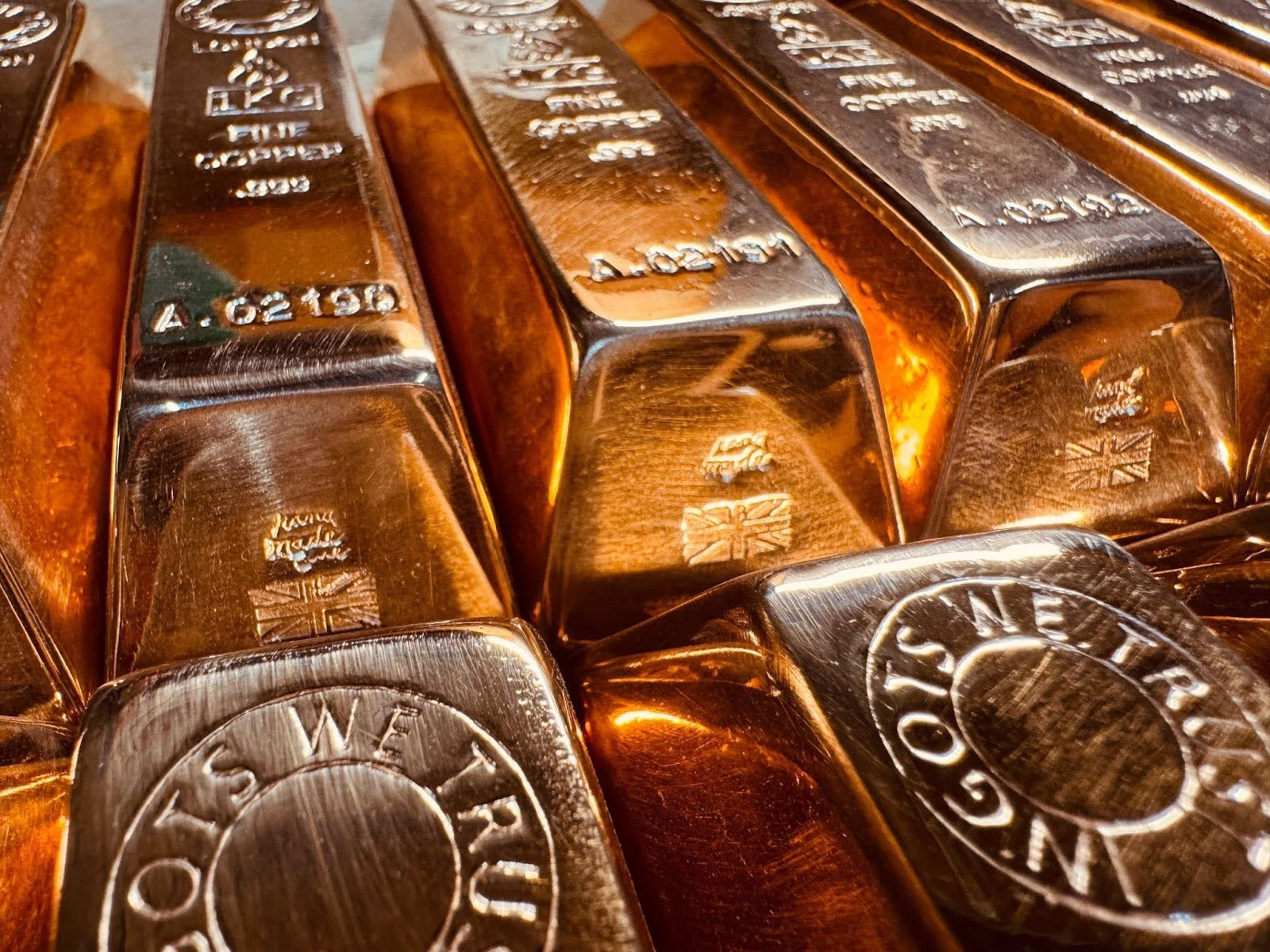
Investing in copper through physical holdings is a different proposition from buying shares in copper companies or tracking an ETF. With physical copper, you own something real, something whose purity you can verify, whose weight you can measure, and whose value ties directly to the price of copper per kg on any given day. That directness appeals to a growing number of people who've grown sceptical of financial products they can't touch.
Copper ingots are the cleanest entry point into physical copper. They're cast to a consistent standard, priced close to spot, and straightforward to store. Unlike copper coins, which carry a premium for design or mintage, copper ingots give you exposure to actual copper prices without paying for aesthetics you may not value. That said, the ingot format spans a wide range from small hand-poured bars to oversized cast pieces that collectors refer to as The Behemoth.
The Behemoth category, large-format copper ingots weighing several kilograms or more, has developed a loyal following among UK stackers who want bulk copper value at near-spot pricing. Thread discussions on UK precious metals forums regularly come back to this format as the most cost-efficient way to hold physical copper, particularly when the price of copper per kg is rising and every premium point above spot starts to matter more.
Copper Ingots and Purity: The Part Most Buyers Skip (and Shouldn't)
Here's where a lot of buyers, particularly those new to physical copper, make their biggest mistake. They find copper for sale at a price that looks reasonable, skip the purity question, and end up with something that won't resell at the value they expected. Copper ingots and purity are not separate topics. Purity is what sets the price, full stop.
Electrolytic copper refined from copper concentrate through a controlled process is the benchmark grade. It sits at 99.9% purity and is what the LME spot price actually reflects. Below that, you've got fire-refined copper, and below that, secondary material reclaimed by a coppersmith from mixed scrap. Each step down in purity means a step down in price, and any seller who can't confirm which tier their product sits in should be treated cautiously.
Copper plates follow the same logic. Whether you're buying rolled copper plates for their industrial utility or their collector appeal, the purity grade should always be front and centre. Ingots We Trust provides purity documentation with all copper products, which removes the guesswork that has frustrated buyers browsing generic marketplaces.
The Precious: Copper Coins and Smaller Formats for Collectors Starting Out
Not every copper buyer is looking for a multi-kilogram block. The Precious, smaller, often artisan copper pieces, including coins, miniature pours, and decorative bars serves a different but equally valid purpose. These formats are accessible, visually interesting, and make a natural starting point for anyone getting comfortable with physical copper before committing to larger pieces.
Copper coins in particular carry a dual value: their intrinsic copper content priced against copper prices, plus whatever premium the design or limited production run commands. That premium can be modest or significant depending on the piece, which is why understanding the base copper price per pound and then asking what you're paying above it is a habit worth developing early.
The community consensus, echoed across UK stacker forums and Reddit threads on copper collecting, is that building a collection with a mix of The Precious and The Behemoth gives you the best of both worlds: the tactile appeal of smaller pieces and the investment weight of larger ingots sitting closer to spot. Starting with The Precious and scaling up as confidence grows is a pattern that comes up again and again in those conversations.
Copper Mining and Copper Companies: What the Supply Chain Tells Physical Buyers
You don't need to follow copper mining news in detail to benefit from knowing the basics. When major copper companies report output cuts due to environmental regulations, ore grade decline, or labour disputes refined copper supply tightens. That tightening feeds through the supply chain from copper concentrate to finished copper ingots, and the price of copper per kg moves accordingly.
For physical copper buyers, this matters practically. If you're timing a larger purchase, a quick scan of copper company news gives you context that spot prices alone don't. A rising copper price per pound alongside supply disruption signals from multiple mining regions is a different situation from a rising price driven purely by speculative positioning, and the former tends to be stickier.
Staying loosely informed about the upstream end of copper mining, copper concentrate processing, and refinery output turns out to be one of the more useful habits a physical copper investor can build. It doesn't take long, and the signal quality is generally better than most of the noise that passes for financial commentary.
Frequently Asked Questions
Is investing in copper through physical ingots better than buying shares in copper companies?
They serve different purposes. Shares in copper companies give you leveraged exposure to copper prices when the price of copper per kg rises, mining company profits often rise faster, but the reverse is also true. Physical copper ingots give you direct, unlevered exposure: their value tracks the copper price per pound closely, without the corporate risk layer. Many UK investors hold both, using physical copper as a stable base and shares for growth exposure.
What should I expect to pay above spot when buying copper for sale?
Premiums vary by format. Large copper ingots, particularly the Behemoth category, typically carry the smallest premium above the price of copper per kg, since you're paying mostly for refined metal with minimal fabrication cost. Copper coins and smaller decorative pieces from The Precious range carry higher premiums, reflecting minting or casting costs plus any collector demand. A premium of 5–15% above spot is typical for standard ingots from reputable sellers; anything significantly higher warrants scrutiny.
How do copper plates differ from copper ingots as an investment?
Copper plates are flat-rolled copper sheets produced to a consistent thickness, whereas copper ingots are cast in bar or block form. Both are priced relative to live copper prices and their purity grade. Plates are often preferred by buyers who want easy storage and consistent dimensions; ingots tend to appeal to stackers who prioritise weight per unit. Purity considerations are identical always confirm electrolytic grade for either format if you're buying for investment purposes.
Why does copper price per pound differ from the price of copper per kg?
It's purely a units difference. The copper price per pound is the standard reference in North American markets, while the price of copper per kg is used across the UK and Europe. One kilogram equals approximately 2.205 pounds, so you can convert between them easily. Most live metals platforms will display both. When comparing sellers, always ensure you're comparing like for like a price quoted per pound will look very different to one quoted per kilogram, even when the underlying rate is identical.
What is copper concentrate and how does it affect the copper I buy?
Copper concentrate is the raw, partially processed output from copper mining. It contains copper sulphides and other minerals and must be smelted and refined before it becomes the high-purity copper used in ingots, plates, and coins. As a buyer of finished copper products, you won't interact with copper concentrate directly, but production disruptions at the concentrate stage do feed through to the finished copper supply. When copper companies report concentrate shortfalls, expect some upward pressure on the copper price per pound within weeks.
Tags : .....