Why Choose a 300 Hour YTTC Rishikesh for Advanced Yoga Teacher Development?
By Sajan Negi 07-09-2026 1
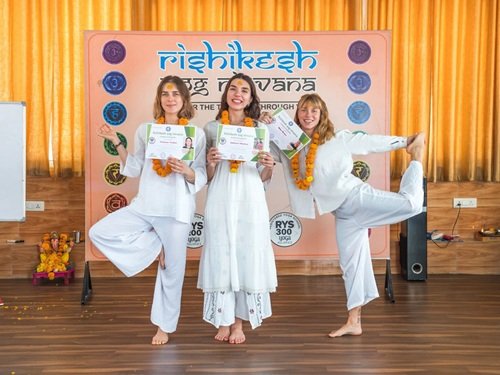
For yoga practitioners who have already moved beyond the basics, the next stage is not simply about learning more postures. It is about refining awareness, strengthening teaching skills, understanding yoga philosophy more deeply, and developing the confidence to guide different students with intelligence and compassion. That is why a 300 hour yoga teacher training in Rishikesh can be a meaningful step for practitioners seeking advanced development in one of yoga's most respected spiritual settings.
Rishikesh offers an environment where yoga is not confined to a studio timetable. The rhythm of the Ganges, the Himalayan landscape, traditional ashram culture, meditation practices, and the city's long association with yoga can create a setting that encourages both disciplined study and personal reflection. For an experienced practitioner, this combination can make advanced training feel less like another qualification and more like a period of intentional immersion.
What Makes 300-Hour Training Different?
A 300-hour program is generally intended for practitioners who already possess a foundation in yoga and want to develop greater depth. Instead of repeatedly covering introductory concepts, advanced training can create more room for exploration, integration, observation, and teaching practice.
The difference is particularly important for people who want to become thoughtful teachers rather than instructors who simply demonstrate sequences.
Advanced study may involve a more nuanced exploration of:
- Asana and intelligent sequencing
- Pranayama and breath awareness
- Meditation and concentration
- Yoga philosophy
- Anatomy and movement principles
- Teaching methodology
- Adjustments and modifications
- Class planning and communication
- Professional teaching awareness
- Personal practice and self-observation
The value lies in connecting these subjects. A teacher who understands anatomy but cannot communicate clearly still has limitations. Likewise, someone with strong personal practice may need additional skills to adapt a class for beginners, older adults, or students with different physical abilities.
A well-structured 300 hour YTTC Rishikesh can therefore serve as a bridge between personal practice and mature teaching.
Why Rishikesh Is Particularly Appealing for Advanced Practitioners
Location matters when the objective is immersive learning.
Rishikesh has become internationally associated with yoga, meditation, and spiritual study. That reputation attracts practitioners from different countries and backgrounds, creating a naturally diverse learning environment.
For an advanced student, this diversity can be valuable. Teaching yoga requires more than understanding one's own body. It requires learning how to observe and communicate with people whose experiences, mobility, expectations, and learning styles may differ considerably.
There is also something distinctive about stepping away from familiar routines. A practitioner who spends several weeks focused on study, practice, reflection, and teaching may notice aspects of their relationship with yoga that are easy to overlook during everyday life.
The setting does not automatically create transformation, of course. The real work still comes from consistent practice and honest engagement. But an immersive environment can make that work easier to prioritize.
Moving From Performing Asana to Understanding It
One of the most important shifts in advanced yoga education is learning to look beyond the external appearance of a posture.
Two students can appear to perform the same asana while experiencing completely different physical demands. Alignment cues that work well for one person may not be appropriate for another. Flexibility, skeletal structure, previous injuries, strength, balance, breathing patterns, and confidence can all influence how someone approaches movement.
This is where advanced yoga teacher training in Rishikesh can become especially useful.
Rather than asking only, "How should this pose look?", advanced study encourages teachers to consider questions such as:
- What is the purpose of this posture?
- What should the student experience?
- Which muscles and joints are involved?
- What modifications could make the practice more accessible?
- When should a teacher offer an alternative?
- How can verbal instruction be clearer?
- How does the posture fit into the wider sequence?
That change in perspective can make teaching more responsive and less formulaic.
Developing Better Teaching Intelligence
A strong yoga teacher is not necessarily the person who knows the longest list of Sanskrit names.
Teaching intelligence involves observation, timing, language, adaptability, and judgment.
An experienced practitioner may know exactly what they want students to do but struggle to explain it. Another teacher may have excellent communication skills but lack sufficient understanding of movement principles. Advanced teacher development brings these areas together.
Teaching practice can help practitioners become more comfortable with:
Demonstration: Showing a movement without allowing demonstration to replace verbal instruction.
Verbal cueing: Giving students information that is concise, useful, and easy to process.
Observation: Recognising when students need clarification, modification, or a different approach.
Sequencing: Building classes with a coherent progression rather than collecting unrelated postures.
Adaptation: Responding appropriately when a planned class does not suit the people in front of you.
These skills often distinguish a knowledgeable practitioner from a genuinely effective teacher.
The Role of Yoga Philosophy in Advanced Development
Yoga teacher training becomes richer when physical practice is connected to the philosophical framework behind it.
For advanced practitioners, philosophy can provide a broader context for understanding why yoga encompasses much more than physical exercise.
Concepts from classical yoga philosophy can encourage reflection on awareness, discipline, attachment, concentration, ethical conduct, and the nature of practice. Studying these ideas alongside asana, pranayama, and meditation can help teachers communicate yoga as a multidimensional tradition without reducing it to a collection of fitness techniques.
This is also important for teachers who want their classes to feel purposeful.
A philosophy-informed teacher can introduce concepts thoughtfully and appropriately, allowing students to explore yoga's deeper dimensions without turning every class into a lecture.
Why Immersion Can Strengthen Personal Practice
Teacher development begins with the teacher.
An advanced course can challenge practitioners to examine habits that have become automatic. Perhaps a sequence is always practiced in the same way. Perhaps certain postures are avoided. Perhaps meditation is treated as an occasional activity rather than an integral part of practice.
Immersion creates an opportunity to reconsider these patterns.
Regular practice, study, meditation, and reflection can encourage practitioners to become more observant of breath, movement, attention, and emotional responses.
This personal dimension is one reason many people consider a 300 hour RYT Rishikesh pathway. The attraction is not merely adding another number to a résumé. For many practitioners, the deeper objective is becoming more prepared, self-aware, and responsible as a yoga professional.
Building Confidence Without Losing Humility
Advanced training should not create the illusion that a teacher has finished learning.
Yoga is too broad for that.
Instead, meaningful teacher development can create a healthier form of confidence: knowing what you understand, recognising what you do not know, and remaining willing to learn.
This matters when working with students. A teacher who feels compelled to have an answer for everything may give unnecessary or inappropriate advice. A teacher who can acknowledge limitations is often better positioned to create a safe and respectful learning environment.
The most valuable confidence is therefore not performance confidence. It is professional judgment.
Why Choose a 300-Hour Yoga TTC in India?
India offers a particularly compelling context for practitioners who want to explore yoga within the culture where many of its traditional systems developed.
A 300-hour yoga TTC India experience can combine structured education with exposure to a broader yoga environment. For international students especially, living and studying in India can provide a cultural dimension that cannot be reproduced through an online course or a short workshop.
At the same time, students should evaluate teacher-training programs carefully.
Before choosing a course, look beyond photographs and marketing language. Consider the curriculum, teaching methodology, practical components, faculty experience, accommodation details, schedule, student support, and the clarity of the program's learning outcomes.
Reviews can be useful, but they should be considered alongside the actual information provided by the school. Prospective students should also make sure that the course matches their existing experience and future professional goals.
What Should Advanced Students Look for in a Program?
The right course depends on the practitioner.
Someone interested in teaching general group classes may have different priorities from someone interested in therapeutic applications, personal practice, or specialist populations.
However, several qualities are broadly valuable.
Depth rather than repetition: Advanced training should build on previous knowledge rather than simply extending an introductory curriculum.
Practical teaching experience: Students benefit from opportunities to plan, teach, receive feedback, and improve.
Balanced education: Asana should be supported by philosophy, pranayama, meditation, anatomy, and teaching methodology.
Individual attention: Feedback can be particularly valuable when developing teaching skills.
Clear communication: Course expectations, schedules, curriculum, eligibility, and certification information should be transparent.
A supportive learning environment: Advanced education can be demanding, so the quality of the learning community matters.
These factors help prospective students distinguish substantive training from a course that simply sounds advanced because it has a larger number attached to its name.
A Deeper Relationship With Teaching
Perhaps the strongest reason to pursue advanced training is that teaching yoga changes when the practitioner begins to understand that every student arrives with a different story.
A beginner may be nervous. An experienced athlete may be strong but unfamiliar with stillness. Someone recovering from an injury may need considerable adaptation. Another student may attend class primarily for stress relief.
There is no single cue, sequence, or teaching style that serves everyone equally well.
Advanced development helps teachers become more adaptable. Instead of forcing students into a predetermined idea of what a yoga class should look like, the teacher learns to create an environment in which practice can be approached intelligently.
That is a significant professional skill.
Is a 300-Hour Program Right for You?
A 300-hour course may be appropriate if you already have yoga-teaching experience or a substantial foundation and want to deepen your knowledge and refine your teaching approach.
It may be less suitable for someone who is completely new to yoga or still developing basic familiarity with foundational practices. In that situation, an introductory or foundational teacher-training pathway may provide a more appropriate starting point.
The key question is not simply, "Is 300 hours better?"
It is, "Does this level of study match where I am now and where I want my yoga practice to go?"
When the answer is yes, advanced training can become an opportunity to consolidate years of practice into a more mature teaching philosophy.
Frequently Asked Questions
What is a 300 hour yoga teacher training in Rishikesh?
A 300-hour yoga teacher training is an advanced educational program designed for practitioners seeking deeper study of yoga and further development of their teaching skills. Depending on the program, subjects can include asana, pranayama, meditation, philosophy, anatomy, sequencing, teaching methodology, and practical teaching.
Who should consider a 300 hour YTTC Rishikesh program?
It is generally suited to practitioners who already have a solid yoga foundation and want to deepen their knowledge or teaching abilities. Prospective students should check the individual school's eligibility requirements before enrolling.
How is advanced yoga teacher training in Rishikesh different from beginner training?
Advanced training generally builds on existing knowledge and places greater emphasis on refinement, integration, teaching practice, sequencing, observation, and deeper theoretical study. The exact curriculum varies between schools.
What does 300 hour RYT Rishikesh mean?
The term can refer to a 300-hour advanced teacher-training pathway associated with Registered Yoga Teacher education. Students should verify the specific certification and registration details offered by the school rather than relying solely on the terminology used in course marketing.
Why study a 300-hour yoga TTC in India?
India can provide an immersive cultural and educational environment for people interested in yoga. Studying in Rishikesh can also allow practitioners to experience a setting strongly associated with yoga, meditation, and spiritual practice.
Can a 300-hour course improve my teaching skills?
It can, particularly when the program includes practical teaching, feedback, sequencing, observation, anatomy, communication, and adaptation. The quality and structure of the individual course are important factors.
Should I choose Rishikesh only because it is famous for yoga?
Not necessarily. Reputation and location are useful considerations, but curriculum quality, teachers, practical training, student support, course structure, and transparency should also influence your decision.
Step Into a Deeper Practice
Advanced yoga teacher development is ultimately less about collecting credentials and more about becoming a more perceptive practitioner and responsible teacher. A thoughtfully designed 300 hour yoga teacher training in Rishikesh can bring together disciplined practice, traditional study, teaching methodology, cultural immersion, and personal reflection in one focused experience.
Rishikesh Yognirvana — deepen your practice through 300 hour yoga teacher training in Rishikesh.
Tags : .....