Why Apostille and Document Preparation Are Gaining Importance in Today’s Global Shift
By Don Jose 25-05-2026 144
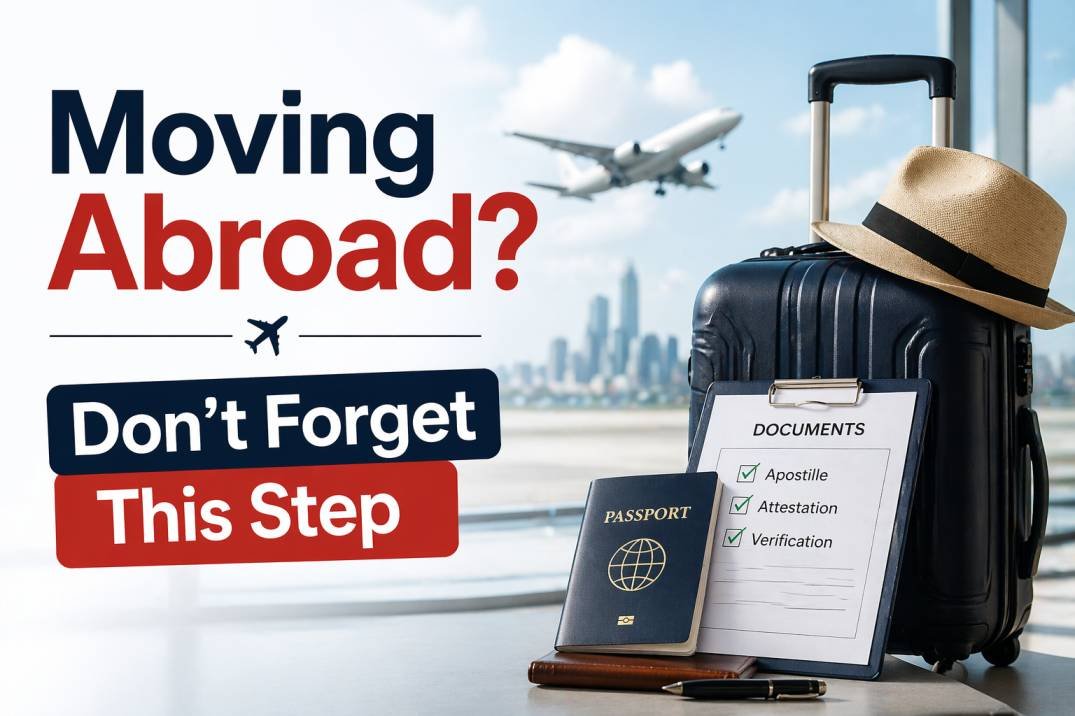
From airport check-ins to visa approvals, one overlooked detail can quietly delay your entire journey — your documents.
In a world shaped by shifting economies, geopolitical tensions, and evolving migration patterns, one thing is becoming increasingly clear — moving across borders is no longer just about opportunity, it’s about preparation.
For many, the idea of moving abroad starts with excitement — a new job, a university admission, or even the decision to explore life in another country. But somewhere between planning and actually making the move, reality sets in.
Your documents matter more than you think.
Global Movement Is Increasing — But So Are Checks
Today, more people are crossing borders than ever before — for work, study, business, or long-term relocation. But at the same time, governments and institutions are becoming more careful about what they accept.
A degree, a birth certificate, or a business document issued in the UK may be perfectly valid at home — but that doesn’t automatically make it acceptable abroad.
It’s not uncommon for someone to secure a job overseas, only to face unexpected delays because a certificate wasn’t properly legalised.
This is where many people get stuck.
What Apostille Really Means (In Simple Terms)
An apostille is a certification that proves your document is genuine and can be trusted in another country, especially those that are part of the Hague Apostille Convention.
Think of it as a universal “verification stamp” that tells foreign authorities:
👉 This document is real and officially recognised.
Without it, even valid documents can face delays, questions, or rejection.
It’s Not Just a Step — It’s a Process
One of the biggest misconceptions is that document legalisation is just a quick formality.
In reality, it often involves multiple steps:
Notarisation
Apostille
Sometimes additional attestation
In some cases, translation or local verification
And here’s where things get tricky — the sequence matters.
Missing a step or doing it in the wrong order can delay your entire plan, whether it’s a job abroad, university admission, or visa process.
Where Most People Go Wrong
From experience, the biggest issues aren’t complex — they’re small oversights:
Submitting the wrong version of a document
Skipping notarisation before apostille
Not checking country-specific requirements
Assuming one process works for every country
These small mistakes can lead to bigger consequences — missed deadlines, rejected applications, or unnecessary stress during what should be an exciting transition.
Apostille Isn’t Always the Final Step
Another common misunderstanding is that once a document is apostilled, everything is done.
But that depends on where you’re going.
Some countries accept apostille directly. Others may require additional steps like embassy attestation or verification after arrival.
That’s why understanding the destination country’s requirements is just as important as preparing the document itself.
Why This Matters More Today
With stricter immigration systems, increased fraud checks, and more structured international processes, documentation is no longer just paperwork — it’s part of your overall journey.
In many cases, your documents determine:
How fast your visa is processed
Whether your application is accepted
How smoothly you transition into a new country
Being Prepared Makes All the Difference
Moving abroad already comes with enough uncertainty. Documentation shouldn’t be one of them.
Those who prepare early — understanding what’s needed and how the process works — often move forward with fewer delays and far less stress.
On the other hand, leaving it to the last minute can turn a simple process into a complicated one.
Final Thought
The world is opening up in new ways, but it’s also becoming more structured.
Opportunities are there — but accessing them depends on how prepared you are.
Apostille and document preparation may not be the most exciting part of moving abroad, but they are one of the most important.
For those preparing documents for international use, having clarity on requirements early can make the process far smoother. Helpline Group UK assists individuals in navigating document legalisation and apostille procedures, helping reduce delays and making cross-border transitions more manageable.
Because in the end, it’s not just about going somewhere new — it’s about getting there without unnecessary obstacles.