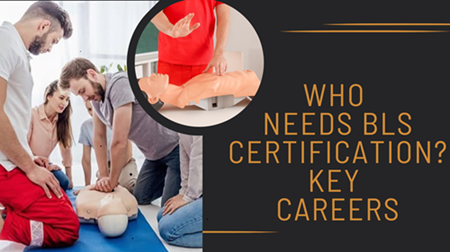
Every second counts during a cardiac arrest or a severe medical emergency. When breathing stops, or a heart ceases to beat, immediate intervention is the ultimate difference between life and death. This is where Basic Life Support (BLS) comes into play. But who exactly needs this specialized training? While many people learn basic resuscitation techniques, obtaining a BLS license is a specialized credential designed for healthcare providers and professionals who face life-threatening emergencies regularly.
Let’s dive into what this certification entails and explore the specific careers that strictly require it.
What is a BLS License?
BLS stands for Basic Life Support. It is a foundational level of medical care used to treat individuals experiencing respiratory distress, cardiac arrest, or obstructed airways. Unlike standard layperson CPR, BLS training focuses heavily on high-quality chest compressions, ventilation using a bag-valve-mask (BVM), and the rapid integration of Automated External Defibrillators (AEDs).
Furthermore, it emphasizes teamwork. Professionals learn how to coordinate efficiently during high-stress, multi-rescuer resuscitations. Obtaining a BLS license signifies that an individual has mastered these critical, life-saving techniques and is fully prepared to act in a clinical or field setting.
Healthcare Professionals
The most obvious group required to hold a BLS license is healthcare providers. In hospitals, clinics, and emergency rooms, every single second matters. Doctors, registered nurses, and nurse practitioners must be fully prepared to respond to sudden cardiac arrest at a moment's notice. Because they work directly with patients who have compromised health, their ability to perform high-quality resuscitation is strictly mandated by hospital policies and accrediting organizations.
Furthermore, emergency medical technicians (EMTs) and paramedics rely on this training on the front lines. These professionals are usually the first to arrive at the scene of an accident or medical crisis. Their BLS license is the absolute foundation of their daily duties, allowing them to sustain patients during transport to the nearest emergency department. Without this certification, it is impossible to secure a position in an ambulance or emergency medical service agency.
Allied Health and Dental Workers
Beyond doctors and nurses, a wide array of allied health professionals must also maintain an active certification. Dentists, dental hygienists, and dental assistants work in close proximity to patients who are often under the influence of anesthesia or sedation. Although dental offices are generally safe environments, syncope, airway obstruction, or sudden cardiac events can occur. Having a certified team ensures that the clinic can stabilize a patient before emergency services arrive.
Similarly, pharmacists and pharmacy technicians interact daily with patients managing complex medication regimens. Adverse drug reactions can lead to respiratory failure or sudden cardiac arrest, making BLS training an essential safeguard in both retail and clinical pharmacy settings. Physical therapists and occupational therapists also fall into this category. They work closely with patients who might be recovering from severe traumas, meaning the risk of a medical event during physical rehabilitation is always present. For these roles, holding a BLS license is a fundamental hiring requirement.
First Responders and Public Safety
Public safety officials encounter unpredictable and hazardous situations daily. Police officers, sheriff’s deputies, and state troopers are frequently the first to arrive at the scene of an automobile collision, domestic dispute, or medical emergency. Because their duties extend far beyond law enforcement, they must be prepared to render medical aid instantly. Securing a BLS license is a standard prerequisite for police academy graduation in many jurisdictions across the United States.
Firefighters also require this credential. While many firefighters are cross-trained as paramedics, even those strictly focused on fire suppression need to know how to perform life-saving resuscitation. Fire scenes are chaotic, and victims may suffer from smoke inhalation, severe burns, or physical trauma.
Additionally, lifeguards at pools, water parks, and beaches must possess this certification. Drowning victims require immediate, high-quality ventilation and chest compressions to prevent catastrophic brain damage. For these public safety professionals, a BLS license is a critical tool that empowers them to protect the public effectively.
Education and Childcare Workers
Working with children carries an inherent responsibility for their physical safety. While not every teacher needs an advanced medical degree, many childcare professionals are required to hold a BLS license. Daycare workers, preschool staff, and full-time nannies are often the first line of defense when a child chokes on food or suffers a severe allergic reaction.
In the educational system, school nurses obviously require this certification, but many school districts also mandate it for athletic coaches and physical education teachers. Student-athletes push their bodies to the limit and are at a higher risk for sudden cardiac events, such as commotio cordis, or severe asthma attacks during rigorous physical activity. Having a coach on the field with a valid BLS license ensures that life-saving interventions begin immediately, rather than waiting helplessly for an ambulance to arrive.
Corporate, Aviation, and Security Roles
The need for Basic Life Support extends well into the corporate and transportation sectors. Flight attendants, for example, operate in a uniquely isolated environment where immediate medical backup is miles away. If a passenger experiences a cardiac emergency at 30,000 feet, the flight crew must be entirely self-reliant. The Federal Aviation Administration (FAA) mandates that flight attendants be trained in CPR and AED use, and most major airlines specifically require a formal BLS license for their crew members.
Security guards and loss prevention officers also benefit immensely from this training. These professionals monitor large crowds and are often positioned as the initial responders in shopping malls, concert venues, and corporate campuses. Having a team of security personnel equipped with a BLS license provides a vastly safer environment for patrons and employees alike. Even in traditional office settings, designated workplace safety officers often pursue this certification to fulfill occupational safety requirements and protect their colleagues.
Conclusion
Knowing how to respond in a medical crisis is an invaluable skill. While anyone can benefit from learning basic resuscitation techniques, certain professions mandate a higher, more clinical level of preparedness. From doctors and nurses in the emergency room to lifeguards watching over crowded beaches, holding a BLS license ensures that professionals are ready to act decisively when every second counts.
If you are considering a career in healthcare, public safety, education, or any field where human life is in your hands, obtaining this certification is your first step toward making a tangible difference. Do not wait until an emergency happens—ensure your credentials are up to date and ready to be put to the test.
Tags : .....