A digitizing company becomes part of your production process the moment you load its file onto a machine. If lettering looks unclear or a revision arrives late, your shop has to explain the delay to the customer.
Before hiring a provider of embroidery digitizing services, ask how it prepares files for your garments, checks its work, and handles problems after delivery. Then place a small trial order. A clear conversation and a realistic stitching test give you a stronger basis for choosing a partner than price alone.
Ask for examples that match your orders
Start with the work your shop actually sells. If most orders involve company polos and structured caps, ask to see those products. A portfolio of large jacket designs tells you little about how the company handles a small chest logo.
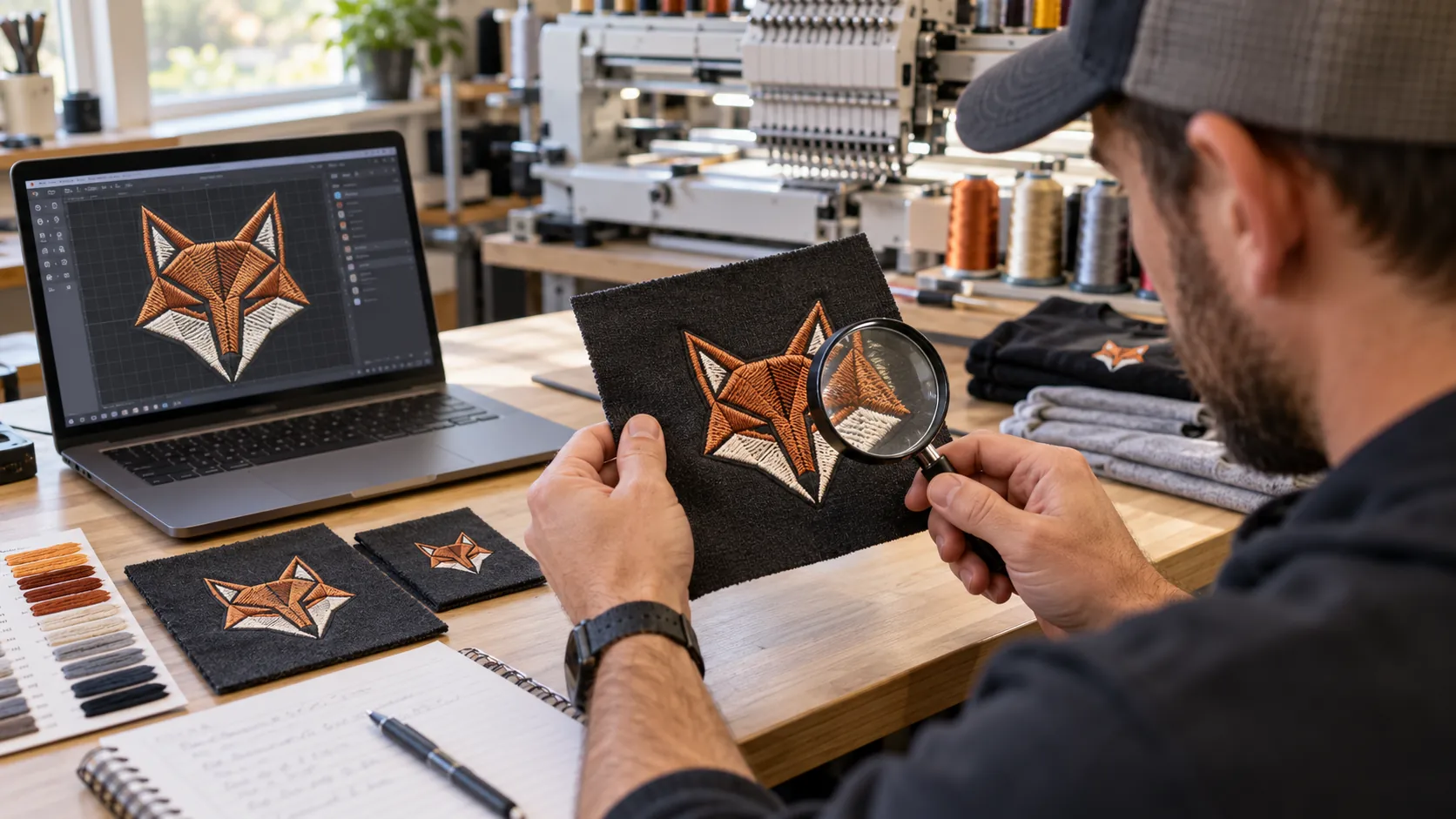
Request close photographs of finished embroidery, including lettering and outlines. Ask whether the examples show physical stitching or software previews. Both can be useful, but they show different things. Look for readable text, clean edges, and consistent shapes on garments similar to yours.
Check what information they need before starting
A useful first question is, “What do you need from us besides the artwork?” Expect a discussion about the finished dimensions, garment fabric, placement, machine format, and any special thread requirements.
Explain whether measurements are in inches or millimeters. Send the garment style when possible, especially for caps or textured fabrics. Wilcom’s fabric guidance explains that stitch settings need to suit the material being embroidered. A provider should therefore ask enough questions to understand the job before preparing the file. Missing details can create avoidable revisions.
Discuss artwork that may need changing
Customer artwork does not always translate neatly into embroidery. Tiny lettering, narrow gaps, and fine outlines may need adjustments at the requested size. Ask how the company identifies these limits and gets approval before changing a design.
For example, imagine a contractor wants a detailed logo with a small tagline on a polo. Will the digitizer flag the tagline before starting? Can they explain the options in plain language? You need enough information to discuss changes with your customer while there is still time to approve them.
Find out how files are tested
Ask what “quality checked” means in practice. Does someone review the stitch order and dimensions? Does the company sew a physical sample? If so, ask which fabric and size it uses, and whether you receive a photograph.
A sample on one material does not establish how the file will behave on every garment. Run your own test using the intended garment or comparable fabric, with your production setup. Check the lettering, fabric distortion, and outline alignment before releasing the order. Keep the approved sample as a reference for production.
Clarify what happens when a revision is needed
Ask the company to explain its revision policy with examples. Correcting a missed instruction may be treated differently from enlarging the logo, changing the garment, or replacing customer artwork after delivery.
Confirm which edits are included, whether any time limit applies, and how quickly corrections are returned. Ask what evidence the team needs when stitching goes wrong. Clear photographs, the file version, and details of your setup help the digitizer investigate. Machine settings and garment preparation can also affect results, so useful support should consider more than the file alone.
Confirm delivery times in your time zone
For a US embroidery shop, “tomorrow morning” needs a date and a time zone. Confirm whether quoted turnaround means business hours or calendar hours, and when the clock starts. Artwork approval or missing instructions may affect that starting point.
Ask separately about initial delivery, revisions, and urgent support. A fast first file offers limited help if a correction cannot arrive before production begins. Explain your deadline, leave room for testing, and confirm who responds during your working hours. Include weekend and holiday arrangements if your shop regularly accepts urgent orders.
Get the full price before approving work
Request a written quote based on the actual design and finished size. Ask whether the charge is flat, based on stitch count, or affected by complexity. Confirm the currency and any rush charges before authorizing the order.
Check whether additional sizes, cap versions, and later artwork changes cost extra. Compare the total job cost alongside the time your team spends checking files and requesting corrections. A lower initial quote may offer little value if repeated adjustments hold up a machine or consume staff time.
Agree on files and customer artwork handling
Confirm the machine file format you need and ask what supporting information comes with it. Useful details include finished dimensions, thread color sequence, and a clearly labeled file version. If you want an editable source file, confirm whether it is included and compatible with your software.
Ask whether you can reuse delivered files for repeat orders and how long backups remain available. Also clarify who can access customer artwork and whether designs may appear in the company’s portfolio. Put your expectations in writing before sharing confidential work. For repeat customers, agree on a naming system that separates approved files from earlier drafts. This helps your operators select the correct design when a reorder arrives months later.
Use a trial order to make the decision
Choose a representative logo for the trial, including the kind of lettering or detail your shop regularly handles. Give each shortlisted provider the same brief so you can compare fairly.
Record whether instructions were followed, when the file arrived, how the sample stitched, and how clearly the team answered questions. If an adjustment is needed, evaluate that experience too. The trial should show whether the working relationship suits your production routine.
To discuss a trial with BitsNPixs, explore our embroidery digitizing services for US shops and share your artwork, garment details, finished size, and deadline. Agree on the scope before work begins, then approve the stitched result before committing to a larger order.
Tags : .....