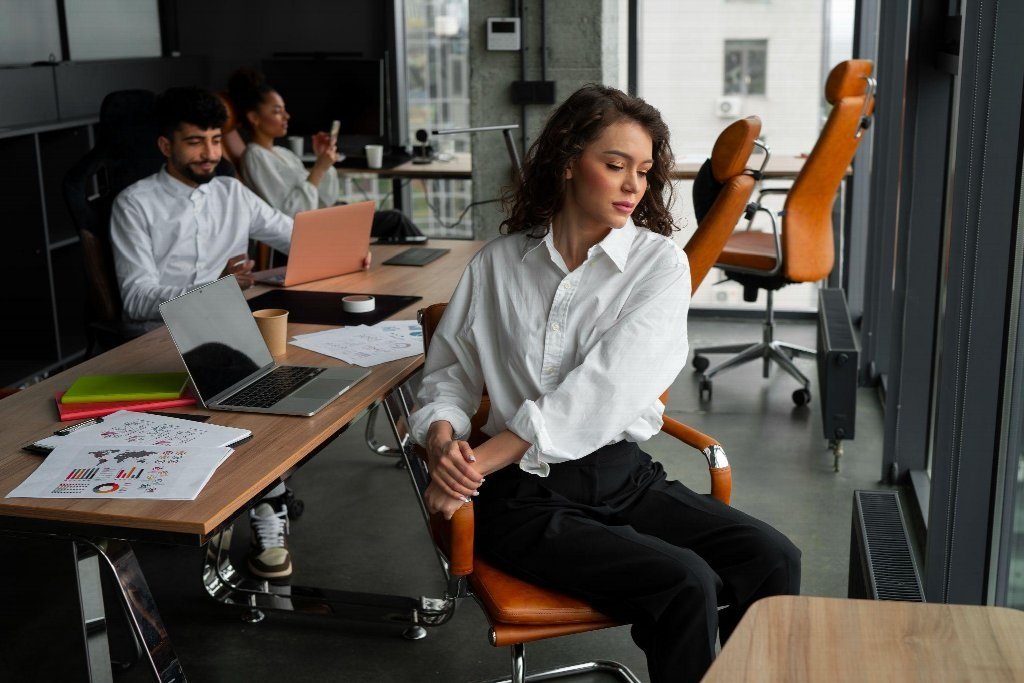
Walk into some offices and the first impression is immediately clear: everything looks polished, but the environment feels formal, rigid, and impersonal. There may be identical desks, glass conference rooms, bright overhead lighting, and carefully arranged furniture, yet the space does not necessarily feel comfortable enough to spend an entire workday in.
A professional workspace does not have to feel corporate to create a credible impression. The strongest environments usually balance appearance with practical details that affect how people actually work.
Discussions among remote workers and coworking users often focus on the same issues: noise, lighting, comfortable furniture, reliable technology, privacy, and whether the layout supports both focused work and conversation.
That raises a useful question: what makes a workspace feel genuinely professional while still feeling relaxed and human?
1. What Actually Makes a Workspace Feel Professional?
Professionalism is not created by expensive furniture alone. It comes from how well the environment supports the people using it.
A workspace can have simple furniture and still feel polished if it is clean, organized, comfortable, and thoughtfully arranged.
Does Space Support Different Types of Work?
People rarely spend an entire day doing one type of task.
Someone might need to write a report in the morning, take a private client call later, join a video meeting, and collaborate with colleagues in the afternoon.
A useful workspace should account for those changes.
A coworking office space North Dallas, for example, can be useful as a reference point for how professional work areas can combine private work settings, shared areas, and a more relaxed environment.
The important consideration is not whether a workspace looks impressive in photographs. It is whether people can comfortably use it for the work they actually need to do.
Is Everything Too Uniform?
Uniformity can create order, but too much of it can make an office feel institutional.
A mixture of desks, chairs, tables, private areas, plants, artwork, and natural materials can create visual variety without making the environment look disorganized.
The objective is consistency without making every corner look identical.
2. How Much Does Noise Matter in a Professional Workspace?
Noise is one of the issues that frequently comes up in discussions about coworking and shared offices. Workers often describe unpredictable conversations, loud calls, and poorly separated zones as more disruptive than ordinary background activity.
This makes acoustic planning an important part of professional workspace design.
Should a Professional Office Be Completely Quiet?
Not necessarily.
A productive workspace does not need to be silent. People need to talk, collaborate, answer calls, and interact.
The problem is uncontrolled noise.
GSA workplace guidance recommends separating quiet, concentrated areas from interactive areas and using acoustic treatments to manage sound.
How Can Noise Be Managed?
Simple design decisions can make a difference:
- Place meeting rooms away from quiet work areas.
- Use enclosed rooms for longer calls.
- Add sound-absorbing materials where appropriate.
- Create designated quiet zones.
- Keep high-traffic areas away from focused workstations.
This allows the workspace to remain active without making concentration unnecessarily difficult.
3. Why Does Lighting Change How an Office Feels?
Lighting is often noticed only when it is bad.
Harsh overhead lights, screen glare, or poorly lit corners can make an otherwise attractive workspace uncomfortable.
GSA guidance recommends maximizing daylight and providing users with appropriate control over task lighting and glare.
Is Natural Light Enough?
Natural light can improve the visual quality of a workspace, but it needs to be balanced with practical lighting.
A desk positioned directly in front of a bright window may create screen glare. A meeting room without sufficient lighting may feel uncomfortable during video calls.
Good workspace design considers both.
Where Should Task Lighting Be Used?
Individual workstations can benefit from adjustable task lighting.
Instead of illuminating every area with the same intensity, lighting can be matched to the activity. Focused work areas may require stronger task lighting, while informal seating can use softer illumination.
That small amount of control can make a space feel more comfortable without sacrificing professionalism.
4. What Makes an Office Comfortable Without Looking Too Casual?
Comfort does not mean turning an office into a living room.
It means giving people furniture and spaces that support the physical demands of a workday.
Are Comfortable Chairs Really That Important?
Yes, particularly for people who spend several hours at a desk.
Adjustable seating, appropriate desk height, adequate legroom, and suitable monitor positioning are practical considerations.
GSA workplace guidance also recommends adjustable work surfaces and task chairs to support comfort and reduce physical strain.
Can Casual Seating Still Look Professional?
Absolutely.
A small lounge area, comfortable armchairs, or informal meeting table can make a workspace more approachable.
The key is placement.
Casual seating works best when it has a clear purpose, such as informal meetings, short breaks, reading, or collaborative conversations.
5. Why Do Some Open Offices Feel Uncomfortable?
Open layouts can create a sense of space, but they can also introduce problems when every activity happens in the same area.
One recent office-design discussion highlighted concerns about shared desks, excessive noise, visual distractions, and layouts that look attractive but are difficult to use for sustained work.
Is Open Space Always Better?
No.
An open layout can work well for collaboration, but it may not suit activities requiring privacy or concentration.
A better approach is to create different zones within the same workspace.
For example:
Quiet zone: Individual work and focused tasks.
Collaboration zone: Team discussions and informal meetings.
Private zone: Client calls, interviews, and confidential conversations.
Social zone: Breaks, casual conversations, and refreshments.
This gives people choices instead of expecting one layout to accommodate every activity.
6. How Can a Workspace Feel Welcoming Without Losing Professionalism?
A workspace can feel warm without looking informal.
The difference often comes down to small visual details.
What Design Elements Add Personality?
Plants, artwork, natural textures, books, subtle color, and comfortable seating can make a workspace feel more personal.
The goal is not to decorate every wall.
Instead, choose elements that complement the purpose of the space.
Natural materials can soften an otherwise highly structured office. Artwork can give visitors something interesting to look at. Plants can add visual variety without taking attention away from the work environment.
Should Branding Be Everywhere?
Probably not.
A professional workspace does not need a company logo on every wall to communicate credibility.
A small reception sign, tasteful brand colors, or understated visual identity may be enough.
When branding becomes the dominant design feature, the environment can start feeling more like a corporate showroom than a place where people actually work.
7. What Do People Actually Need From a Meeting Space?
Meeting spaces should be designed around the conversations they are expected to support.
A large conference room is useful for presentations, but it is unnecessary for every meeting.
Should Every Meeting Need a Conference Room?
No.
A professional workspace can benefit from different meeting options:
- Two-person meeting areas
- Small private rooms
- Informal discussion tables
- Larger conference rooms
- Video-call rooms
This makes the environment more flexible.
GSA workplace planning guidance similarly recommends a range of meeting and collaboration spaces that can accommodate different group sizes and activities.
What Makes a Meeting Room Feel Professional?
It does not need expensive furniture.
Reliable internet, power access, comfortable seating, appropriate lighting, acoustic privacy, and easy-to-use video equipment are more practical priorities.
A simple room that works reliably can feel more professional than an impressive room that creates technical problems.
8. Does a Workspace Need to Look Expensive to Feel Premium?
Not necessarily.
A polished workspace is more about consistency and maintenance than the price of individual items.
A moderately priced chair that is comfortable and well-maintained may contribute more to the user experience than an expensive chair that does not suit the space.
Where Should the Budget Go?
Businesses and workspace operators should prioritize elements that affect daily use:
- Ergonomic furniture
- Reliable internet
- Good lighting
- Acoustic management
- Functional meeting rooms
- Adequate power access
- Clean shared areas
- Practical storage
These are the details people interact with repeatedly.
9. How Can a Workspace Stay Flexible as Needs Change?
A workspace should not be designed as though today's needs will remain unchanged for years.
Teams grow, working arrangements change, and businesses may need different combinations of private and shared space.
Can Furniture Make a Workspace More Adaptable?
Yes.
Movable tables, modular furniture, flexible partitions, and reconfigurable meeting areas can make it easier to change the layout.
GSA guidance specifically recommends workspace layouts and furniture that can be adjusted or reconfigured as needs change.
Flexibility also prevents businesses from treating the workspace as a permanent arrangement when their working patterns have already changed.
10. What Is the Difference Between Professional and Corporate?
The two terms are often treated as interchangeable, but they do not have to mean the same thing.
Professional generally describes a workspace that is organized, reliable, comfortable, and appropriate for the work being performed.
Corporate can describe a particular visual or cultural style: formal furniture, standardized layouts, strict hierarchy, and highly controlled environments.
A workspace can be professional without adopting all of those characteristics.
The most useful question is therefore not, "Does this office look corporate?"
It is:
"Does this environment help people work comfortably while creating confidence for the people who visit it?"
That shift changes how the space is evaluated.
Conclusion
A professional workspace does not need to feel formal, expensive, or corporate.
What matters more is whether the environment works for the people using it. Comfortable furniture, appropriate lighting, manageable noise, private areas, practical meeting spaces, reliable technology, and thoughtful organization can create a polished workplace without removing its personality.
The best spaces also recognize that people work differently. Some need quiet concentration. Others need collaboration. Some spend much of the day in meetings, while others need a comfortable desk and minimal interruptions.
A workspace feels genuinely professional when those differences are considered in the design.
FAQs
1. Can a workspace look professional without traditional office furniture?
Yes. Professionalism comes more from organization, comfort, functionality, and maintenance than from traditional furniture. A workspace can use relaxed seating, natural materials, plants, and flexible layouts while still providing a credible environment for employees, clients, and visitors.
2. What is the biggest problem with open office spaces?
One common problem is uncontrolled noise and distraction. Open layouts can support communication, but they may make focused work or private conversations difficult. Creating separate quiet, collaborative, and private areas can help balance the advantages of openness with the need for concentration.
3. How can a small workspace feel more professional?
Focus on the details people experience every day. Keep the space organized, use comfortable furniture, improve lighting, manage noise, provide reliable internet, and create a clear area for meetings or private conversations. A smaller workspace can feel highly professional when every part of it has a practical purpose.
Tags : .....