If you have ever picked up a hair clipper and noticed that small lever on the side, you probably wondered what it does. That lever controls whether your clipper is in the open or closed position. It directly affects how much hair gets cut and how close the blade sits to the scalp. Understanding this one feature can completely change the quality of your haircuts whether you are a professional barber or cutting hair at home.
Many beginners ignore this lever completely and that one mistake costs them the entire haircut. They end up with uneven lines, patchy fades, or hair that is cut too short in the wrong places. The good news is that once you understand how the lever works, everything clicks into place.
In this guide, you will learn everything about the open and closed clipper positions. We will cover how the lever works, when to use each position, how it affects different hair types, and how barbers use it to create perfect fades and tapers. By the end, you will feel fully confident using your clipper lever the right way.
What Is Open and Closed on Clippers
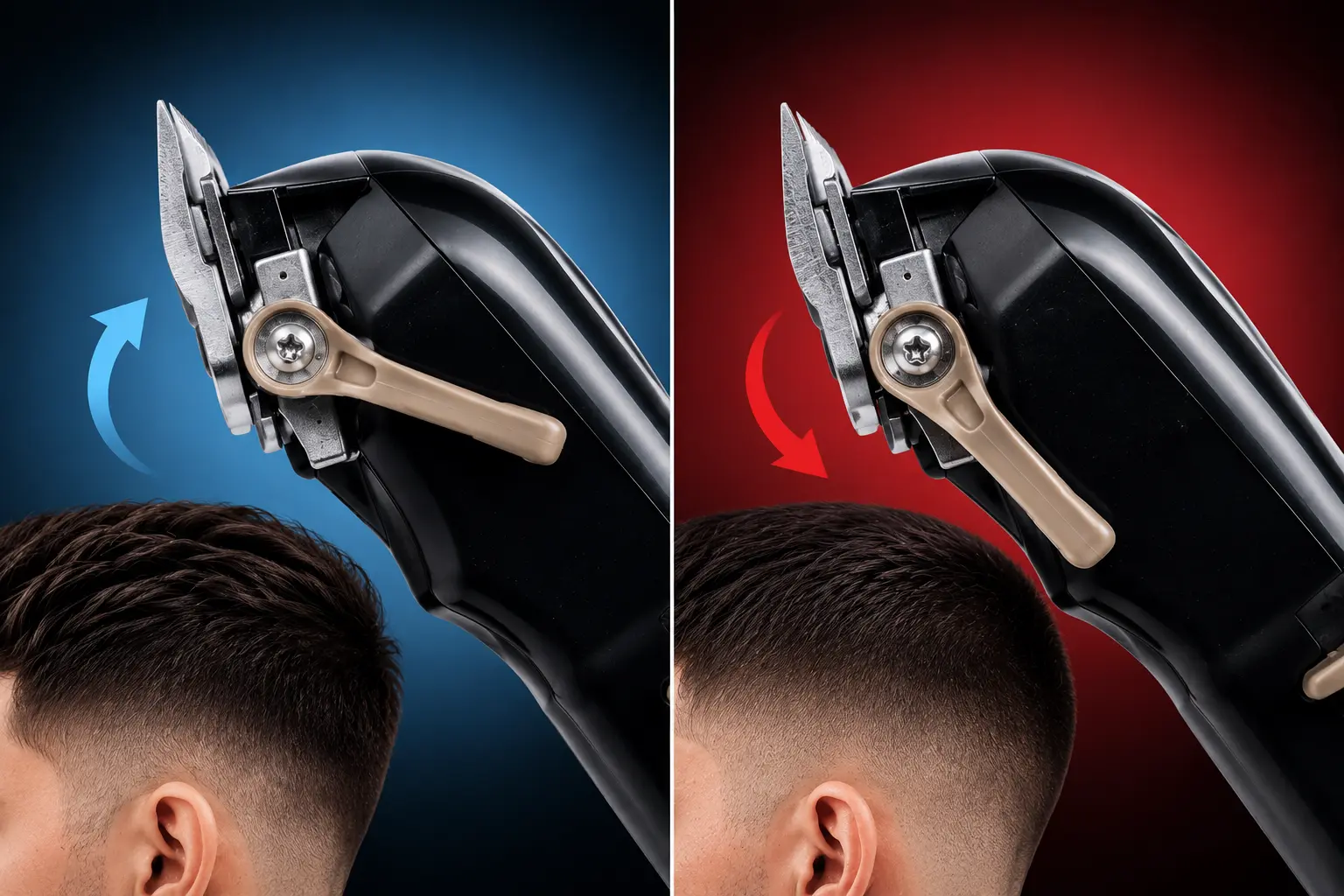
The open and closed positions refer to the two settings of the taper lever on a hair clipper. When the lever is in the open position, the blade moves slightly away from its lowest point. This creates a wider gap between the teeth of the blade. As a result, the clipper cuts less hair and leaves more length on the scalp.
When the lever is in the closed position, the blade shifts to its lowest and tightest setting. The teeth of the blade come closer together. This allows the clipper to cut hair shorter and closer to the skin. Most barbers switch between these two positions constantly during a single haircut to create smooth, clean results.
Understanding the Taper Lever on Hair Clippers
The taper lever is the small switch attached to the side of the clipper body. It sits right below the blade area and is easy to move with your thumb while you are cutting. Most quality clippers from brands like Wahl, Andis, and Oster include this lever as a standard feature.
The taper lever gives you control without changing the guard attachment. It works as a fine-tuning tool between guard sizes. When you slide it up or down, it physically shifts the top blade of the clipper. This movement changes the cutting length by a small but important amount — usually between half a guard size and a full guard size in difference.
How Does the Clipper Lever Work
The clipper lever works by moving the top blade of the clipper forward or backward. When you push the lever down or toward the closed position, the top blade slides forward. This brings it closer to the bottom blade and creates a tighter cut. When you pull the lever up or toward the open position, the top blade moves back slightly.
This movement might seem small, but it creates a noticeable difference in the length of hair left after cutting. The gap between the top and bottom blade determines how much hair passes through before being cut. A smaller gap means shorter hair. A wider gap means slightly longer hair. This is the core mechanic behind the hair clipper lever open vs closed function.
What Is Open and Closed Lever Blade Position Explained
In the open position, the lever is pushed up toward the top of the clipper. The top blade pulls back and exposes more of the cutting teeth. This setting cuts hair at a longer length. Barbers often start a haircut in the open position because it removes bulk without cutting too close.
In the closed position, the lever is pushed down toward the bottom of the clipper. The top blade shifts forward and covers more of the bottom blade. This setting cuts hair much shorter and closer to the skin. The open vs closed lever difference is most visible when you compare the lines left on the skin after each pass. Closed gives a tighter, sharper line while open gives a softer and longer result.
When You Need Closed Clipper Lever Up or Down
This is one of the most common questions people ask — and for good reason. Knowing when to go lever up or lever down makes a real difference in your results.
You use the lever in the open position (lever up) when:
- You want to leave more hair length on top
- You are blending or fading hair into longer sections
- You want a softer finish without harsh lines
- You are starting the haircut and need to remove bulk first
You use the lever in the closed position (lever down) when:
- You want a tight, close cut near the skin
- You are doing the outline or edging work
- You need a sharp and defined hairline
- You are finishing the cut and want a clean look
Switching between lever up and lever down during a single haircut is totally normal. In fact, most barbers do this multiple times per cut. The key is knowing which position creates the result you are going for at each stage.
Hair Clipper Lever Open vs Closed — Cutting Length Difference
The hair clipper lever open vs closed setting changes the cutting length by roughly half a guard size. For example, if you are using a number two guard with the lever closed, switching to the open position will cut hair closer to a number one and a half in length. This may sound like a small change, but it is very noticeable in the final result.
This cutting length difference is especially important during blending and fading. When you need a smooth transition between two guard sizes, the lever gives you an in-between option. Instead of jumping from a number one directly to a number two, you can use a number one with the lever open to create a gradual length change. This prevents harsh lines and produces a natural-looking blend.
Here is a quick reference table to help you understand each lever setting at a glance:
This table makes it easy to decide which setting to use at every stage of the haircut. Keep it in mind every time you pick up your clipper.
Open vs Closed Lever for Fades and Blending
Fades are one of the most popular haircut styles in the USA right now. A clean fade requires smooth transitions between very short hair near the skin and longer hair on top. The - is one of the most important tools a barber uses to create this look.
Think about a classic low taper fade. The barber starts with a number one guard and the lever open near the bottom of the hairline. This creates a soft base without cutting all the way to the skin. Then they switch to the lever closed with the same guard to tighten the lowest section right above the neckline. After that, they move up to a number two guard with the lever open to blend into the mid section. The back-and-forth between open and closed creates the smooth skin fade effect that clients love.
Does Hair Type Affect How You Use the Lever
Yes, hair type plays a big role in how you use the clipper lever. Thick and coarse hair behaves differently than fine and straight hair. If you are working with thick or curly hair, you may find that the open position still cuts quite aggressively. The density of the hair means even a wide blade gap removes a lot of material in one pass.
Fine and straight hair is more forgiving. The open position leaves it looking naturally longer and lighter. For fine hair, the closed position can sometimes cut too close and leave the scalp visible. This is why barbers always assess hair type before deciding how much time to spend in each lever position. Understanding your hair type helps you get the best result without over-cutting.
Clipper Guard and Lever — How They Work Together
The guard attachment and the lever are two separate tools that work together to control cutting length. The guard is the plastic comb that snaps onto the blade. It sets the base cutting length — for example, a number one guard cuts hair to about one-eighth of an inch. The lever then fine-tunes within that range.
Here is a simple way to think about it:
- Guard closed lever = shortest possible cut with that guard
- Guard open lever = slightly longer cut with the same guard
- No guard closed lever = very tight cut, very close to skin
- No guard open lever = slightly longer than a skin fade, used for blending
Using both tools together gives you more control than using either one alone. This combination is what allows professional barbers to create dozens of different looks using the same set of clippers.
Common Mistakes People Make With the Clipper Lever
Many people make simple mistakes with the clipper lever that lead to uneven or unexpected results. The most common mistake is forgetting to check the lever position before starting a cut. If you left your clipper in the open position from last time, your first pass may cut less than you expected. Always check the lever before you begin.
Another common mistake is switching the lever mid-stroke. Changing positions while the clipper is moving through the hair can create uneven patches. Always pause your stroke, adjust the lever, and then continue. Also, some people rely only on the lever and skip guard changes entirely. The lever is a fine-tuning tool — it works best in combination with proper guard selection, not as a replacement for it.
How to Maintain Your Clipper Lever for Long Term Use
Your clipper lever works best when the blade is properly maintained. Oil your blade regularly — at least every two to three uses. A well-oiled blade runs smoothly and responds better to lever adjustments. If the blade is dry or dirty, the lever may feel stiff or may not produce the expected length change.
Check the tension of your blade screws occasionally. If the screws are too loose, the blade may shift on its own and change your cutting length unexpectedly. If they are too tight, the lever will feel hard to move and can wear out faster. Keep your clipper clean, oil it often, and check the blade alignment regularly. A well-maintained clipper gives you consistent results every single time.
Tips for Getting the Best Results With Your Clipper
Getting great results with your clipper is about more than just knowing the lever positions. Here are some practical tips that help both home users and professional barbers:
- Always start with a clean, dry blade before cutting
- Use clipper oil before and after every session
- Cut against the direction of hair growth for the cleanest result
- Start with the lever open to remove bulk before tightening up
- Practice switching the lever smoothly so it becomes second nature
For home users, take your time and work in small sections. For barbers, develop a rhythm of switching between open and closed that feels natural during the cut. The more you practice, the more instinctive these adjustments become.
Conclusion
Understanding the purpose of open and closed clipper positions is a simple skill that makes a huge difference in every haircut. The lever gives you fine control over cutting length without changing your guard. Open means longer. Closed means shorter. Together, they give you the range you need to blend, fade, and finish any style cleanly.
Whether you are a home user giving yourself a fresh trim or a professional barber crafting the perfect skin fade, the lever is your best friend. Learn it, practice it, and use it with confidence. Start with the lever open to shape and blend, then close it to tighten and define. That simple habit will improve every haircut you do from this point forward.
Tags : .....