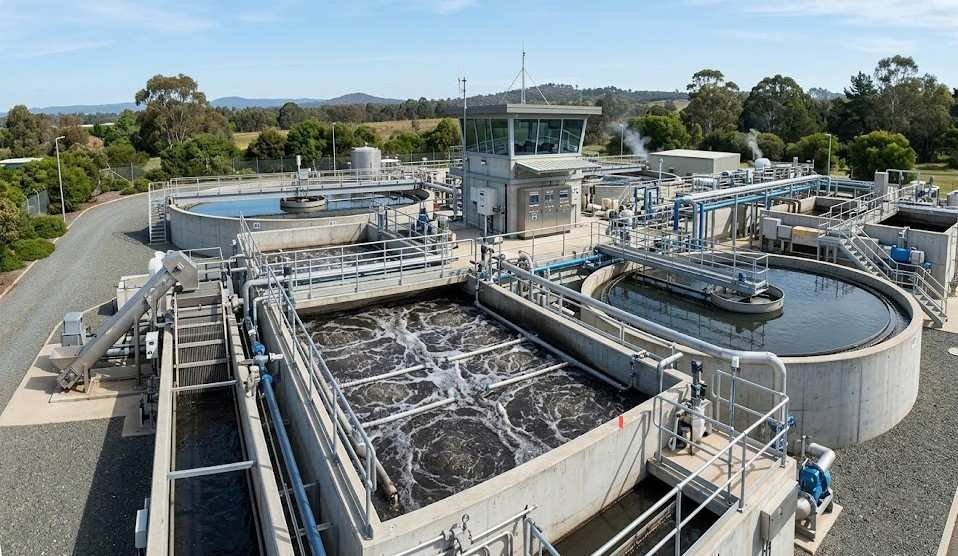
Managing wastewater efficiently has becom, essentially for protecting environmental sustainability and public health. An Automatic Sewage Treatment Unit is a kind of an advanced arrangement that treats sewage water automatically, with low human involvement. These units rely on modern approaches like aeration, biological processing, and filtration to get rid of harmful contaminants from the wastewater before the water is safely released, or sometimes reused. Nowadays, an Automatic Sewage Treatment Unit is commonly found in residential complexes, hotels, hospitals, commercial buildings, and even in industries, mainly because it works effectively, needs low maintenance, and runs in an eco-friendly manner. When the whole sewage treatment routine is automated, these systems help save water, limit pollution levels, and support long-term sustainable city growth.
What is an Automatic Sewage Treatment Unit
An Automatic Sewage Treatment Unit is a system that deals with wastewater on its own. It processes sewage water automatically with human help. This system handles sewage water by itself. The Automatic Sewage Treatment Unit needs little manual oversight to work. It is designed to treat sewage water. It relies on a mix of biological methods, mechanical processes, and filtration steps to clear away contaminants, reduce harmful bacteria, and also handle solid waste inside the wastewater. You will see these units in residential, commercial, and industrial areas quite often, because they help with water management, and they also support environmental sustainability in a more direct way. With an Automatic Sewage Treatment Unit, the treated water ends up being safe enough to discharge properly, or it can be reused for non-potable needs, for example, gardening, or even flushing and similar day-to-day use cases.
Key Highlights:
- Processes sewage water automatically
- Lessens environmental pollution
- Enables water recycling plus reuse
- Needs minimal human intervention
- Works well for multiple industries and buildings
Why Automatic Sewage Treatment Units Are Important
Rapid urbanization and industrial growth have raised the need for more useful wastewater management solutions. An Automatic Sewage Treatment Unit takes a key part in preventing water pollution and safeguarding public health, at least that's the idea. Basically, these setups help organizations follow environmental regulations while also cutting down on their reliance on freshwater sources.
- Importance of an Automatic Sewage Treatment Unit
- Helps manage water contamination
- Supports sustainable wastewater treatment
- Cuts manual observation and labor expenses
- Improves sanitation and hygiene standards
- Encourages water conservation habits
Main parts of an Automatic Sewage Treatment Unit
So an Automatic Sewage Treatment Unit has a lot of important parts that do their thing together, to clean up wastewater in a quite efficient way. Each unit handles a specific task during the overall sewage process, and nothing is really random.
Major Components:
- The collection tank for sewage storage
- A screening chamber to kick out solid waste
- An aeration tank for biological treatmen
- A clarifier for separating the sludge
- A sludge holding tank for further waste collection
- Control panel with automated sensors and monitoring systems
How Does an Automatic Sewage Treatment Unit Work
An Automatic Sewage Treatment Unit runs via a kind of systematic process, which removes impurities from wastewater through physical, biological, and chemical methods. The automation aspect helps keep the process going nonstop, and it also boosts treatment efficiency.
Working Process:
- Sewage water flows into the collection chamber
- Big solid bits get filtered out
- The biological step breaks down organic waste
- Aeration supports bacterial activity, making it more effective
- Sludge separates from the treated water
- The final disinfection removes harmful microorganisms entirely
Step-by-step Treatment Method:-
So the treatment process inside an Automatic Sewage Treatment Unit is built to make sure the wastewater purification keeps working effectively, before it is disposed of or reused.
- Collection:- Wastewater comes in from drains as well as pipelines
- Screening:- Plastic pieces, paper remnants, and other solid clutter are taken out
- Aeration:- Oxygen is added to wake up the beneficial bacteria
- Biological Treatment:- Microorganisms break down the organic important
- Descriptions:- The sludge sinks and stays at the bottom of the tank
- Disinfection:- Chemicals or UV devices kill bacteria and pathogens
- Reuse:- The cleaned water is either reused or safely discharged
Technique Used in Automatic Sewage Treatment Units
Modern Automatic Sewage Treatment Unit systems use advanced technologies to make treatment more efficient and also to cut down the operational costs a bit.
Some common technologies include, and people usually mention these:
- MBBR moving bed biofilm reactor
- SBR sequential batch reactor
- MBR membrane bioreactor
- The activated sludge process
- IoT-based monitoring systems, with dashboards
- and smart automation together with sensor technology
Main Features of an Automatic Sewage Treatment Unit
An Automatic Sewage Treatment Unit comes with a lot of advanced features that make the whole wastewater treatment process kinda easier, quicker, and more dependable overall.
- Full automation of the process
- A compact and space-saving layout
- low maintenance needs
- Energy-efficient performance
- Odor control systems to keep things cleaner around the site.
- Remote monitoring and control
Benefits of Installing an Automatic Sewage Treatment Unit
Getting an Automatic Sewage Treatment Unit in place brings in long-term benefits, both for the environment and for the budget, for businesses as well as residential properties. It kind of keeps things cleaner and more sensible over time.
Cuts down on water pollution by handling wastewater in a more effective, kind of controlled way Encourages water reuse, especially for gardening and flushing, kind of like a smart loop
- Lowers manual effort because the system runs most of the time automatically.
- Supports environmental compliance and safety requirements
- Takes care of unpleasant odors and helps sanitation feel better
- Helps save on long-term operation and maintenance costs
- Boosts general hygiene across homes and commercial spaces
Applications of Automatic Sewage Treatment Units
An Automatic Sewage Treatment Unit is pretty much used everywhere across various sectors, because it has strong wastewater management abilities and it can handle things in an efficient way.
Common Applications:
- Residential apartment blocks and housing societies
- Hotels or resorts
- Hospitals for healthcare and medical facilities
- Educational Institutions and learning centers
- Commercial Complexes and shopping malls
- Industrial making units, factories, and similar facilities
Factors to Examine Before Choosing an Automatic Sewage Treatment Unit
Choosing the appropriate Automatic Sewage Treatment Unit is usually about a bunch of practical and environmental conditions.
Main factors to keep in mind:
- How much sewage it can treat per day, and how consistent that output is
- The amount of installation space you actually have, because space always turns out tighter than expected
- Which treatment technology is used, for example, aeration-based methods versus other setups
- Power consumption and how well it operates, meaning efficiency can vary a lot in real use
- Maintenance needs plus everyday operational costs, including what parts get replaced more often
- Whether it can meet pollution control regulations without hassle, and stay within the compliance limits over time
Common Challenges and Results
An Automatic Sewage Treatment Unit is really good because it has a lot of advantages. Automatic Sewage Treatment Units can have some problems when they are being used if we do not take care of the Automatic Sewage Treatment Unit.
- More sludge produced — Doing regular sludge removal keeps the whole process running efficiently.
- Power consumption worries — Switching to more energy-efficient options or systems cuts electricity expenses.
- Bad odor issues — Good aeration plus ventilation, basically the right airflow, helps stop those unpleasant smells.
- Equipment upkeep — Planned maintenance and servicing, before failure, can prevent breakdowns.
- Monitoring becomes messy — Using smart automation improves tracking and system oversight overall.
Future Trends in Automatic Sewage Treatment Units
The future of wastewater management is getting a bit smarter and also more sustainable with technological innovation. Right now, the Modern Automatic Sewage Treatment Unit setups are moving forward in a way that gives better automation and improved energy efficiency, sometimes even faster response times.
- Emerging Trends: AI-based monitoring along with predictive upkeep schedules
- Smart IoT-driven wastewater management, connected sensors, and all
- Treatment units that run on solar power, rather than only grid electricity
- Advanced membrane filtering systems that separate more precisely
- Eco-friendly low-energy treatment methods, generally designed to reduce impact
Conclusion
An Automatic Sewage Treatment Unit is a kind of essential solution for modern wastewater management and environmental protection. These setups treat sewage water in an automated way, with processes that run by themselves, so pollution can be lowered, water can be conserved, and sanitation gets better. By using advanced technologies, they often need less maintenance, and they can work in a more sustainable style, so an Automatic Sewage Treatment Unit is becoming more important for homes, offices, and even industrial sites. Choosing the proper sewage treatment system isn’t just a quick choice; it also backs long-term environmental sustainability and more efficient water resource management.
FAQs
1. What exactly is an Automatic Sewage Treatment Unit
An Automatic Sewage Treatment Unit is basically a system that handles wastewater on its own using biological methods, filtration stages, and it does this without much intervention.
2. How does an Automatic Sewage Treatment Unit work?
It handles sewage via screening, then aeration, afterward biological treatment, sludge separation, and finally water disinfection.
3. Where are Automatic Sewage Treatment Units commonly found?
You’ll see them a lot in apartments, hospitals, hotels, industries, and also in commercial buildings, or any place that needs steady wastewater control.
4. What benefits come with an Automatic Sewage Treatment Unit?
It supports water reusing, helps cut down pollution, reduces the heavy manual effort, and basically supports environmental sustainability a lot more.
5. Is an Automatic Sewage Treatment Unit easy to maintain?
Yes, most modern systems are made for low maintenance, with automatic monitoring and control features, so ongoing care is usually simpler than older setups.