Website Design Cost in Dubai: WordPress vs Shopify vs Custom - A Platform Price Comparison
By Ryan Mitchell 23-09-2026 6
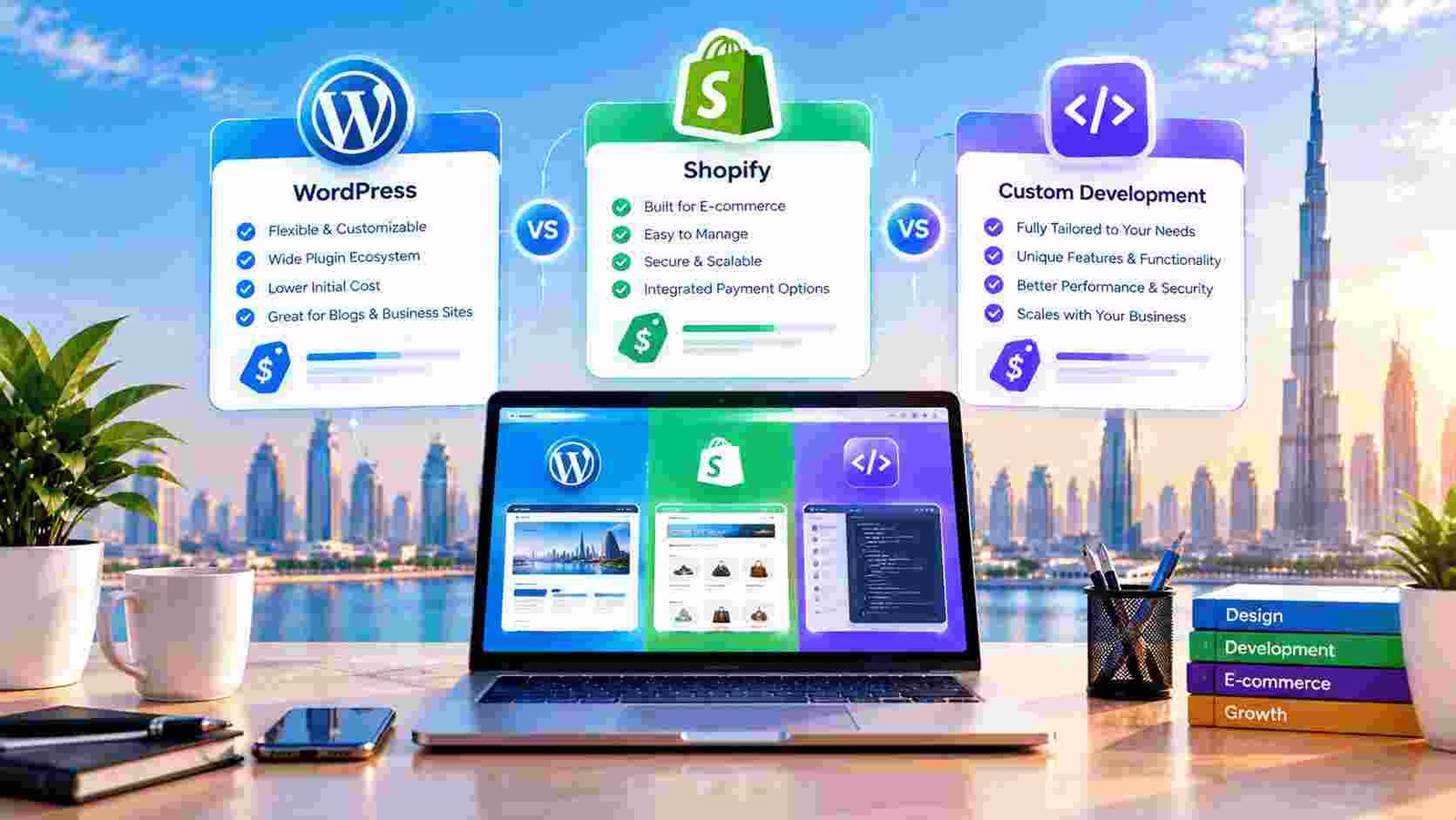
Before a single design conversation happens, there's a foundational decision that quietly shapes everything about your final cost: which platform your website actually gets built on. WordPress, Shopify, and fully custom development aren't just different technical choices; they represent genuinely different cost structures, ongoing expenses, and long-term flexibility, and picking based on unfamiliarity or a developer's personal preference rather than your actual business needs is one of the more common, avoidable ways Dubai businesses overpay or under-deliver.
Here's a genuinely practical comparison of what web design price Dubai looks like across these three main paths, and which one actually fits different kinds of businesses.
WordPress: The Flexible, Cost-Efficient Default for Most Service Businesses
WordPress remains the most common choice for UAE SMEs, and the reasoning holds up: it's genuinely flexible, backed by a huge plugin ecosystem, and comparatively affordable to both build and maintain. A WordPress business site in Dubai typically runs AED 8,000-30,000 for setup, positioning it well for service businesses, clinics, consultancies, and content-heavy brands wanting a professional site with a working blog, strong SEO capability through plugins like Yoast or Rank Math, and straightforward content updates that don't require developer involvement for routine changes. Where WooCommerce is added for ecommerce specifically, a custom WordPress store typically runs AED 3,000-15,000 to build professionally, with hosting from roughly AED 200 monthly.
The genuine tradeoff is quality variance; WordPress's low barrier to entry means execution quality swings widely depending on who builds it. A poorly configured WordPress site can be slow and genuinely insecure, and it needs regular, ongoing maintenance (updates, security monitoring) that businesses frequently underestimate when budgeting only for the initial build.
Shopify: The Fast, Managed Path for Product-Based Businesses
If your website's core job is selling physical products, Shopify is typically the fastest route to a working, genuinely secure store. A professional Shopify build in Dubai commonly runs AED 8,000-30,000, on top of the platform's own subscription starting around $29 monthly for the base plan. The core appeal is that ecommerce essentials, inventory management, shipping logic, abandoned cart recovery, come native to the platform rather than requiring separate plugins and custom configuration, and a skilled Shopify agency can typically deliver a fully functional, custom-designed store in as little as two to four weeks.
The genuine tradeoff is customization depth and recurring cost. Deep customization beyond what Shopify's theme editor and app marketplace naturally support requires familiarity with Shopify's proprietary Liquid language, and the ongoing subscription plus app fees accumulate as a genuine recurring cost that WordPress's self-hosted model doesn't carry in the same way. For businesses with straightforward product catalogs prioritizing speed to market, this tradeoff is usually well worth it; for businesses with genuinely complex, highly customized catalog logic, it can start to feel limiting over time.
Custom Development: Built Exactly Around Your Business, at a Real Cost Premium
Custom development makes sense specifically when your business logic doesn't fit neatly into what WordPress or Shopify already offer: booking platforms, multi-vendor marketplaces, anything involving authenticated user accounts and genuinely complex workflows. Pricing here starts considerably higher, typically AED 50,000 and climbing past AED 300,000 for enterprise-grade, highly customized platforms, reflecting the reality that everything is being built specifically for your process rather than adapted from an existing framework.
The genuine tradeoff is cost and dependency. There's no platform limitation to work around, and integration with systems like Salesforce or a proprietary ERP tends to be considerably cleaner than forcing it through WordPress or Shopify's existing architecture , but you're also dependent on your development team, whether external or in-house, for any future changes, since there's no plugin marketplace or app store to lean on for quick additions.
A Direct Comparison for Common UAE Business Scenarios
A consultancy, clinic, or law firm wanting a professional, content-rich site with easy self-managed updates fits WordPress well, typically in the AED 8,000-30,000 range, since the platform's strength in content management and SEO plugin support directly matches what this kind of business actually needs.
A retail brand or D2C business selling a straightforward product catalog is usually best served by Shopify, typically AED 8,000-30,000 for the build plus ongoing subscription costs, since native ecommerce functionality and fast time-to-market outweigh the platform's customization ceiling for most standard retail operations.
A business with a genuinely unique operational model, a booking platform, a multi-vendor marketplace, a service requiring complex user authentication and custom workflows, is the scenario where custom development's higher cost, starting around AED 50,000, actually pays for itself, since forcing this kind of logic into WordPress or Shopify typically produces a worse result at a similar or even higher total cost once workarounds and plugin dependencies are factored in.
Where the "Cheap Template" Option Actually Fits
It's worth acknowledging directly that lower-cost template installs exist across all three platforms, sometimes advertised from a few thousand dirhams. These aren't dishonest offers; they're simply pricing a genuinely different product than a properly customized build. A template installation with minimal customization can be a reasonable starting point for a very early-stage business needing a basic presence quickly, but it's worth understanding clearly that this is a different tier from the ranges above, not a discount version of the same deliverable.
What This Means When You're Actually Comparing Quotes
When website design cost in Dubai quotes span WordPress, Shopify, and custom options for what seems like a similar project, the platform choice itself likely explains a meaningful part of any gap before design quality even enters the conversation. It's worth asking any provider directly why they're recommending a specific platform for your business specifically, rather than accepting a platform recommendation that seems to default to whatever that provider happens to specialize in regardless of fit.
Bootesnull has walked UAE clients through this exact comparison more than once, and the recurring lesson has been that platform mismatch, a complex, workflow-heavy business forced onto a template WordPress site to save money, or a simple service business overpaying for custom development it didn't actually need, tends to cost more in the long run than choosing the right platform at a fair price from the start.
Final Thoughts
Web design price Dubai differs meaningfully across WordPress, Shopify, and custom development, not because one is objectively better, but because each is genuinely suited to different kinds of businesses and operational needs. WordPress fits content-driven service businesses well; Shopify fits straightforward product retail; custom development earns its higher cost when your business genuinely doesn't fit either mold. Matching the platform to your actual business model, rather than a generic recommendation, is the clearest way to ensure your budget is going toward something that fits rather than something that merely works.
Frequently Asked Questions
1. Is WordPress cheaper than Shopify for an online store?
For straightforward product catalogs, Shopify is often comparably priced or simpler to launch quickly, while WordPress with WooCommerce tends to offer better long-term value and SEO control as your catalog and traffic grow, though it requires more ongoing technical maintenance.
2. When does custom development actually make financial sense over WordPress or Shopify?
When your business model involves genuinely unique workflows, booking systems, marketplaces, complex user authentication, that don't fit either platform's existing structure, custom development's higher upfront cost typically pays for itself through better long-term fit and cleaner integrations.
3. Does Shopify have hidden ongoing costs beyond the initial build?
Yes, beyond the build cost, Shopify carries an ongoing monthly subscription plus potential app fees for additional functionality, which should be factored into your total cost of ownership rather than just the upfront development price.
4. Can I switch platforms later if my business outgrows my initial choice?
Yes, this is a common path — many businesses start on WordPress or Shopify to launch quickly and validate demand, then migrate to a custom platform once genuine complexity or scale justifies the higher investment.
5. Why do template-based websites cost so much less than custom builds on the same platform?
Template installations involve minimal customization and reuse existing designs, while custom builds involve genuine design and development work tailored to your specific brand and functionality needs — they're different products at different investment levels, not simply discounted versions of each other.
Tags : Web Design cost Web Design price