Understanding PPE: The Last Line of Defence That Must Never Be the Only One
By Karan Sharma 13-05-2026 259
In occupational safety, the hierarchy of controls is a framework that ranks protective measures by effectiveness, from eliminating a hazard entirely at the top, to substituting a less dangerous process, to engineering controls, to administrative controls, and finally, at the base, personal protective equipment. That PPE sits at the bottom of the hierarchy is not a commentary on its importance. It is a recognition that PPE protection functions as the final barrier when all other measures are insufficient, and that every layer before it should be used first.
Understanding this context is essential. PPE is not a substitute for a safer work process. It is the safety net that catches what everything else misses.
What PPE Actually Covers
The term ‘personal protective equipment’ encompasses a far wider range of gear than most people instinctively consider. At its broadest, PPE includes any device or appliance worn by an individual to minimise exposure to one or more workplace hazards. Practically, that breaks down into several protection categories.
Head protection, including safety helmets and hard hats, guards against falling objects, overhead impact, and in specialised variants, electrical hazards and heat exposure. Eye and face protection covers safety spectacles, goggles, and face shields, each calibrated to a different hazard profile ranging from debris impact to chemical splash to radiation exposure. Hearing protection - earplugs and earmuffs - addresses noise-induced hearing loss, one of the most common and irreversible occupational health conditions globally. Respiratory protection, from dust masks to self-contained breathing apparatus, safeguards the lungs against airborne particles, toxic fumes, and oxygen-deficient atmospheres.
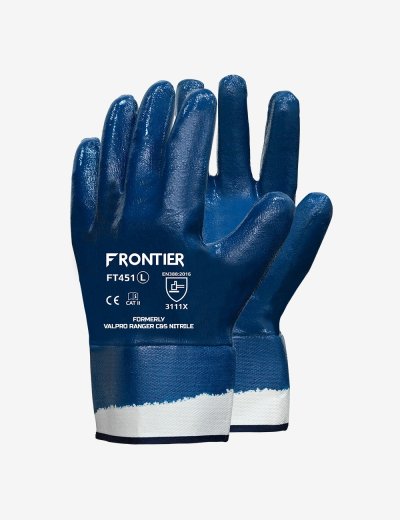
Hand and arm protection includes chemical-resistant gloves, cut-resistant gloves, thermal gloves, and arc flash-rated gauntlets. Foot and leg protection covers steel-toed boots, metatarsal guards, slip-resistant footwear, and electrical hazard footwear. Body protection encompasses high-visibility vests, chemical-resistant coveralls, flame-retardant clothing, and full-body suits for the most extreme hazard environments. Finally, fall protection – harnesses, lanyards, and self-retracting lifelines – forms its own category given the scale of fall-related fatalities in industry globally.
Selection: Starting with the Hazard
The single most important principle in PPE selection is that it must be hazard-specific. Generic PPE chosen without a formal hazard assessment may create a false sense of protection. Employers are required under most occupational safety frameworks to conduct workplace hazard assessments, document the hazards present, and select PPE that addresses each one adequately and specifically.
Fit matters as much as specification. PPE that does not fit correctly may be technically compliant but practically ineffective. OSHA's updated 2025 standards for construction PPE explicitly reinforce that properly fitting equipment is a legal requirement, not an aspiration.
Culture: The Human Factor
Equipment alone does not create safety. The most rigorously specified PPE becomes useless the moment a worker leaves it in their locker because it is uncomfortable, inconvenient, or because the culture of their workplace communicates that cutting corners is acceptable. Research consistently shows that PPE compliance rates rise when workers understand why each piece of equipment matters, are trained in how to use it correctly, and see their supervisors model the behaviour themselves.
For workplaces seeking a comprehensive range of certified PPE across every protection category, manufacturers such as KARAM offer solutions built to international safety standards, from head protection and harnesses to eye and body protection, designed to support a genuinely integrated
approach to worker safety.