Sutures are a fundamental component of modern medical and surgical care. They are used to close wounds, repair tissues, and promote proper healing after injury or surgery. Understanding the different types of suture is essential for healthcare professionals, medical students, and anyone interested in surgical procedures.
Sutures help bring the edges of a wound together, reduce bleeding, and minimize the risk of infection. The correct choice of suture material and technique plays a crucial role in ensuring effective healing and reducing scarring. In this article, we will explore the major types of suture, their classifications, materials, and common uses in medical practice.
What Is a Suture?
A suture is a sterile thread used by doctors and surgeons to close wounds or surgical incisions. Sutures hold tissues together until the body naturally heals the damaged area.
Sutures are selected based on several factors such as the type of tissue involved, the expected healing time, and the location of the wound. The different types of suture are designed to meet specific medical needs and surgical conditions.
Main Types of Suture
Sutures are primarily divided into two categories:
Absorbable sutures
Non-absorbable sutures
Each type has unique properties and medical applications.
Absorbable Sutures
Absorbable sutures are designed to dissolve naturally in the body over time. The body gradually breaks down these sutures through biological processes, eliminating the need for removal.
Features of Absorbable Sutures
Gradually absorbed by the body
Ideal for internal tissues
No need for suture removal
Reduced patient discomfort
Common Absorbable Suture Materials
Catgut Sutures
These sutures are made from natural fibers derived from animal tissue and are commonly used in internal surgical procedures.
Vicryl Sutures
Vicryl is a synthetic absorbable material widely used in general surgeries due to its reliable strength and predictable absorption.
Polyglycolic Acid Sutures
These sutures provide strong wound support and gradually dissolve as the tissue heals.
Medical Applications
Absorbable sutures are commonly used for:
Internal organ repair
Soft tissue closure
Dental procedures
Gynecological surgeries
They are particularly useful when the body can safely absorb the suture material during healing.
Non-Absorbable Sutures
Non-absorbable sutures are made from materials that the body cannot break down. These sutures remain in place until they are manually removed or left permanently in certain procedures.
Features of Non-Absorbable Sutures
Long-lasting support
Strong tensile strength
Suitable for external wound closure
May require removal after healing
Common Non-Absorbable Suture Materials
Nylon Sutures
Nylon sutures are synthetic and widely used for skin closure because they cause minimal tissue reaction.
Silk Sutures
Silk sutures are natural fibers known for their flexibility and ease of handling during surgery.
Polypropylene Sutures
These sutures are extremely durable and often used in cardiovascular and plastic surgery.
Polyester Sutures
Polyester provides strong and long-term tissue support, making it useful in orthopedic and cardiovascular procedures.
Medical Applications
Non-absorbable sutures are used for:
Skin closure
Tendon repair
Cardiovascular surgery
Orthopedic procedures
They provide strong and stable wound support where long healing times are expected.
Types of Suture Based on Thread Structure
Another way to classify types of suture is by the structure of the thread.
Monofilament Sutures
Monofilament sutures consist of a single strand of material.
Advantages
Lower risk of infection
Smooth passage through tissue
Minimal tissue damage
Disadvantages
Harder to tie knots
Less flexible compared to braided sutures
Common examples include nylon and polypropylene sutures.
Multifilament (Braided) Sutures
Multifilament sutures are made by weaving several fibers together to create a single thread.
Advantages
Strong knot security
Easier handling during surgery
Better flexibility
Disadvantages
Higher risk of bacterial growth
Slightly increased tissue reaction
Examples include silk and polyester sutures.
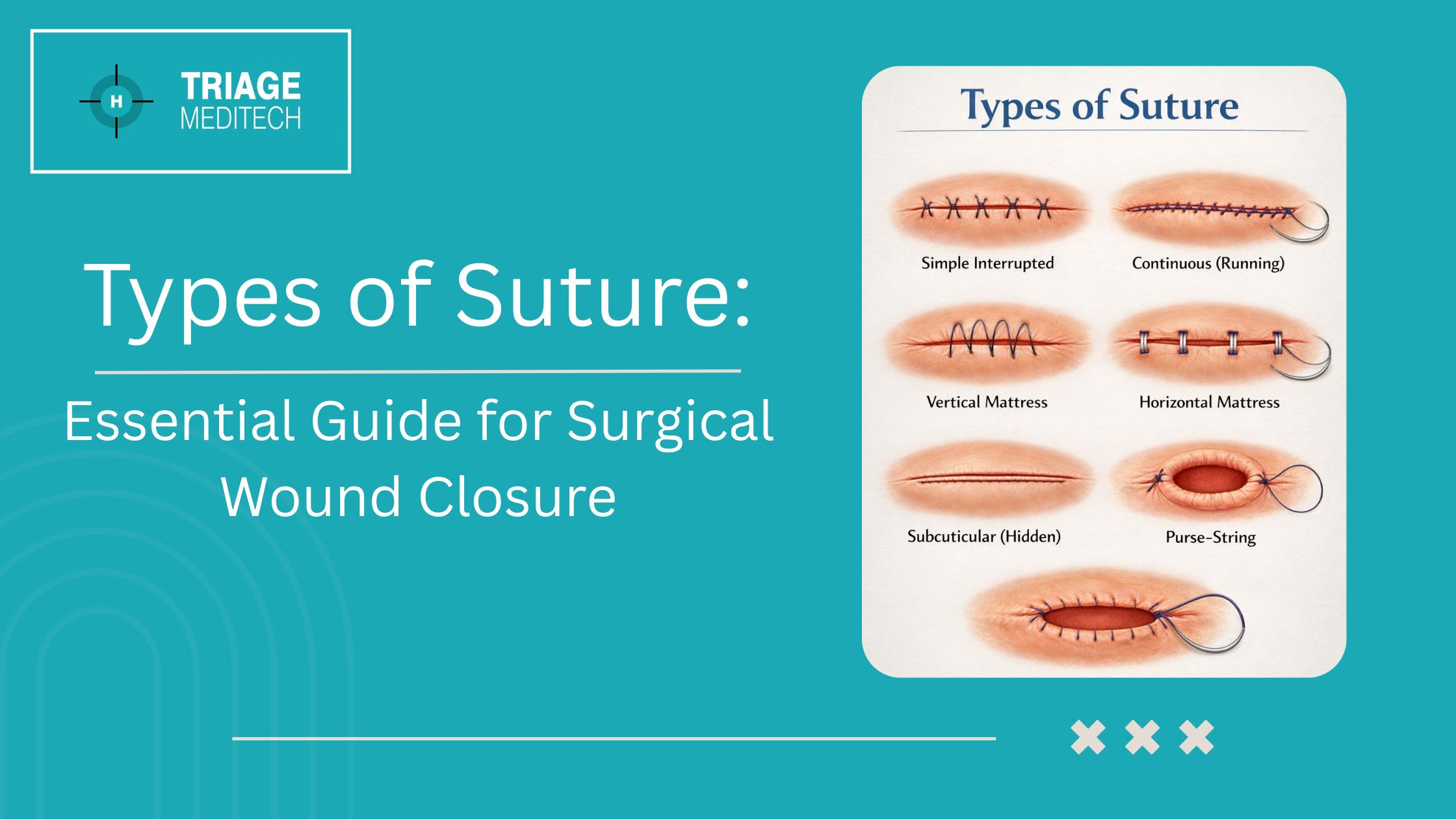
Common Suture Techniques
In addition to material types, sutures are also categorized based on the stitching technique used.
Interrupted Sutures
Each stitch is placed and tied individually.
Benefits
Provides strong wound closure
Allows precise tension control
Failure of one stitch does not affect the entire wound
Continuous Sutures
A single thread runs along the entire wound without separate knots for each stitch.
Benefits
Faster closure
Even distribution of tension
Requires less suture material
Mattress Sutures
Mattress sutures provide extra support for wounds that experience high tension.
Types include:
Vertical mattress sutures
Horizontal mattress sutures
These are commonly used in deep wounds or areas where the skin is thick.
Factors Influencing Suture Choice
Doctors select the appropriate types of suture based on several factors.
Tissue Type
Different tissues require different levels of support during healing.
Healing Duration
Slow-healing tissues may need stronger and longer-lasting sutures.
Risk of Infection
Monofilament sutures are often preferred in contaminated wounds.
Cosmetic Considerations
Smaller sutures are used in facial procedures to reduce scarring.
Wound Location
Areas that experience movement or tension require stronger sutures.
Importance of Proper Suture Selection
Selecting the correct types of suture is essential for effective wound healing. Proper suture choice helps in:
Preventing wound complications
Reducing infection risk
Supporting tissue healing
Minimizing scarring
Improving surgical outcomes
Medical professionals carefully evaluate the wound and patient condition before choosing the appropriate suture material.
Conclusion
Sutures are an essential tool in surgical and wound management. Understanding the different types of suture, including absorbable and non-absorbable materials, structural variations, and stitching techniques, helps healthcare providers deliver effective treatment.
Proper suture selection ensures that wounds heal safely and efficiently while minimizing complications. As medical technology continues to evolve, new suture materials and techniques are improving patient care and surgical outcomes around the world.