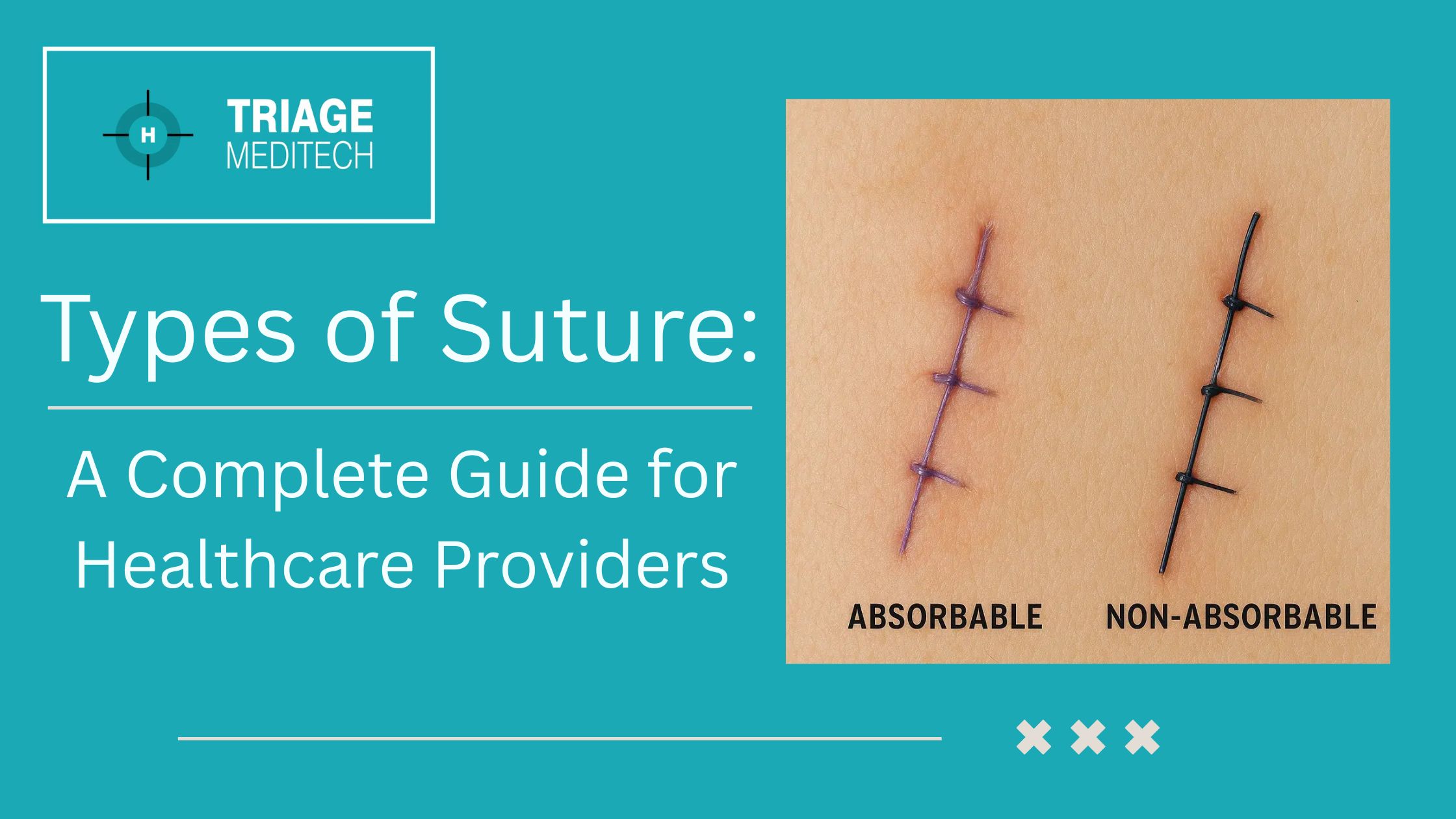
Sutures are a fundamental tool in modern medicine, used to close wounds, support tissue healing, and prevent infections. Choosing the correct type of suture is essential for optimal recovery, minimal scarring, and successful surgical outcomes. This guide explores the types of suture, their properties, and their clinical applications.
What is a Suture?
A suture is a medical thread or material used to bring tissues together after surgery or injury. Sutures help maintain proper alignment of tissues, promote healing, and reduce complications such as infection or wound dehiscence.
Sutures can be made from natural materials, such as silk or catgut, or synthetic materials, like nylon, polypropylene, and polyglycolic acid (PGA). They are classified based on absorbability, structure, and clinical application, which helps medical professionals select the best suture for each type of tissue.
Classification of Sutures
Sutures are broadly divided into absorbable and non-absorbable types. Additionally, they are categorized by structure into monofilament (single strand) and multifilament/braided (multiple strands). Each type offers unique benefits depending on tissue type, healing time, and surgical need.
H2: Absorbable Sutures
Absorbable sutures are designed to dissolve in the body over time, eliminating the need for removal. They are primarily used for internal tissues or wounds that heal relatively quickly.
H3: Common Absorbable Sutures
Catgut
Made from natural collagen from sheep or cow intestines.
Absorbs in 7–10 days.
Commonly used in soft tissue closure and gastrointestinal surgery.
Polyglycolic Acid (PGA)
Synthetic suture with slower absorption than catgut.
Absorbed over 60–90 days.
Used for deep tissue and subcutaneous closures.
Polydioxanone (PDS) and Polylactic Acid (PLA)
Monofilament synthetic sutures with slow absorption.
Provide long-term support for tissues needing extended healing.
Commonly used in orthopedic, cardiovascular, and reconstructive procedures.
H2: Non-Absorbable Sutures
Non-absorbable sutures are not broken down by the body. They provide long-term support and may either remain permanently or be removed once the wound has healed.
H3: Common Non-Absorbable Sutures
Silk
Natural braided suture with excellent knot security.
Used in soft tissue approximation, vessel ligation, and ophthalmic surgeries.
Nylon
Synthetic monofilament or braided suture.
High tensile strength, ideal for skin closure and external wounds.
Polypropylene (Prolene)
Monofilament suture resistant to infection.
Minimal tissue reaction, suitable for cardiovascular and plastic surgery.
Polyester (Ethibond)
Braided synthetic suture with strong durability.
Frequently used in tendon repair and orthopedic surgeries.
H2: Monofilament vs. Multifilament Sutures
Monofilament Sutures: Made from a single strand, causing minimal tissue trauma and reducing infection risk. Examples include Nylon, PDS, and Prolene.
Multifilament (Braided) Sutures: Made of multiple fibers twisted together for superior knot security but slightly higher infection risk. Examples include Silk, PGA, and Polyester.
H2: Choosing the Right Suture
When selecting a suture, healthcare providers consider:
Wound Location – Internal tissues versus external skin require different sutures.
Tissue Type – Tendons, organs, and soft tissues vary in tensile strength requirements.
Healing Time – Absorbable sutures for fast-healing tissues; non-absorbable sutures for slow-healing or load-bearing tissues.
Infection Risk – Monofilament sutures are preferred for contaminated wounds.
Patient Factors – Age, comorbidities, and allergies influence suture choice.
H2: Best Practices for Suture Management
Maintain strict sterile technique to prevent infection.
Handle sutures gently to avoid tissue trauma.
Educate patients on proper wound care if external sutures are used.
Remove non-absorbable sutures at the recommended time to minimize scarring or tissue reaction.
Conclusion
Understanding the types of suture is essential for medical professionals. Absorbable sutures like catgut, PGA, and PDS are ideal for internal tissues, while non-absorbable sutures such as silk, nylon, and polypropylene provide long-term support for external or slow-healing wounds.
Proper suture selection, based on tissue type, healing duration, infection risk, and patient-specific factors, ensures faster recovery, fewer complications, and optimal surgical outcomes.