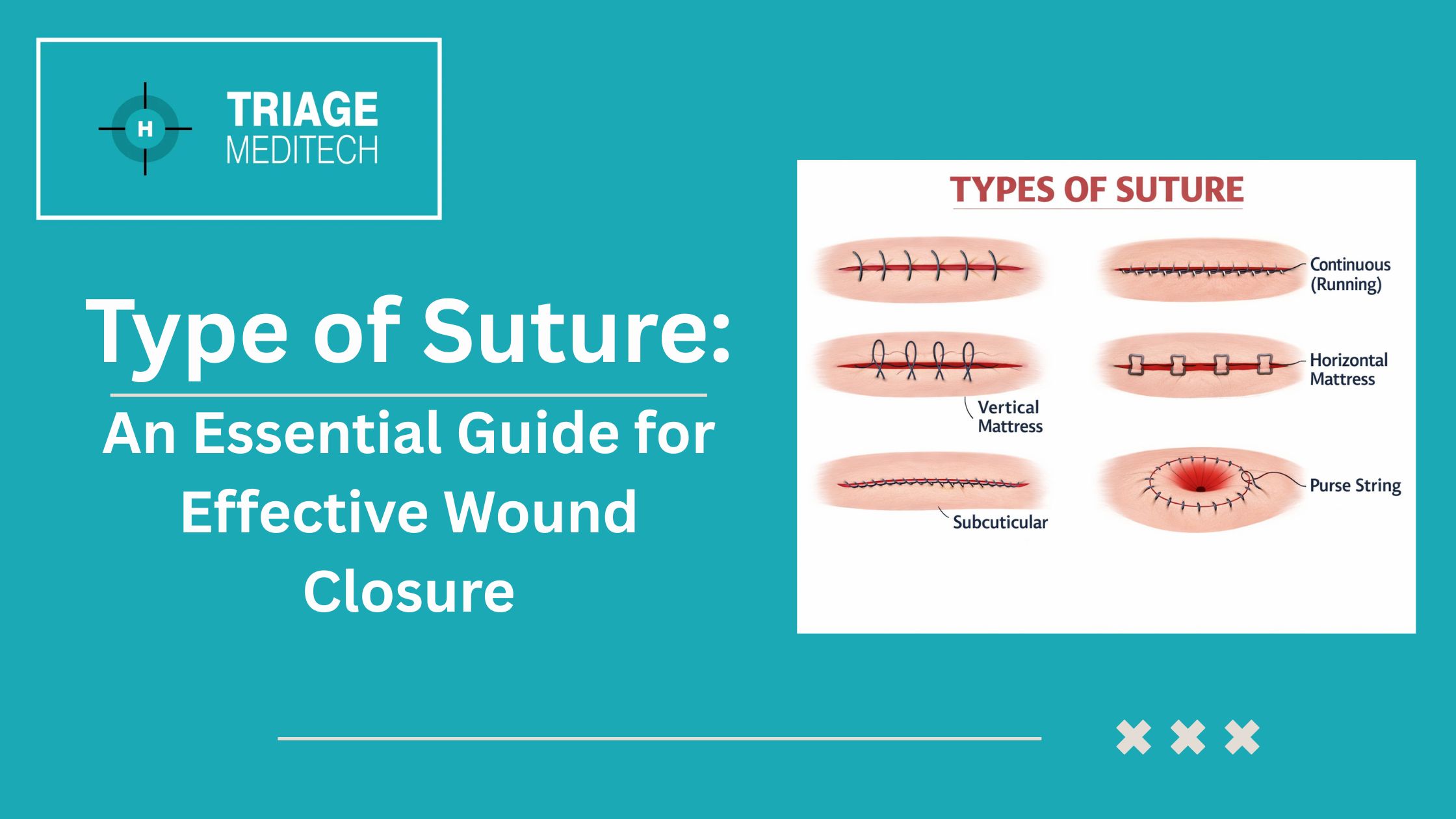
Sutures are a critical element of modern healthcare, used across surgical, emergency, and outpatient settings to close wounds and promote healing. The choice of type of suture can directly influence wound strength, infection risk, healing time, and cosmetic outcome. With numerous suture materials and structures available today, understanding their differences is essential for healthcare professionals, medical students, and clinical decision-makers. This guide explores the major types of sutures, how they are classified, and where they are commonly used in medical practice.
What Is a Suture?
A suture is a sterile medical thread used to approximate tissues after surgery or traumatic injury. By holding wound edges together, sutures help control bleeding, protect the wound from contamination, and support the natural healing process. Depending on the clinical situation, sutures may dissolve over time or remain in place until removed.
Why the Right Type of Suture Matters
Selecting the correct type of suture is essential for successful wound management. The right choice helps:
Maintain wound stability
Reduce inflammation and infection
Support proper tissue healing
Improve cosmetic results
Enhance patient comfort
Using an inappropriate suture can lead to complications such as wound dehiscence, infection, or delayed healing.
Classification of Type of Suture
Sutures are commonly classified based on three main criteria:
Absorbability
Material composition
Filament structure
Each classification provides valuable insight into how the suture behaves inside the body and where it should be used.
Absorbable Sutures
Absorbable sutures are designed to break down naturally in the body through enzymatic action or hydrolysis. These sutures are ideal for tissues that heal quickly and do not require long-term support.
Common absorbable sutures include:
Vicryl (Polyglactin 910)
Polyglycolic Acid (PGA)
Monocryl (Poliglecaprone)
Chromic Catgut
Advantages:
No need for removal
Reduced patient follow-up
Suitable for internal tissues
Clinical applications:
Gastrointestinal surgery
Gynecological procedures
Pediatric surgery
Subcutaneous tissue closure
Non-Absorbable Sutures
Non-absorbable sutures are not degraded by the body and retain their tensile strength for extended periods. They are removed once healing is complete or left permanently when long-term tissue support is required.
Common non-absorbable sutures include:
Nylon
Silk
Polypropylene (Prolene)
Polyester
Advantages:
High tensile strength
Long-lasting wound support
Clinical applications:
Skin closure
Cardiovascular surgery
Orthopedic and tendon repair
Type of Suture Based on Material
Natural Sutures
Natural sutures are derived from biological sources and have been used in medicine for many years.
Examples:
Silk
Catgut
Benefits:
Excellent handling properties
Strong knot security
Limitations:
Higher tissue reaction
Less predictable absorption
Synthetic Sutures
Synthetic sutures are manufactured from artificial polymers and are widely used in modern healthcare due to their consistency and reliability.
Examples:
Vicryl
Nylon
Prolene
Monocryl
Benefits:
Minimal tissue reaction
Predictable strength and absorption
Lower risk of infection
Monofilament vs Multifilament Sutures
Monofilament Sutures
Monofilament sutures consist of a single smooth strand that passes easily through tissue.
Advantages:
Reduced bacterial adherence
Minimal tissue trauma
Disadvantages:
Less flexible
Requires careful knot technique
Examples:
Nylon
Prolene
Monocryl
Multifilament Sutures
Multifilament sutures are composed of multiple strands braided together.
Advantages:
Excellent handling
Strong knot security
Disadvantages:
Higher risk of infection
Increased tissue drag
Examples:
Silk
Vicryl
Polyester
Type of Suture Based on Clinical Application
Skin Sutures
Non-absorbable sutures such as nylon or polypropylene are commonly used for skin closure because they provide strength and minimize scarring.
Internal Tissue Sutures
Absorbable sutures are preferred for internal organs and muscle layers, allowing them to dissolve naturally during healing.
Cosmetic and Plastic Surgery Sutures
Fine monofilament or absorbable sutures are selected to reduce visible scarring and improve cosmetic outcomes.
Specialty Sutures
Cardiac surgery: Polypropylene
Orthopedic surgery: Polyester or stainless steel
Ophthalmic surgery: Fine nylon sutures
Key Factors in Selecting the Right Type of Suture
When choosing a type of suture, healthcare professionals consider:
Tissue type and healing time
Required tensile strength
Risk of infection
Wound location
Patient age and overall health
Proper selection helps reduce complications and ensures optimal wound healing.
Conclusion
Understanding the different type of suture is essential for effective wound closure and successful surgical outcomes. With classifications based on absorbability, material, and filament structure, each suture serves a specific role in medical practice. Choosing the appropriate suture improves healing, minimizes complications, and enhances patient satisfaction. Sutures remain an indispensable tool in modern healthcare.