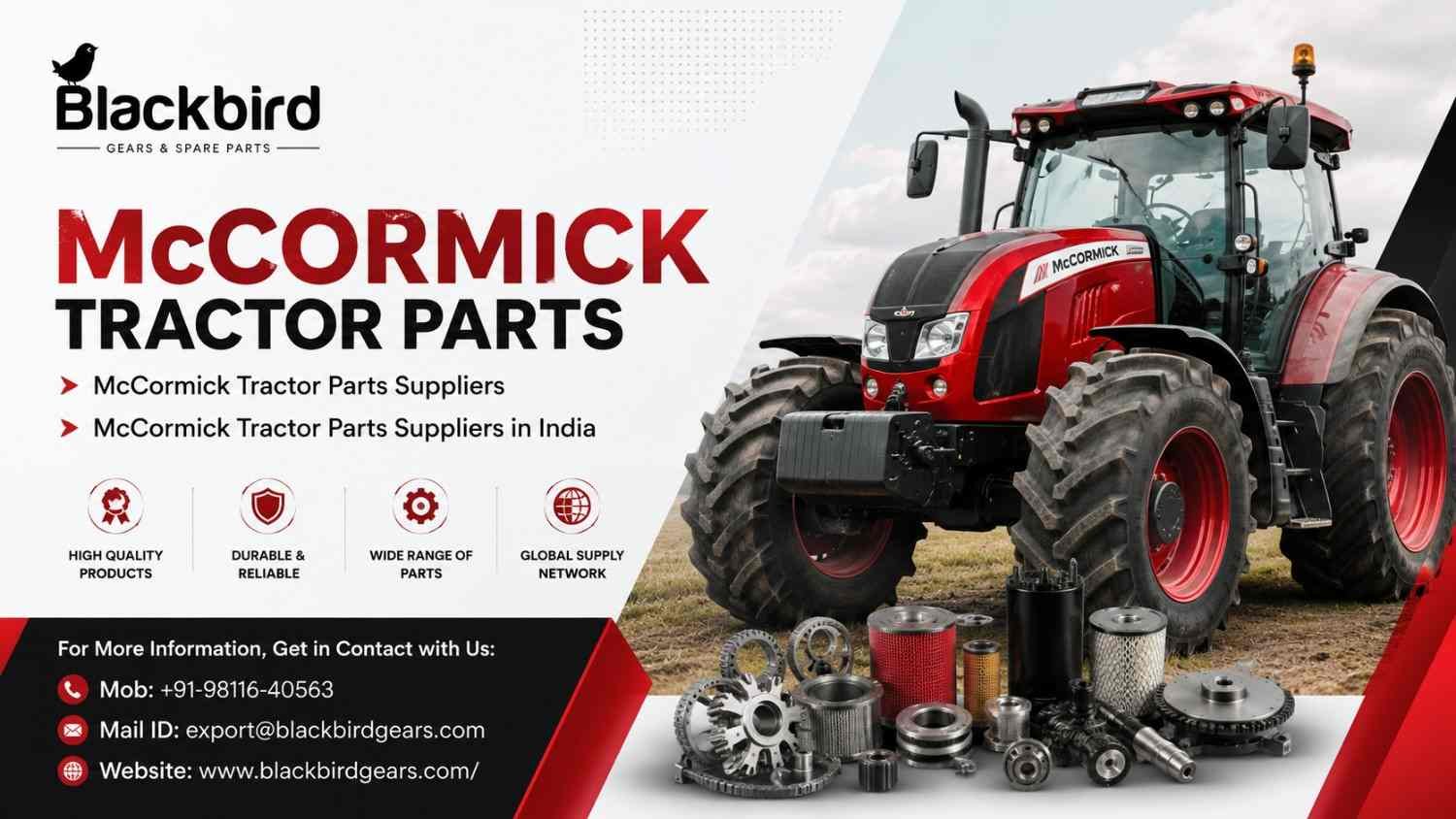
A procurement manager in Nashik once told us he'd rejected three McCormick tractor parts shipments in a single quarter not because the parts were fake, but because the tolerances were off by fractions that only showed up after 200 hours of field use. That's the problem with sourcing McCormick tractor parts: on paper, everything looks fine. In practice, a hydraulic seal that's 0.3mm out of spec fails during peak sowing season, and your buyer remembers it for years. Finding McCormick tractor parts suppliers who actually understand this isn't optional it's the difference between repeat business and a one-time order.
The Spec Detail Most Buyers Skip
McCormick tractors largely built on Case IH and New Holland platforms since the Argo Tractors partnership use components that split into three buckets: engine and fuel system parts (injectors, fuel pumps, filters), transmission and hydraulic assemblies (clutch plates, hydraulic pumps, lift cylinders), and chassis components (axles, brake shoes, steering linkages).
Where Buyers Get Burned
Most catalogs list part numbers and dimensions. What they skip is casting batch consistency. Two parts with identical spec sheets can come from different casting runs with different metallurgical properties. We test hardness across batches not just the first sample sent for approval because a supplier who only tests the sample they know you'll check isn't really testing anything.
What Distinguishes a Real Supplier from a Reseller
Here's how to evaluate any McCormick tractor parts supplier, and what a weak answer sounds like at each stage.
- OEM cross-reference documentation. A bad answer: "We match by dimension, don't worry about the OEM number." That's a guess dressed up as confidence.
- Batch testing records. A bad answer: "Quality is guaranteed, no reports needed." No reports means no accountability when something fails.
- Defect and return policy in writing. Bad answer: “We’ll take it as it comes.” A supplier with a policy doesn’t say that. That's a negotiation you lose when the shipment comes in.
- Minimum order flexibility for new buyers. A bad answer: "MOQ is fixed, no exceptions, ever." Rigid MOQs on a first order tell you they don't want to build a relationship they want a transaction.
- Export documentation experience. A bad answer: "We can figure that out when it comes up." Figuring out customs paperwork after the container is packed costs you weeks.
Why This Matters for Your Margins, Not Just Your Uptime
Sourcing decisions here aren't about avoiding breakdowns alone. They protect the business math behind every order.
Consistent tolerances mean fewer warranty claims eating into your margin on resale. Verified OEM cross-referencing means you're not explaining part mismatches to an angry dealer network six weeks after delivery. Batch traceability means that when not if a defect surfaces, you can isolate the affected lot instead of pulling your entire inventory. Reliable lead times protect your own commitments to downstream buyers, which matters more than people admit until they've missed one. And transparent defect policies mean disputes get resolved in days, not months of email chains that go nowhere.
Nobody puts "fewer 2 a.m. calls from angry dealers" on a benefits slide. But that's what real supplier reliability buys you.
The Location is a Supply Chain Decision, Not Just an Address
We operate out of India, which puts us within reasonable freight distance of major agricultural export corridors Nhava Sheva and Mundra both handle regular tractor-parts container traffic. That's not incidental. A supplier based near a working port cuts inland transit time, and inland transit is where damage claims usually originate, not ocean freight.
We currently ship to buyers across 31 countries, with the heaviest repeat-order volume coming from East Africa and Southeast Asia regions running large populations of older McCormick and Case IH-platform tractors that need consistent parts availability, not one-off fulfillment.
About Us
We've been doing this since 2013, starting as a two-person sourcing desk before growing into a full spare parts supply operation. We stopped sourcing hydraulic seals from one particular vendor in 2022 after we noticed a pattern seals performing fine in lab tests but degrading faster than expected in high-humidity coastal markets. We switched suppliers and changed our humidity-testing protocol. That's not a story we put in a brochure. It's just what happens when you've been doing this long enough to notice patterns nobody flagged for you.
Send us your part list with OEM numbers (or tractor model and year if you don't have them), your target quantity, and your delivery port. Lead time and pricing within 24 hours. We respond. Minimum order quantities start at 50 units per SKU for new buyers, with flexibility on mixed-SKU orders. Reach out to Blackbird Gears directly we don't route you through a call center.
Conclusion
Sourcing McCormick tractor parts isn't complicated once you know which questions expose a weak supplier. Ask about batch testing, defect policy, and export documentation before you ask about price. The suppliers who hesitate on those three questions are telling you something. Start with a small trial order and judge us on how we handle the first hiccup that's where you'll actually learn who you're working with.
FAQs
1. What McCormick tractor models do you supply parts for?
Mostly the X, Series, and MC ranges built on the Case IH/New Holland platform post-2000. Older pre-Argo-partnership models are harder we can usually source them, but lead times run longer, so tell us the model year upfront.
2. Are your McCormick tractor parts OEM or aftermarket?
Both, depending on the part. We're transparent about which is which on every quote anyone claiming 100% OEM-only sourcing at competitive pricing is either misrepresenting the part or the price.
3. Do you provide batch testing reports with shipments?
Yes, for hydraulic and transmission components as standard. Engine components come with reports on request ask when you place the order, not after.
4. What's your minimum order quantity?
50 units per SKU for new buyers, though we'll discuss mixed-SKU orders for smaller trial runs.
5. How do you handle defective parts after delivery?
Documented return and replacement policy, shared before you order not negotiated after a shipment arrives.