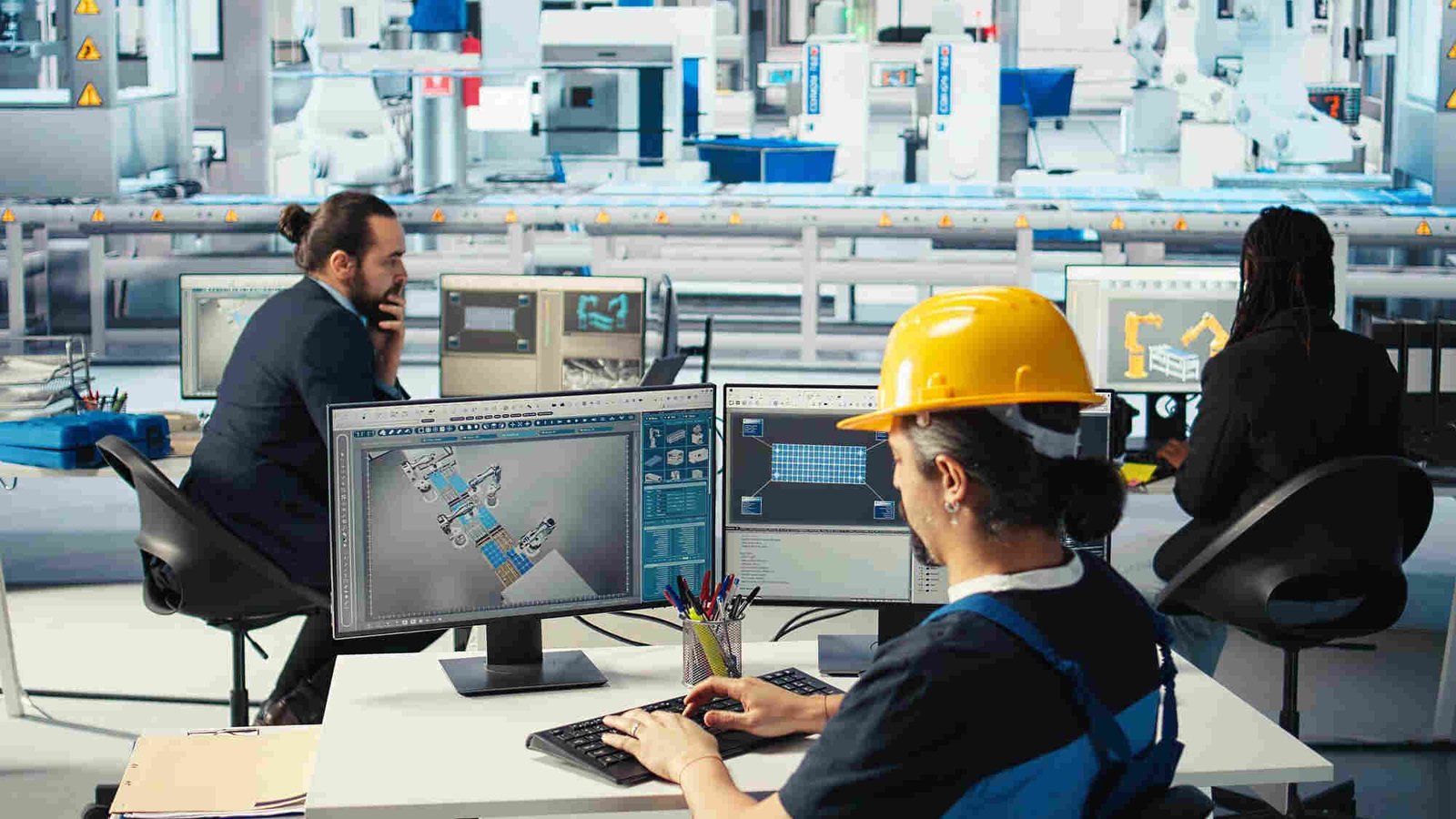
Manufacturing accuracy has become increasingly important as industries demand products with tighter tolerances, consistent quality, and faster production cycles. Even small errors during cutting, shaping, drilling, or assembly can lead to material waste, product defects, and higher operational costs. This is where automation has transformed modern production. Technologies such as robotics, computer-controlled machinery, sensors, and automated inspection systems help manufacturers perform repetitive and precision-based tasks with greater consistency. For companies working with advanced production requirements, CNC Machining China has also become associated with highly controlled machining processes that support precise component manufacturing.
Automation does more than reduce manual labor. It creates a controlled production environment where machines can follow programmed instructions, monitor processes, identify deviations, and maintain repeatable results. As a result, manufacturers can improve accuracy while also increasing productivity and reducing unnecessary waste.
How Automation Improves Manufacturing Accuracy
One of the biggest advantages of automation is its ability to perform the same operation repeatedly without the natural variations associated with manual work. Human operators can experience fatigue, distraction, or differences in technique, particularly when performing repetitive tasks for several hours.
Automated equipment follows predefined instructions with a high level of consistency. Whether it is cutting a component to a specific dimension or positioning parts during assembly, automated systems can repeat the process according to established parameters. This consistency is particularly valuable when hundreds or thousands of identical components need to be produced.
Automation can also maintain precise operating conditions. Machines can regulate factors such as speed, pressure, temperature, positioning, and tool movement. Keeping these variables within defined limits helps reduce production variation and supports consistent product quality.
Precision Through Computer-Controlled Equipment
Computer-controlled machinery plays an important role in modern manufacturing accuracy. CNC equipment, for example, translates digital designs into controlled machine movements. Once the correct specifications and instructions have been programmed, the equipment can perform complex operations with minimal variation between individual parts.
This approach is useful when manufacturing components with intricate shapes, narrow tolerances, or multiple machining stages. Instead of relying entirely on manual measurements and adjustments, manufacturers can use digital instructions to guide the equipment throughout the production process.
The result is greater repeatability. A properly calibrated machine can produce multiple components that closely match the original design specifications. This reduces the likelihood of dimensional inconsistencies and makes it easier to maintain quality across large production runs.
Automated Inspection and Quality Control
Automation has also changed the way manufacturers detect defects. Traditional inspection methods often require workers to manually measure and examine individual components. While skilled inspectors remain valuable, automated inspection systems can significantly increase the speed and consistency of quality checks.
Modern production lines may use cameras, laser scanners, sensors, and measurement systems to examine components during or after manufacturing. These systems can identify issues such as incorrect dimensions, surface defects, misalignment, or missing components.
Automated inspection can also provide immediate feedback. If a machine detects that a product falls outside the required specifications, the manufacturing process can be paused or adjusted. This prevents large quantities of defective products from continuing through the production line.
Reducing Human Error
Human expertise remains essential in manufacturing, but automation can reduce the number of errors caused by repetitive manual activities. Workers may accidentally enter incorrect measurements, position components incorrectly, or overlook minor defects during long production periods.
Automated systems can minimize these risks by following predefined processes. Digital controls can restrict operations to approved settings, while sensors can verify whether specific steps have been completed correctly.
Automation therefore allows employees to focus more on supervision, maintenance, quality analysis, and process improvement rather than constantly performing repetitive movements. Combining human expertise with automated precision creates a more reliable production environment.
Improving Material and Component Consistency
Accurate manufacturing is not only about producing products correctly; it is also about using materials efficiently. Incorrect cuts, excessive machining, and dimensional mistakes can result in significant material waste.
Automated equipment can optimize cutting patterns, control tool movements, and maintain consistent production parameters. This helps manufacturers use raw materials more efficiently and reduces unnecessary scrap.
For industries working with metal profiles and fabricated components, automated processes can be particularly beneficial. An Aluminum Manufacturer can use automated cutting, drilling, extrusion, and inspection technologies to maintain consistent dimensions across large production quantities. Better process control can help ensure that finished profiles meet specified requirements before they reach customers.
Real-Time Monitoring and Process Control
Another important advantage of automation is continuous monitoring. Modern manufacturing systems can collect information from sensors throughout the production process. Data related to machine performance, temperature, pressure, vibration, speed, and other variables can be monitored in real time.
When a parameter moves outside its acceptable range, the system can generate an alert or automatically make an adjustment. This allows manufacturers to address problems before they result in significant numbers of defective products.
Real-time monitoring also supports predictive maintenance. Changes in machine vibration, temperature, or performance may indicate that equipment requires attention. Identifying these warning signs early can prevent unexpected failures that could otherwise affect production accuracy and schedules.
Automation and Faster Production
Accuracy and productivity do not have to be opposing goals. Automated systems can perform many operations faster than manual methods while maintaining consistent results. Machines can also operate for extended periods with fewer interruptions, depending on the production environment.
Faster production becomes especially valuable when manufacturers need to meet large orders or strict delivery schedules. Because automated equipment can maintain consistent operating parameters, increasing production volume does not necessarily require sacrificing quality.
However, speed should always be balanced with proper calibration and quality control. An incorrectly configured automated system can reproduce the same error repeatedly. This makes setup, programming, maintenance, and inspection essential parts of an effective automation strategy.
The Importance of Calibration and Maintenance
Automation can improve accuracy only when the equipment itself is properly maintained. Machines that are poorly calibrated, worn, or incorrectly configured may produce inaccurate results regardless of how advanced their control systems are.
Regular calibration ensures that measurement and positioning systems continue to operate within required specifications. Preventive maintenance can also reduce problems caused by worn tools, loose components, sensor failures, or mechanical deterioration.
Manufacturers should therefore establish maintenance schedules and regularly verify machine performance. Combining automated monitoring with professional maintenance helps preserve accuracy over the long term.
The Future of Manufacturing Accuracy
The role of automation is expected to expand as manufacturers adopt artificial intelligence, advanced robotics, machine vision, connected sensors, and data-driven production systems. These technologies can work together to create increasingly intelligent manufacturing environments.
Future systems will be better equipped to identify production patterns, predict potential problems, optimize machine settings, and detect quality issues earlier. Greater connectivity will also allow manufacturers to monitor production performance across multiple machines and facilities.
The goal is not simply to replace manual work. Instead, modern automation is increasingly focused on creating manufacturing systems that are more predictable, measurable, and responsive.
Conclusion
Automation has become a major contributor to manufacturing accuracy by improving consistency, reducing human error, supporting automated inspection, and enabling real-time process control. Computer-controlled machinery and intelligent monitoring systems allow manufacturers to maintain precise production standards while handling larger volumes efficiently.
When supported by proper calibration, maintenance, skilled supervision, and effective quality management, automation can create a reliable production environment where accuracy is maintained from the initial process through final inspection. As manufacturing technology continues to evolve, automation will remain an important tool for companies seeking greater precision, efficiency, and long-term production reliability.
Tags : .....