The Digital Evolution of Embryology: How Artificial Intelligence is Redefining Selection Dynamics in Assisted Reproduction
By Steffi Angel 03-07-2026 88
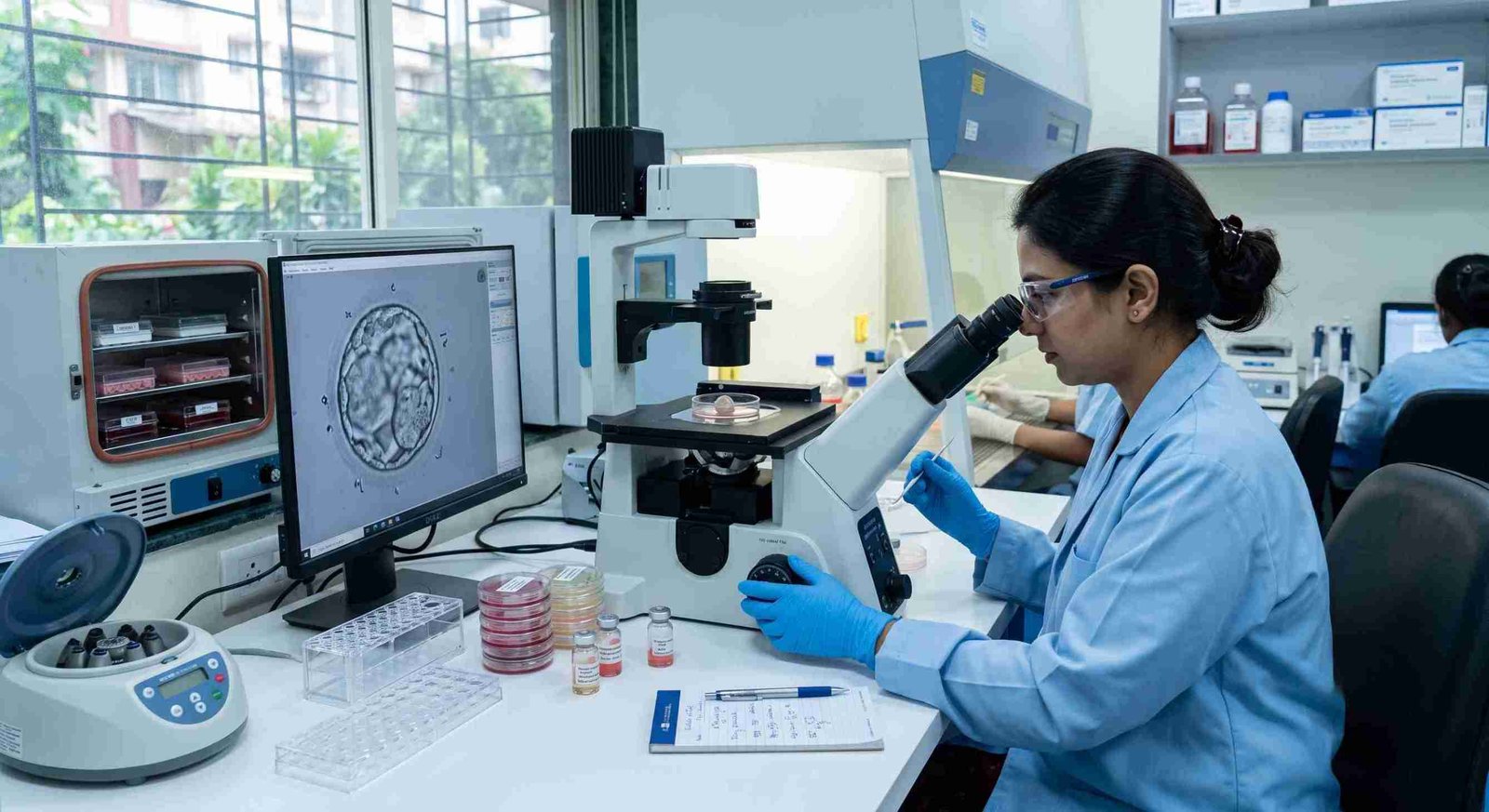
Every single step in assisted reproductive technology has evolved from subjective clinical observations to a highly quantifiable science based on data. Until recently, embryo selection for its implantation potential was almost exclusively based on visual manual grading. Growing blastocysts would be taken out of incubators periodically and examined under high-powered microscopes to check its structural cellular symmetry, cell division rate, and general shape. Although this evaluation has helped thousands of families conceive children through humans, it inevitably introduces some minor inaccuracies, arising from the fact that some cell stress happens when taking the incubator out of the incubator, human fatigue, and differences in the interpretation of the evaluator. In today's times, the addition of high-developed neural systems has changed this all together, and now it's an exceptionally consistent and mechanised course of action to assess embryos.
Not only is the introduction of machine learning algorithms no replacement for the essential clinical skills and expertise of clinical teams, but it is even a much more powerful analytical tool and one that can look beyond the capabilities of the human eye. Advanced software systems are able to process huge amounts of time-lapse imaging data, allowing scientists to monitor micro-movements and cellular changes at sub-millimetre resolution without disrupting the growing cultures. Fertility patients who want to take advantage of these technological breakthroughs often work with a leading IVF Specialist to create very personalized treatment schedules that incorporate these forecasting artificial intelligence, effectively increasing the chances of implantations and decreasing the emotional toll and time of multiple transfers.
Decoding the Mechanics of Artificial Intelligence Embryo Grading
However, traditional embryo selection only takes into account certain snapshots in time, and the embryologists can only make decisions based on what is seen at the appointed times. AI algorithms disrupt this strategy by analysing live video streams captured within special time-lapse incubators. It is able to analyze thousands of visual data points at once, analyzing with a level of detail that is too complex or too fast to detect by human eyes.
The system processes these data complexly, and produces an objective and uniform viability score that in most cases is on a very precise scale, with the highest score reflecting the highest statistical likelihood of a clinical pregnancy. The one, single scoring system eliminates any human bias and allows all embryos to be compared against a large worldwide database of embryo success. With clear data-driven patterns instead of visual grading, the clinical team can have a much more accurate selection process, and take away the guesswork from the process to become a predictive science.
The Physical Advantage of Non-Invasive Environmental Stability
The real clinical advantage of automated neural networks is the way they preserve the physical integrity of growing cells, in addition to the massive computational advantage. Each time a fragile embryo is taken out of the incubator to perform a routine visual inspection, it is subjected to a short-term increase in the ambient temperature, ventilation and local pH. These small changes in the environment cause micro-stressors that can have a subtle effect on fast early cell development, even with the fastest and most experienced hands.
This is possible with intelligent computer systems that monitor continuously over time, so that the entire selection process can be performed without ever opening the incubator doors. The cells are fully protected in a sterile, totally balanced environment that is the exact replica of the natural environment of the human body. This ongoing stability ensures that as many cells as possible divide naturally, and shields sensitive layers of tissue from outside influences, while allowing the embryologist to have an uninterrupted supply of visual information. This not only enhances the quality of overall blastocyst but also boosts blastocyst survival rates when used in combination with computational accuracy and complete environmental protection.
Personalizing the Timeline of Your Fertility Journey
For a successful fertility procedure in today's age, the end goal isn't only a positive test, it's a healthy live birth in the safest and fastest way. If several healthy-looking blastocysts are obtained, sometimes the manual visual grading process can result in a lengthy timetable if the cells that are chosen to contain hidden developmental delays.
Advanced predictive models can help clinical teams to accurately predict each patient's history and real-time embryo movement. The extensive evaluation allows for the selection of the best single embryo for transfer, thereby reducing the chances of a complex multiple pregnancy and the number of replacement cycles, which are time consuming and emotionally draining.
Securing Confidence Through Advanced Technology
The dream of having a family comes true only when there's an active partnership with a medical team that always adopts new advancements and scientific discoveries. Connect the advanced computational modeling, absolute environmental stability and customizable transfer timelines, and you will see that real advances in reproductive medicine are a full circle of technological accuracy. With a focus on thorough pre-cycle testing, access to cutting-edge clinical facilities with advanced automation tools for tracking, and dedicated expertise in addressing complex fertility issues, people can safeguard their emotional health and optimize their chances of success. Taking a comprehensive and customized care approach means that your medical network is well balanced, robust, and ready to serve a healthy and successful future.
Tags : .....