In the world of botanical ingredients, few command the universal recognition and gentle trust of chamomile. For centuries, this daisy-like flower has been the go-to remedy for restless nights and unsettled stomachs. But in today's formulation labs, chamomile is undergoing a transformation. It is no longer just a tea bag staple—it is a standardized, bioavailable extract finding its way into serums, supplements, and functional beverages.
For B2B buyers seeking Chamomile Extract, the sourcing landscape points decisively toward China. Not merely as a low-cost producer, but as a hub of advanced extraction technology, vertically integrated supply chains, and manufacturing expertise that meets rigorous international standards.
The Two Chamomiles: Understanding What You're Sourcing
Before diving into suppliers, it is essential to understand that "chamomile" typically refers to two distinct plants, and the distinction matters for procurement.
German chamomile (Matricaria chamomilla or Matricaria recutita) is the variety most widely used for medicinal and cosmetic purposes. Considered the more potent of the two, it contains higher concentrations of the key bioactive compounds—specifically apigenin and alpha-bisabolol . Apigenin is a flavonoid prized for its antioxidant and anti-anxiety properties, while alpha-bisabolol gives chamomile its powerful anti-inflammatory characteristics and aids in cell turnover .
Roman chamomile (Chamaemelum nobile) is also used in the industry, but German chamomile dominates the extract market due to its superior therapeutic profile .
When sourcing, you will encounter extracts standardized to specific apigenin percentages (ranging from 1% to 98%) or extraction ratios (such as 10:1 or 20:1) . The specification you choose depends entirely on your application—higher concentrations for targeted supplements, gentler ratios for cosmetic formulations.
Why China? The Manufacturing Advantage
China's dominance in botanical extracts is not new, but the sophistication of its chamomile supply chain deserves attention. The country combines agricultural scale with industrial precision, creating an environment where quality and consistency are the baseline, not the exception.
Shaanxi Province: The Botanical Heartland
If you are sourcing chamomile extract, your search will almost certainly lead you to Xi'an, Shaanxi Province. This region hosts over 60% of China's active chamomile extract suppliers, creating a dense ecosystem of biotech firms specializing in plant-based active compounds .
The concentration of manufacturers here—companies like Xi'an Demeter Biotech and Xi'an Eco Biotech—creates significant logistical advantages. Shared infrastructure, access to skilled labor, and proximity to research institutions enable faster innovation cycles and consistent quality control . Many of these facilities operate under Good Manufacturing Practice (GMP) standards and hold ISO certifications, which are non-negotiable for international buyers targeting regulated markets .
What sets Shaanxi apart is its R&D focus. Suppliers in this region excel at standardization, offering chamomile extracts with precise, verifiable apigenin concentrations. For a procurement manager, this translates into batch-to-batch consistency—the foundation of any reliable finished product.
Hunan Province: Scale and Integration
While Shaanxi leads in concentration, Hunan Province—particularly around Changsha—excels in industrial-scale processing and vertical integration. The region is home to advanced extraction methods like supercritical CO₂ and ethanol solvent systems, enabling manufacturers to produce high-purity extracts with minimal solvent residues .
The strategic importance of Hunan is underscored by major industry investments. In 2010, global nutrition company Herbalife broke ground on an 80,000-square-foot extraction facility in Changsha, specifically citing the region's location on the Yangtze River and its proximity to China's nutritional herb cultivation areas . This facility was designed to process 8,000 metric tons of raw materials annually, producing botanical extracts including chamomile for global distribution .
For large-volume buyers, Hunan-based suppliers like Hunan MT Health Inc. (operating over 10,000 m² of facility space) offer the capacity and GMP-compliant production lines necessary for high-volume contracts .
Other Sourcing Regions
Shandong Province offers coastal logistics advantages, with suppliers like Natural Micron Chem Tech benefiting from streamlined shipping routes—ideal for buyers prioritizing fast international dispatch . Jiangsu Province is home to specialized manufacturers like Nanjing Zelang Biotechnology, which offers high-concentration chamomile flavonoids (30%, 50%, 70%) and positions itself as a one-stop service provider with formulation support and contract manufacturing capabilities .
The Science of the Extract: What You're Actually Buying
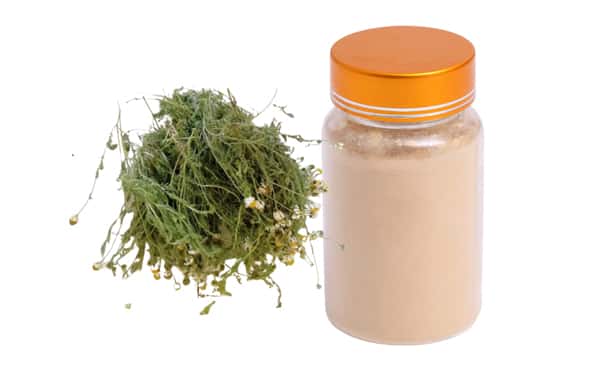
When you source chamomile extract, you are procuring a standardized fraction of the flower head, typically produced through steam distillation or solvent extraction . The resulting powder ranges from light yellow to brown-yellow, with a characteristic aromatic odor .
The primary active compounds to verify in your Certificate of Analysis (CoA) include:
Apigenin: The key flavonoid marker for quality and potency
Alpha-bisabolol: Responsible for anti-inflammatory effects
Chamazulene: Formed during extraction, known for additional anti-inflammatory properties
Leading suppliers like Angelbio offer extracts with apigenin content as high as 98%, verified by HPLC testing, with strict controls on heavy metals (lead < 0.05 ppm), residual solvents, and microbiological contaminants . These specifications are critical for brands targeting pharmaceutical-grade or premium cosmetic applications.
Vetting Suppliers: Beyond Price to Performance
The abundance of suppliers in China is an advantage, but it demands rigorous evaluation. For B2B buyers, the decision should balance cost against measurable performance metrics.
Operational Excellence Metrics
Data from leading suppliers reveals clear patterns of reliability :
Aogubio's 40% reorder rate signals exceptional customer satisfaction and financial stability, with annual online revenue exceeding $1.7 million . Xi'an Demeter's ≤1-hour response time ensures rapid issue resolution—critical for time-sensitive product launches.
Quality Assurance Requirements
Certifications are the entry ticket. Look for :
ISO 9001 (Quality Management)
GMP (Good Manufacturing Practice)
HACCP or ISO 22000 (Food Safety)
USDA/EU Organic (for clean-label positioning)
Kosher/Halal (for specific market access)
Always request batch-specific Certificates of Analysis (CoA) and consider third-party testing through labs like SGS or Eurofins to verify supplier claims .
Price Considerations and Value-Based Sourcing
Pricing varies based on concentration, extraction method, and order volume. For 1% apigenin extract, typical FOB prices range from $5.80 to $10.00 per kilogram, with minimum order quantities (MOQs) from 50kg to 500kg .
The lowest price often comes with trade-offs—higher MOQs, longer lead times, or less formulation flexibility. Your choice should align with your product's market positioning and volume requirements.
Applications Driving Demand
Chamomile extract's versatility explains its sustained market growth. Key applications include :
Cosmetics and Skincare: Anti-inflammatory properties make it ideal for creams, serums, and masks targeting sensitive, acne-prone, or dry skin. It soothes irritation, speeds healing of minor burns, and neutralizes free radicals.
Personal Care: Incorporated into body lotions, shower gels, and hair care products for its calming and nourishing effects.
Nutraceuticals: Used in capsules, tablets, and teas aimed at promoting relaxation, reducing stress, and supporting digestive health.
Functional Foods and Beverages: Finding its way into ready-to-drink relaxation beverages and functional shots.
Building Long-Term Supplier Relationships
Successful sourcing extends beyond transactional purchasing. Consider these strategies:
Start with samples. Most reputable suppliers offer samples (10-25g is typical), sometimes free, sometimes with a nominal fee refundable upon order placement . Test for solubility, color uniformity, odor, and microbial limits before committing.
Consider factory audits. Whether on-site or virtual, inspecting facilities provides invaluable insight into hygiene standards, equipment maintenance, and quality control protocols. Many suppliers now offer live virtual tours .
Plan for dual sourcing. Qualify at least two suppliers—one with rapid response for agile needs, another with high capacity for volume stability. This mitigates risk and strengthens negotiating position.
Final Thoughts
Sourcing Chamomile Extract from China is no longer a concession to cost—it is a strategic decision to access world-class manufacturing capabilities, advanced extraction technology, and a deeply integrated supply chain. From the specialized biotech clusters of Shaanxi to the industrial-scale operations of Hunan, the ecosystem is mature, transparent, and ready for partnership.
By prioritizing certified manufacturers with verifiable performance metrics, rigorous testing protocols, and the technical ability to meet your specific formulation needs, you secure not just a raw material, but a competitive advantage for your next generation of wellness and beauty products.