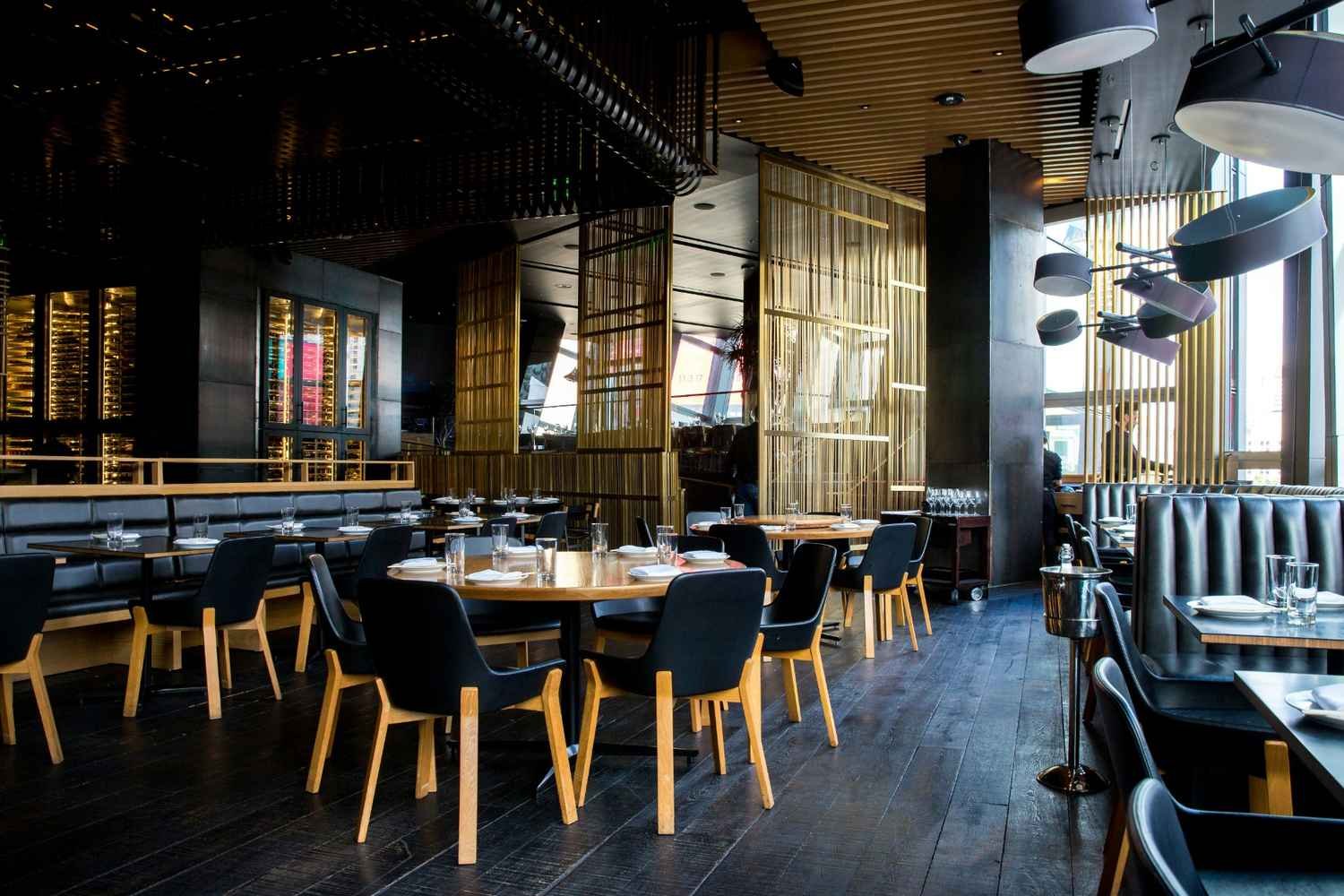
Walk into a great restaurant and it's easy to focus on what's directly in front of you. The food. The atmosphere. The service. The carefully chosen playlist humming away in the background. What most diners don't see is the business thinking that makes those experiences possible.
Restaurants are among the most challenging businesses to run. Margins are tight. Consumer habits change constantly. Competition never sleeps. Yet some venues don't just survive—they thrive.
What's their secret?
The answer often has less to do with recipes and more to do with strategy. Behind every successful restaurant lies a collection of business lessons that apply far beyond hospitality. Whether you're running a startup, managing a retail brand, or launching a new venture, there's plenty to learn from the restaurants that consistently fill tables and build loyal followings.
Take 1 Lombard Street, for example.
Located in the heart of London's Square Mile, 1 Lombard Street has been serving breakfast, lunch, dinner, brunch, and Sunday roasts since 1998. In an industry where many venues struggle to reach their fifth anniversary, longevity like that doesn't happen by accident.
The first lesson is diversification.
Many businesses rely too heavily on a single revenue stream. Successful restaurants understand the risks of doing so. At 1 Lombard Street, the business extends beyond everyday dining. Weddings, private dining, corporate events, loyalty programmes, and its Goosebox catering operation all contribute to a broader ecosystem.
Interestingly, this approach mirrors advice often shared by business leaders. In Good to Great, business author Jim Collins argued that enduring organisations build resilient models rather than relying on a single source of success (Collins, 2001).
The same principle applies here.
If one area slows down, another can help maintain momentum.
Restaurants learned this lesson particularly well during recent economic uncertainty. Operators that diversified often adapted more effectively than those dependent on a single customer segment.
The second lesson is consistency.
Customers rarely return because of one exceptional experience. They return because the experience remains consistently good.
Ask anyone who's worked in hospitality and they'll tell you the same thing. Delivering excellence once is difficult. Delivering it every day is much harder.
That's true in every industry.
Think about your favourite brands. Chances are you trust them because they consistently meet expectations.
Restaurants provide a daily masterclass in operational discipline.
A key takeaway is that consistency builds trust, and trust builds loyalty.
The third lesson revolves around creating a sense of place.
The most memorable restaurants don't simply serve food. They create environments people want to spend time in.
This isn't a new idea.
Back in the early twentieth century, successful cafés often became social hubs where communities gathered. Today's best restaurants continue that tradition, although the settings may look different.
Customers increasingly seek experiences rather than transactions.
That's where branding becomes critical.
People remember how a place makes them feel.
Which brings us to another valuable lesson: authenticity.
Consumers have become remarkably good at spotting businesses that try too hard to manufacture personality. Authentic brands stand out because they don't need to pretend.
A restaurant with a clear identity often performs better than one trying to appeal to everyone.
Consider The Mitre in Richmond.
The pub doesn't attempt to be something it isn't. It embraces its history as a traditional ale and cider house tucked away in a residential corner of West London. The building's heritage, warm atmosphere, beer garden, craft ales, pizza offering, and neighbourhood feel all contribute to a distinct identity.
That's powerful.
Customers know exactly what they're getting.
In business, clarity frequently outperforms complexity.
Many companies spend enormous amounts of money trying to differentiate themselves. Yet often the strongest differentiator is simply understanding who you are and communicating it effectively.
Notably, Harvard Business School professor Michael Porter has long argued that strategy involves choosing what not to do as much as deciding what to do (Porter, 1996).
Successful restaurants demonstrate this every day.
They focus on their strengths.
They avoid chasing every trend.
They understand their audience.
Another lesson hidden inside hospitality is the importance of community.
Restaurants don't succeed in isolation. They become part of neighbourhoods, routines, and social lives.
A local pub becomes a meeting place. A favourite brunch spot becomes part of a weekend ritual. A restaurant hosting celebrations becomes woven into people's memories.
Business owners often talk about customer acquisition.
Restaurants remind us to focus on customer relationships instead.
A few years ago, I spoke with a restaurant manager who could remember dozens of regular guests by name. He knew their favourite tables, preferred drinks, and even birthdays.
Was that scalable? Probably not.
Was it effective? Absolutely.
People like feeling recognised.
The strongest businesses understand this fundamental human truth.
Technology has changed many aspects of commerce, but relationships still matter.
Perhaps more than ever.
Modern restaurants also offer valuable lessons about adaptability.
The hospitality industry evolves rapidly. Consumer tastes shift. Economic conditions fluctuate. New technologies emerge.
The venues that endure rarely resist change completely.
Instead, they adapt while protecting what makes them unique.
That's a difficult balance to achieve.
Businesses often fall into one of two traps. Some refuse to evolve. Others chase every new trend until they lose their identity.
The best operators sit somewhere in the middle.
They remain flexible without becoming directionless.
Another lesson comes from supply chains.
Many successful restaurants place enormous emphasis on sourcing. They build relationships with farmers, producers, fishmongers, and suppliers who share their values.
At first glance, this may seem like a culinary consideration.
In reality, it's a business lesson.
Strong partnerships create stronger organisations.
Companies that invest in reliable relationships often gain advantages in quality, consistency, and resilience.
The principle applies everywhere.
Whether you're sourcing ingredients, software, materials, or professional services, the quality of your partners influences the quality of your outcomes.
Interestingly, consumers increasingly pay attention to these details.
Research from Deloitte suggests customers are becoming more interested in sustainability, transparency, and provenance when making purchasing decisions (Deloitte, 2024).
Restaurants have been responding by telling richer stories about where products come from and how they're produced.
Transparency creates trust.
Trust creates loyalty.
Then there's innovation.
Many people assume innovation means technology.
Restaurants suggest otherwise.
Innovation often involves finding better ways to deliver value.
Sometimes that's a new menu concept. Sometimes it's a loyalty programme. Sometimes it's a redesigned guest experience.
The point isn't novelty for its own sake.
It's improvement.
Businesses frequently overcomplicate innovation.
Restaurants remind us that small improvements, executed consistently, can have significant impact over time.
The final lesson may be the most important.
Purpose matters.
People increasingly support businesses that stand for something beyond profit.
That's especially visible in hospitality.
Guests connect with stories, values, and missions.
Few examples illustrate this better than Muse by Tom Aikens.
Rather than simply offering fine dining, Muse is built around personal storytelling. The tasting menus reflect pivotal memories from Tom Aikens' life and culinary journey. Guests experience not just technical skill but narrative. Every dish contributes to a broader story.
That sense of purpose creates emotional connection.
The restaurant's commitment to seasonal British produce, sustainable sourcing, and partnerships with passionate suppliers reinforces that identity further.
Importantly, purpose doesn't replace commercial thinking.
It strengthens it.
Customers often gravitate toward businesses that know why they exist.
Simon Sinek famously captured this idea with the phrase: "People don't buy what you do; they buy why you do it" (Sinek, 2009).
Restaurants provide compelling evidence of that principle.
The most memorable venues don't just feed people.
They stand for something.
Conclusion
Successful restaurants offer far more than great meals.
Look closely and you'll find lessons in branding, customer loyalty, diversification, innovation, adaptability, leadership, partnerships, and purpose. These aren't hospitality lessons alone. They're business lessons.
From the diversified model and enduring relevance of 1 Lombard Street, to the authenticity and community spirit of The Mitre, to the purpose-driven storytelling behind Muse by Tom Aikens, each demonstrates principles that apply well beyond the restaurant industry.
What's fascinating is that many of these lessons aren't complicated.
Know your audience.
Stay consistent.
Build relationships.
Adapt when necessary.
Protect your identity.
Create experiences people remember.
Those ideas may sound simple. Yet they're surprisingly difficult to execute well.
That's why successful restaurants remain such powerful business case studies.
The next time you're enjoying a memorable meal, take a moment to look beyond the menu.
You might just discover one of the smartest business lessons you'll encounter all year.
Tags : .....