Suturing: Techniques, Materials, and Clinical Insights for Effective Wound Closure
By triage_meditech 06-04-2026 512
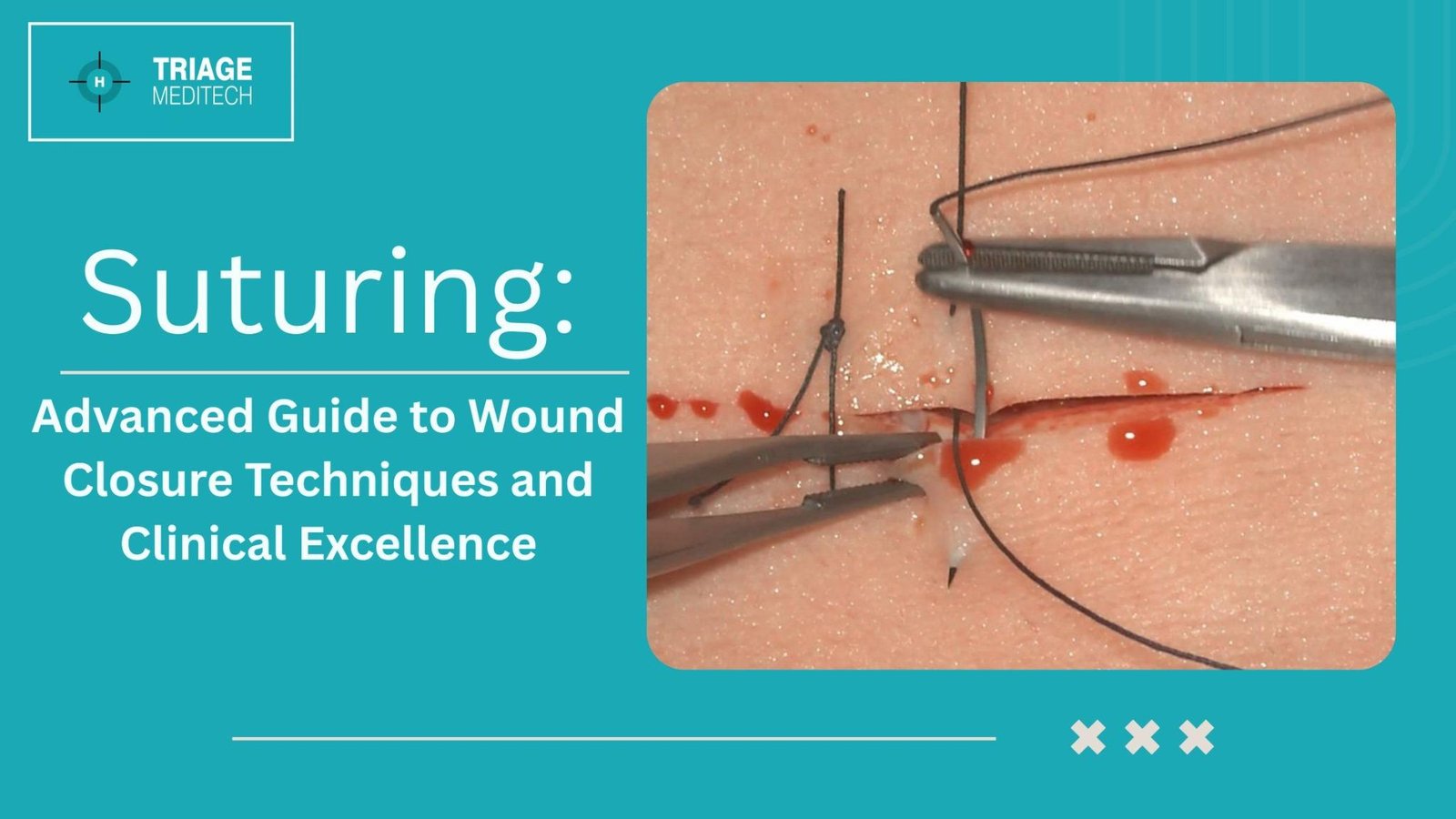
Suturing is a cornerstone of clinical practice, essential for closing wounds, controlling bleeding, and promoting optimal healing. From minor cuts to complex surgical incisions, mastering suturing ensures better patient outcomes, reduced infection risk, and improved cosmetic results. In this SEO-optimized guide, we dive deep into suturing techniques, materials, and practical tips every healthcare professional should know.
What is Suturing and Why is it Important?
Suturing is the process of stitching tissues together using specialized threads and needles. It is performed to:
- Accelerate wound healing
- Minimize infection risks
- Restore tissue integrity
- Improve cosmetic appearance
Proper suturing aligns wound edges precisely, allowing the body to heal naturally with minimal complications.
Types of Suturing Materials
Selecting the correct suture material is crucial for successful wound management.
Absorbable Sutures
These sutures are broken down by the body over time and are ideal for internal tissues.
Common Types:
- Polyglycolic acid
- Vicryl
- Chromic catgut
Non-Absorbable Sutures
These require manual removal after healing and are often used for skin closure.
Examples:
- Nylon
- Silk
- Polypropylene
Suture Structure: Monofilament vs Multifilament
Monofilament Sutures
- Single-strand structure
- Lower infection risk
- Smooth tissue passage
Multifilament Sutures
- Braided structure
- Strong knot security
- Higher infection risk due to bacterial retention
Popular Suturing Techniques
Different wounds require different suturing approaches. Here are the most commonly used techniques:
Interrupted Sutures
Each stitch is placed and tied individually.
Benefits:
- Precise tension control
- Safer in case of stitch failure
Continuous (Running) Sutures
A single thread is used along the wound length.
Benefits:
- Faster procedure
- Even tension distribution
Mattress Sutures
Vertical Mattress
- Ideal for deep wounds
- Reduces tension and promotes eversion
Horizontal Mattress
- Suitable for fragile skin
- Provides strong wound closure
Subcuticular Sutures
Placed beneath the skin for minimal scarring, often used in cosmetic and plastic surgery.
Essential Suturing Instruments
To perform suturing effectively, healthcare professionals rely on:
- Needle holder for precision control
- Forceps for tissue handling
- Surgical scissors for cutting sutures
- Sterile needles and threads
Using the right tools ensures accuracy and reduces tissue trauma.
Step-by-Step Suturing Process
1. Evaluate the Wound
Assess depth, contamination, and location.
2. Prepare the Area
- Clean with antiseptic solution
- Apply local anesthesia if needed
3. Choose the Technique
Select a suturing method based on wound type and tension.
4. Perform Suturing
- Insert the needle at a 90-degree angle
- Maintain equal spacing between stitches
5. Secure the Knot
Tie firm but not overly tight knots to avoid tissue damage.
6. Apply Dressing
Cover the wound and provide aftercare instructions.
Best Practices for Suturing
- Always follow aseptic techniques
- Use the appropriate suture size and material
- Avoid excessive tension to prevent scarring
- Ensure proper wound edge alignment
- Monitor healing progress regularly
Common Suturing Mistakes to Avoid
Even experienced practitioners can make errors. Avoid these common pitfalls:
- Placing sutures too tightly
- Uneven stitch spacing
- Using incorrect suture material
- Ignoring wound cleaning protocols
Correct technique significantly reduces complications.
Complications Associated with Suturing
Although suturing is routine, complications can occur:
- Infection
- Wound dehiscence
- Excessive scarring
- Tissue ischemia
Early detection and proper management are key to preventing serious outcomes.
Advancements in Suturing
Modern medicine has introduced innovations such as:
- Antibacterial sutures
- Absorbable synthetic materials
- Barbed sutures for knotless closure
These advancements improve efficiency and patient comfort while reducing procedure time.
Conclusion
Suturing is more than just stitching—it is a precise skill that directly impacts healing, infection prevention, and cosmetic outcomes. Understanding different suturing materials, techniques, and best practices allows healthcare professionals to deliver high-quality care. With ongoing advancements and proper training, suturing continues to evolve as a vital component of modern medicine.