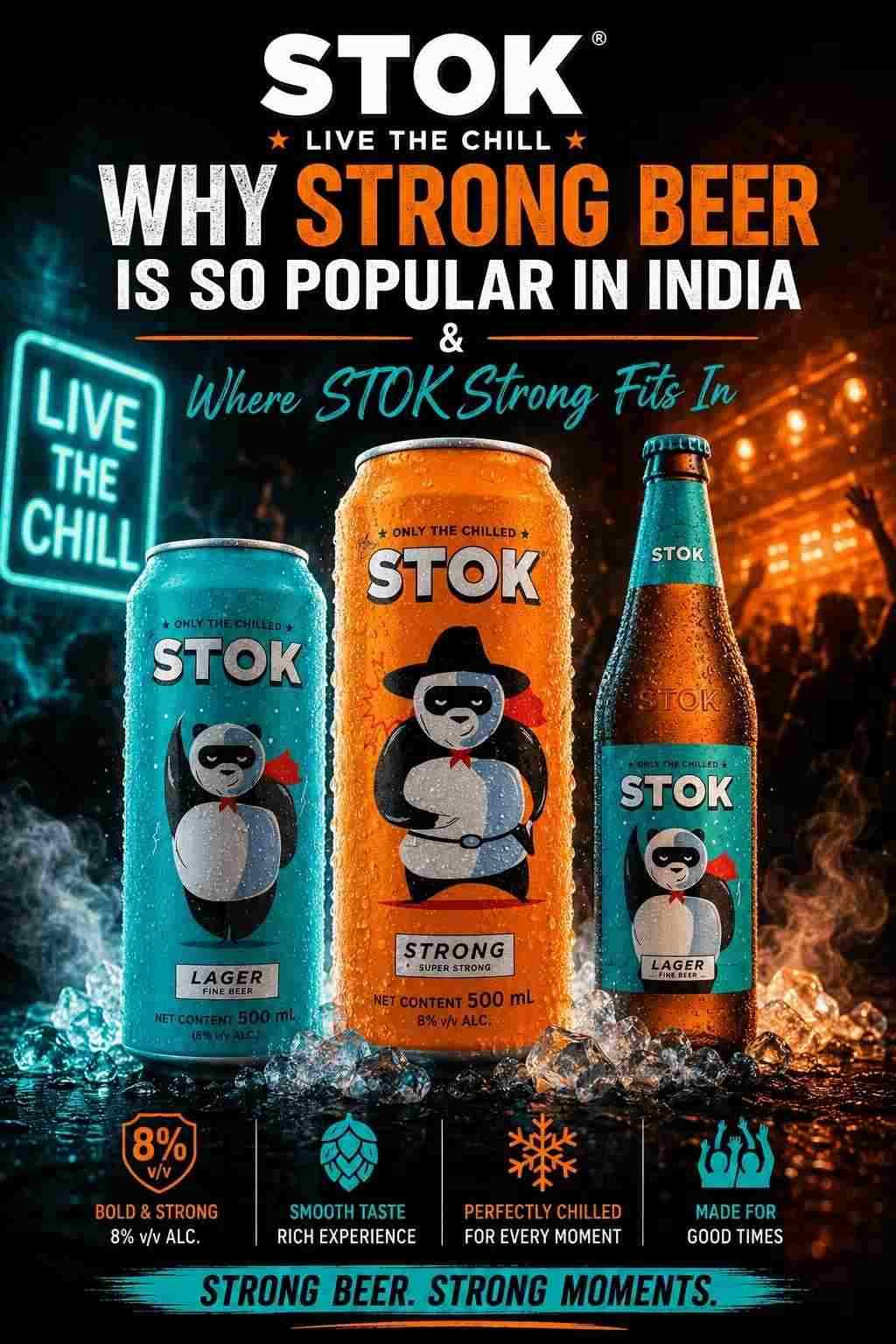
India's beer market was valued at USD 13.4 billion in 2024 and is projected to reach USD 23.41 billion by 2035. Within that growth story, the strong beer segment is punching above its weight. STOK strong beer India positions itself as a high-ABV, American-style option built for drinkers who want more from every pour. This post looks at what defines the strong beer category in India, why it matters to urban consumers, what ABV means in practical terms, and how the American-style format compares to standard lagers. By the end, you will have a clear picture of why this segment keeps growing and what to look for when choosing a strong beer.
What Makes a Beer Qualify as "Strong" in India?
A beer earns the "strong" label in India when its alcohol by volume (ABV) sits above 5%, with most products in the category ranging between 6% and 8%. The higher ABV delivers a more pronounced finish and a fuller body than standard mild beers. This is the core distinction that drives purchasing decisions in the strong beer segment.
How ABV Is Measured and Why It Matters
ABV tells you what percentage of a drink is pure alcohol. A 650ml bottle at 8% ABV contains roughly 52ml of pure alcohol. That is nearly double what a standard 4.5% lager contains. For consumers watching their intake, or simply calibrating their session, this number is critical.
The Role of Brewing Style in Alcohol Strength
Alcohol strength comes from fermentation. More fermentable sugars in the grain bill means the yeast produces more alcohol. Brewers control final ABV by adjusting malt ratios, fermentation time, and yeast strain. An American-style strong beer typically uses a clean, neutral yeast that preserves grain character while letting the alcohol content come through without harsh aftertaste.
Strong Beer vs. Mild Beer: The Key Differences
Mild beers in India generally run between 4% and 5% ABV. They suit longer, more casual sessions. Strong beers above 6% ABV are bought by consumers who prefer fewer bottles with a stronger effect. North India leads the beer market in India, driven by Delhi, Haryana, Punjab, and Uttar Pradesh a region with a strong beer culture and high consumption of both strong and premium beers.
Why Is Strong Beer More Popular Than Mild Beer in India?
Strong beer outsells mild beer in volume terms across most Indian states because it offers more value per rupee spent on alcohol content. Indian consumers, particularly in tier-1 and tier-2 cities, prioritise this value equation. Over 50% of India's population is under the age of 30, and this demographic shift has spurred increased demand for beer, particularly among younger urban consumers.
Income Levels and Drinking Occasions
Strong beers fit informal social occasions home gatherings, small restaurant visits, post-work drinks where consumers want a satisfying drink without buying multiple rounds. Rising disposable incomes have pushed more drinkers toward slightly premium strong formats rather than the cheapest available product.
Urban Lifestyle and Brand Consciousness
Brands are now offering smoother, more refined taste profiles with stylish packaging, responding to urban consumer expectations. The days of strong beer meaning rough taste are ending. Consumers in metros now expect a strong beer to deliver consistent flavour, clean finish, and shelf presence that does not look out of place at a social gathering.
How Distribution Shapes Strong Beer Dominance
Strong beer benefits from wide off-trade distribution supermarkets, wine shops, and convenience outlets. Supermarkets and hypermarkets represent the largest distribution segment, with a 34% market share in 2025, driven by organised retail expansion and attractive promotional pricing. This reach puts strong beer in front of budget-conscious consumers who buy in bulk.
What Is American Style Strong Beer?
American-style strong beer follows a brewing tradition that emphasises clean fermentation, a smooth mouthfeel, and restrained bitterness. Unlike European strong ales, which can carry heavy malt or ester notes, the American format prioritises drinkability at higher ABV. You get the strength without the heaviness. This format has grown internationally because it pairs well with spicy food a clear advantage in the Indian context.
Key Characteristics of the American Format
The grain bill in American-style strong beer leans on pale malts, producing a lighter colour than stouts or dark ales. Hop presence is moderate enough to balance sweetness, not enough to overwhelm. The result is a beer that finishes clean even at 8% ABV. Indian palates, accustomed to strongly spiced food, tend to respond well to this profile.
Why the Format Works for Indian Drinkers
Indian cuisine uses bold flavours cumin, coriander, chilli, tamarind. A heavily bitter or malt-forward beer can clash with these profiles. A clean American-style strong beer acts as a palate cleanser rather than a competitor to food flavour. This is one practical reason the format is gaining ground in India beyond pure alcohol-content considerations.
What to Expect at 8% ABV
At 8% ABV, a 330ml can delivers the equivalent of roughly 2.1 standard drinks. Drinkers who understand standard drink measures can pace themselves more accurately. India's low per capita beer consumption of 2.15 litres versus the Asia Pacific average of 15.33 litres points to significant long-term headroom for growth (Source: Vyansa Intelligence, 2026). As that consumption rises, educated consumers will increasingly look at ABV as a planning tool, not just a strength indicator.
For a closer look at how one Indian craft strong beer positions itself in this space, the STOK Strong product page offers a useful reference on how the American-style format is being interpreted for domestic drinkers.
How Is Strong Beer Different from Craft Beer in India?
Strong beer and craft beer are not mutually exclusive a beer can be both. But in the Indian market, they occupy different mental shelves. Craft beer emphasises brewing philosophy, small-batch production, and ingredient variety. Strong beer is defined entirely by ABV. A craft brewer can produce a strong beer. A mass-market brewer can also produce a strong beer. The difference is process, scale, and intent.
Craft Brewing Methods vs. Mass Production
Craft breweries typically use traditional or experimental ingredients, smaller fermentation vessels, and slower conditioning times. This produces more flavour complexity per batch. The craft beer movement has gained traction in India, with local breweries and microbreweries gaining popularity among younger, more adventurous drinkers who view craft beers as a premium option. A craft strong beer combines the ABV of the strong category with the flavour ambition of the craft category.
Price Points and Consumer Expectations
Mass-market strong beers are priced for volume. Craft strong beers carry a premium tied to ingredients and process. Urban consumers in their mid-20s to mid-30s are increasingly willing to pay that premium. Urban millennials and young professionals are demonstrating willingness to explore artisanal brews that offer unique flavour profiles and authentic brewing heritage.
Where Strong Craft Beer Fits in the Market
The strongest growth opportunity in India's beer market sits at the intersection of strength and craft. Consumers want the ABV they know from strong beer, combined with the flavour story they associate with craft. Brands that can deliver both at a price point accessible to urban middle-class buyers are positioned well for the next five years.
Conclusion
STOK strong beer India enters a market with clear momentum. India's beer market is projected to grow at a CAGR of 9.90% through to 2034, driven by urbanisation, rising incomes, and the increasing popularity of craft and premium beers. The strong beer segment benefits from a value-driven consumer base, a young demographic with experimental tastes, and a format American-style that aligns naturally with Indian food culture. As per-capita beer consumption in India continues to rise, the question is not whether strong craft beer has a future here it is how quickly consumer expectations will outpace what the market currently offers.
We strictly follow all applicable government regulations, legal drinking age policies, and responsible alcohol advertising guidelines in India.
Tags : .....