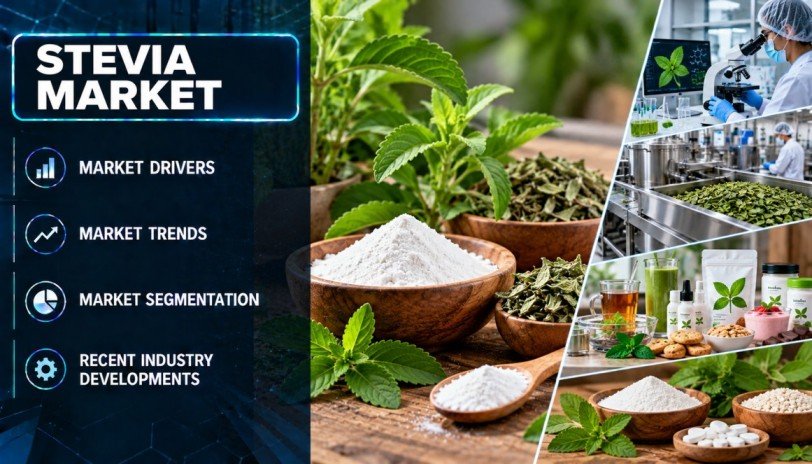
IMARC Group, a leading global market research and management consulting firm, has published its latest report on the stevia market. According to IMARC Group's full stevia market report, The global stevia market size was valued at USD 873.8 Million in 2025. Looking forward, IMARC Group estimates the market to reach USD 1,525.6 Million by 2034, exhibiting a CAGR of 6.39% from 2026-2034. Growth is driven by rising preference for natural sweeteners, wider use in food and beverage formulations, supportive sugar reduction policies, and steady innovation in taste and solubility. Asia Pacific leads the market with a share of over one-third.
The industry is experiencing strong growth momentum as health-conscious consumers move away from refined sugar. Stevia is a plant-based, zero-calorie sweetener extracted from the leaves of the stevia rebaudiana plant. Manufacturers use it in soft drinks, dairy, snacks, tabletop sweeteners, pharmaceuticals and personal care products. Better purification and extraction methods are producing high-purity extracts with less of the bitter aftertaste that once limited adoption.
How Technology is Reshaping the Stevia Market
- Precision Extraction and Purification Technologies: Advanced extraction and bioconversion methods are producing high-purity steviol glycosides such as Reb M and Reb D. These deliver a taste profile much closer to sugar and let manufacturers replace sugar in more demanding formulations like carbonated drinks and dairy.
- Data-Led Formulation and Taste Optimization: Ingredient developers are using analytics and sensory data to design blends that reduce aftertaste, improve solubility and match sweetness curves across beverages, baked goods and sauces. This shortens development cycles and supports clean-label positioning.
- Supply Chain Traceability and Sustainable Sourcing: Digital traceability and regional production models help companies manage quality, cut transport emissions and meet buyer demand for responsibly sourced ingredients. Several suppliers are building regional supply chains for this reason.
Stevia Market Trends and Drivers
The stevia market is witnessing steady expansion, supported by health awareness, regulatory backing and product innovation. A consulting firm survey of more than 5,000 consumers across the United Kingdom, China and the United States found that about 60% of respondents consider healthy aging and longevity products very or extremely important. About 85% of consumers in China reported buying more in this category. Consumers who are thinking about long-term health are cutting sugar and looking for natural, low-calorie alternatives.
Lifestyle disease is another strong driver. According to the Centers for Disease Control and Prevention, over 40% of U.S. adults live with obesity, and 23% of those adults also have diabetes. The International Diabetes Federation estimates that about 537 million people worldwide live with diabetes, including roughly 90 million in South-East Asia. Consumers, doctors and food companies are all looking for sugar alternatives that do not add calories. A food and health survey in the United States found that respondents actively sought zero-sugar claims to limit or avoid sugar. Keto, low-carb and vegan diets add further demand, since stevia fits all of them.
Government policy is accelerating adoption. In the United States, the Food and Drug Administration has granted steviol glycosides GRAS status. An acceptable daily intake has been set by the Joint FAO/WHO Expert Committee on Food Additives. In India, the FSSAI uses the Eat Right India movement to educate consumers on sugar reduction. In Europe, regulators have pushed for a 10% or greater reduction in added sugar across product categories, which is encouraging reformulation in Germany, the United Kingdom and France. In February, Avansya, the joint venture between dsm-firmenich and Cargill, announced that its EverSweet stevia sweetener received a positive safety opinion from both the UK Food Standards Agency and the European Food Safety Authority. Approvals like this give manufacturers confidence to reformulate.
Innovation is closing the taste gap. Companies are investing in new extracts, blends and solubility technologies to match sugar's flavor. Stevia is also reaching new applications. About 15% of protein powders and energy drinks in Europe now use stevia, and in the United States over 20% of natural sweetener sales are made online. Stevia also has a lower carbon footprint than sugarcane cultivation, which helps in sustainability-focused markets.
Stevia Industry Segmentation
The report has segmented the market into the following categories:
Breakup By Extract Type:
- Powder
- Liquid
- Leaf
Powder is the largest extract type segment, holding 67.3% share. It is popular because it is easy to store, has a long shelf life and works in both home cooking and commercial food production. Processing advances have also reduced the bitter aftertaste of earlier powdered products, which suits baking, beverage preparation and tabletop use.
Breakup By End Use:
- Beverages
- Food Products
- Table Top Sweeteners
- Pharmaceuticals
- Others
Beverages lead the end use segments with a 36.1% share. Soft drinks, flavored water, teas and juices are being reformulated to cut sugar without losing sweetness. Large beverage companies such as PepsiCo and Coca-Cola have added stevia to their portfolios, including Pepsi True and Diet Coke. Beverage-specific stevia solutions are also being launched to improve taste and solubility.
Breakup By Region:
- Asia Pacific (China, Japan, India, South Korea, Australia, Indonesia, Others)
- North America (United States, Canada)
- Europe (Germany, France, United Kingdom, Italy, Spain, Russia, Others)
- Middle East and Africa (Turkey, Saudi Arabia, Iran, United Arab Emirates, Others)
- Latin America (Brazil, Mexico, Argentina, Colombia, Chile, Peru, Others)
Asia Pacific dominates the global stevia market. It is both the largest producer and a major consumer, driven by health awareness, rising disposable incomes and high sugar consumption. China is the largest stevia producer, with over 80% of its output exported, supported by government efforts to grow the agricultural economy. Japan, India and South Korea are seeing rising demand as diabetes and obesity concerns grow, and the beverage industry in China and India is adding stevia to flavored water, iced teas and diet sodas.
North America benefits from consumer demand for natural, low-calorie alternatives and a strong innovation pipeline. In Europe, sugar reduction policy and rising diabetes prevalence are key drivers, with more than 60 million people living with diabetes. Latin America is a key production base, with Paraguay, the native home of the plant, as a leading producer and exporter. In Brazil and Mexico, where over 15 million Brazilians and 14 million Mexicans have diabetes, demand for low-calorie sweeteners is growing. In the Middle East and Africa, most GCC nations report prediabetes prevalence above 15% and diabetes above 20%, which supports use in baked goods and beverages.
Competitive Landscape
The report provides a comprehensive analysis of the competitive landscape in the stevia market with detailed profiles of all major companies, including:
- Archer-Daniels-Midland Company
- Cargill Incorporated
- GLG Life Tech Corporation
- Guilin Layn Natural Ingredients Corp.
- Hunan NutraMax Inc.
- Ingredion Incorporated
- Morita Kagaku Kogyo Co. Ltd.
- Pyure Brands LLC
- Sunwin Stevia International Inc
- Tate & Lyle PLC
- The Real Stevia Company AB
- Wisdom Natural Brands
- Zhucheng Haotian Pharm Co. Ltd.
What Does The Full Report Cover?
If you are tracking the stevia market for investment decisions, market entry planning, competitive benchmarking or strategic advisory, IMARC Group's report gives you everything in one place:
- Complete market sizing with revenue and volume analysis across the full projection period
- Quantified growth driver analysis across extract type, end use and regional markets
- Sub-segment breakdowns for powder, liquid, leaf, beverages, food products, tabletop sweeteners, pharmaceuticals and others
- Country-level data for 24 countries, including the United States, China, India, Japan, Germany, Brazil and Saudi Arabia
- Competitive profiles of leading companies with strategic landscape assessment
- Porter's Five Forces analysis and insights on drivers, challenges and opportunities
Recent News and Developments in the Stevia Market
- November: Wisdom Natural Brands, parent company of SweetLeaf, acquired Canada's Drizzle Honey. The deal expands its natural sweetener portfolio alongside stevia and monk fruit and opens U.S. distribution for Drizzle's sustainably sourced raw honey.
- October: Tate & Lyle PLC and Manus announced The Natural Sweetener Alliance to expand access to bioconverted stevia Reb M sourced and made in the Americas. The partnership focuses on traceability, supply chain security and sustainable, high-quality sweeteners.
- August: Howtian launched SoPure Dorado, an unrefined, golden stevia extract with zero calories. Minimally processed, it suits tabletop sweeteners, syrups and sauces, and targets consumers seeking less processed, plant-based options.
- May: Ingredion introduced PureCircle Clean Taste Solubility Solution (CTSS), a non-GMO, 100% stevia sweetener that is 100 times more soluble than Reb M. It targets food and beverage makers facing sugar reduction challenges.
- February: Sugar-Free, a leading sugar substitute brand in India, launched Sugar-Free Green, made from stevia leaves and sold nationwide as pellets and powder.
- July: Tate & Lyle launched Optimizer Stevia 8.1, offering a taste close to sugar at lower cost for sugar reduction formulations.
Note: If you require specific details, data, or insights that are not currently included in the scope of this report, we are happy to accommodate your request. As part of our customization service, we will gather and provide the additional information you need, tailored to your specific requirements. Please let us know your exact needs, and we will ensure the report is updated accordingly to meet your expectations.
Key Questions This Report Answers
- What is the current global stevia market size and what is its projected value?
- Which extract type segment holds the largest share in the global stevia market?
- Which end use segment leads the global stevia market?
- What are the key drivers of global stevia market growth?
- Which region dominates the global stevia market and why?
- How are regulatory approvals, sugar reduction policies and taste innovation reshaping competitive strategies in the stevia industry?
- Who are the top companies in the global stevia market and what are their strategies?
About Us
IMARC Group is a global management consulting firm that helps the world's most ambitious changemakers to create a lasting impact. The company provides a comprehensive suite of market entry and expansion services. IMARC offerings include thorough market assessment, feasibility studies, company incorporation assistance, factory setup support, regulatory approvals and licensing navigation, branding, marketing and sales strategies, competitive landscape and benchmarking analyses, pricing and cost research, and procurement research.
Media and Sales Contact
IMARC Group
Email: sales@imarcgroup.com
United States: +1-201-971-6302
India: +91-120-433-0800
United Kingdom: +44-753-714-6104
Tags : Stevia Market