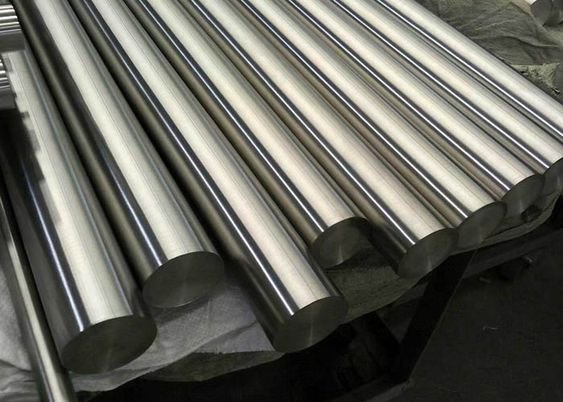
Industrial operations experience rapid equipment failure when engineers select incorrect alloys for aggressive environments. The addition of molybdenum gives this alloy specific defense mechanisms against pitting and crevice corrosion in harsh settings. Buyers frequently source Marine Grade Stainless Steel 316 Bars for offshore platforms and coastal infrastructure. This technical guide outlines the chemical composition, industrial uses, performance advantages, and procurement criteria for these materials.
What Is Stainless Steel 316 Round Bar?
Formulating this metal requires a precise chromium-nickel-molybdenum austenitic balance. Industry professionals usually reference the standard specification ASTM A276 Type 316 Round Bar during procurement. Chromium provides the basic passive oxidation layer. Nickel stabilizes the austenitic crystal structure. Then molybdenum specifically targets the chloride damage that routinely destroys standard 304 grades in wet environments. Suppliers stock these items in bright, cold-finished, hot-finished, and forged forms.
Key Properties of SS 316 Round Bar
Excellent Corrosion Resistance
Severe industrial environments demand strict material selection. The SS 316 Round Bar resists structural decay across these exact conditions. The protective passive layer reforms immediately if scratched. This microscopic self-healing characteristic prevents underlying rust formation even inside damp processing facilities where humidity stays constantly elevated.
Improved Chloride Resistance
Molybdenum stops chloride-induced pitting completely. Coastal facilities rely heavily on this specific chemical trait to maintain structural integrity. Saltwater spray breaks down standard carbon materials within months. This specific grade withstands years of prolonged saline exposure without showing localized decay.
Good Mechanical Strength
Designers find reliable tensile strength alongside excellent baseline durability here. Other steel categories offer much higher sheer strength. Austenitic grades deliberately prioritize chemical stability over pure load-bearing capacity. Despite this metallurgical trade-off, the alloy still supports massive structural loads across typical engineering configurations.
Good Weldability
Joining these solid components requires standard industrial welding processes. Proper procedures prevent localized corrosion delay at the structural joints. High heat input causes severe carbide precipitation in standard carbon steels. This specific austenitic grade accommodates standard TIG and MIG welding using matching filler metals without compromising the surrounding metal structure.
Good Machinability and Fabrication
Machining this metal demands standard heavy-duty industrial equipment. Operators must adjust their machining parameters to handle the severe work-hardening behavior inherent to all austenitic steels. Heavy feeds and slow speeds cut through the hardened surface layer effectively. Sharp tooling prevents heat buildup.
Temperature Resistance
Thermal expansion rates significantly exceed those of standard carbon steels. Designers must account for this dimensional shift in hot piping systems. Heat exposure alters the mechanical properties across specific elevated-temperature applications. Maximum service temperatures depend entirely on the surrounding operating environment and the physical stress loads applied to the part.
Benefits of Using Stainless Steel 316 Round Bars
Superior Corrosion Resistance
Corrosive industrial environments degrade standard carbon alloys rapidly. The 316 material survives these exact conditions reliably over decades. Acidic chemicals and high ambient humidity simply fail to penetrate the molecular surface barrier.
Resistance to Pitting and Crevice Corrosion
Tight spaces trap chloride-containing fluids and cause highly localized metal failure. The unique chemical composition prevents this specific degradation path. It protects the metal under fastener heads and deep inside threaded connections.
Durability and Long Service Performance
Correct material selection leads directly to reliable field performance. Clients often replace carbon steel parts with this specific grade just to extend their standard replacement cycles. The higher initial material cost heavily offsets the price of future maintenance shutdowns.
Low Maintenance Requirements
Plant managers eliminate costly painting and coating schedules entirely. A simple high-pressure wash restores the bright surface finish to its original condition.
Versatile Fabrication
Manufacturers machine the raw material into complex finished components without special tooling. Cold working processes increase the surface hardness even further. Fabrication shops process massive volumes of this metal daily.
Wide Industrial Applicability
Multiple diverse engineering challenges resolve quickly with one standardized material grade. Facilities utilize the metal across marine, chemical, food processing, pharmaceutical, petrochemical, and architectural sectors.
Applications of Stainless Steel 316 Round Bar
Marine Industry: Shipbuilders install propeller shafts and structural supports made from 316 Stainless Steel Round Bar to resist saltwater immersion. Marine hardware requires complete reliability miles from shore.
Chemical Processing: Plant engineers construct storage tanks and piping networks from this material to handle aggressive acids. The metal safely contains caustic chemicals under extreme high pressures.
Food and Beverage Industry: Processing facilities require sanitary surfaces that withstand acidic foods and heavy washdowns. The non-porous finish prevents bacterial growth in dairy and brewery production lines.
Pharmaceutical Industry: Cleanrooms demand non-reactive equipment surfaces to prevent batch contamination. Drug manufacturers build massive mixing vats and centrifuge components directly from these solid billets.
Petrochemical Industry: Refineries deploy these components in high-stress offshore extraction environments. The alloy handles raw crude oil and harsh hydrogen sulfide gas without prematurely failing.
Construction and Architecture: Builders specify the material for structural supports in coastal buildings exposed to continuous salt spray. Architects appreciate the clean aesthetic alongside the structural permanence.
How to Choose the Right Material
Identify the Application
Determine the exact end use first. Marine equipment, chemical processing setups, food lines, pharmaceutical equipment, pumps, and general engineering tasks require wildly different tolerances.
Evaluate the Environment
Assess specific exposure levels to chlorides, moisture, and aggressive chemicals. Note peak operating temperatures, marine atmosphere presence, and potential immersion conditions before ordering stock.
Select the Required Diameter
Component dimensions and physical design loads determine the required material thickness. Incorrect sizing leads to catastrophic mechanical failure regardless of the chemical corrosion resistance.
Choose the Required Finish
Steel suppliers offer bright, polished, cold drawn, and hot finished variants. Surface roughness directly impacts cleanability in sanitary food processing applications.
Check Applicable Standards
Verify that the material meets ASTM, ASME, EN, or specific local project requirements. Regulatory bodies demand strict adherence to these published metallurgical codes.
Verify Mechanical and Chemical Requirements
Confirm the tensile strength, yield strength, hardness, exact chemical composition, and specific dimensional tolerances. Astute buyers reject material batches failing to meet the specified mechanical baselines.
Request Material Certification
Review the Mill Test Certificate before formal material acceptance. Quality inspectors must verify the heat number, chemical analysis, mechanical test results, dimensional inspection, and overall material traceability.
Conclusion
Evaluating the exact physical environment determines the correct diameter, finish, grade, and certification requirements. The metal provides a combination of chemical stability, physical toughness, and fabrication versatility. Plant designers specify the material to solve aggressive structural challenges effectively. Molybdenum provides the necessary defense against chloride damage in coastal regions. Buyers must select their stock based entirely on their actual application parameters.