Sotorasib: A Targeted Therapy for KRAS G12C-Mutated Non-Small Cell Lung Cancer
By Globans Pharma 24-02-2026 79
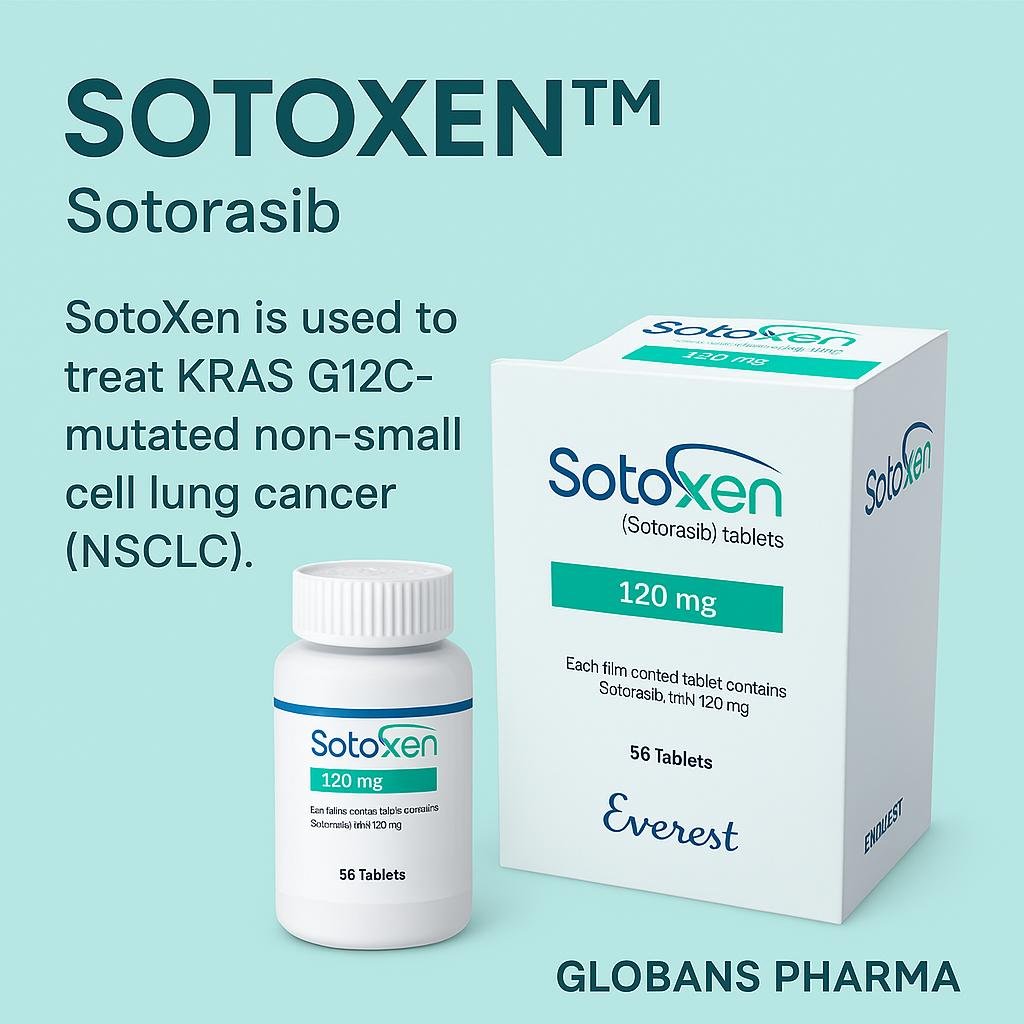
The most common type of lung cancer is non-small cell lung cancer (NSCLC), which is usually linked with particular genetic mutations that cause the cancer to develop. The use of precision medicine has made it possible to develop tailored therapies that target specific mutations in recent years. Sotorasib is one of the new targeted treatments that specifically target the KRAS G12C mutation, a common genetic mutation present in patients with advanced NSCLC.
Understanding the KRAS G12C Mutation
The KRAS gene is accountable for the regulation of cell growth and division. However, when a mutation such as KRAS G12C happens, it leads to the KRAS protein being in a perpetual active state. This leads to the uncontrolled growth of cancer cells.
The KRAS G12C mutation is common in patients with NSCLC in the advanced stage, particularly in patients who have a history of smoking. Previously, it had been thought that this mutation was hard to treat with conventional treatments like chemotherapy or immunotherapy.
What is Sotorasib?
The KRAS G12C inhibitor medicine class comprises the targeted oral drug sotorasib. By direct binding to the mutant form of the KRAS protein and reducing it into an inactive state, it stops the growth of cancer cells.
Sotorasib, that targets the genetic source of tumor growth, may be utilized as specific therapy for patients with KRAS G12C-positive NSCLC.
Mechanism of Action
Sotorasib to treat Non-small cell lung cancer acts at the molecular level by blocking the aberrant KRAS signaling pathways that are responsible for the survival and growth of cancer cells.
Mechanism of Action:
- Inhibits signals for the growth of cancer cells
- Induces apoptosis in cancer cells
- Inhibits the progression of the tumor
- Prevents the spread of cancer cells
This mechanism of action helps in slowing down the progression of the disease with minimal damage to the surrounding healthy tissues.
Clinical Benefits of Sotorasib Therapy
Patients undergoing Sotorasib treatment may have the following potential advantages:
- Progression-free survival
- Reduction in tumor size
- Delay in disease progression
- Tolerable safety profile
- Oral route of administration
Its mutation specificity makes it a valuable treatment modality in managing advanced NSCLC.
Dosage and Administration
It is usually taken orally once a day, as directed by a healthcare provider. Don't take more than the recommended dose.
Safety and Side Effects
As with other targeted therapies, Sotorasib can also cause some side effects, including:
- Diarrhea
- Nausea
- Fatigue
- Elevated liver enzymes
- Musculoskeletal pain
- Cough
It is recommended to monitor liver function on a regular basis when taking Sotorasib to avoid any potential risks.
Who Can Benefit from Sotorasib?
Sotorasib is prescribed for use in adult patients with:
- Locally advanced or metastatic NSCLC
- Confirmed KRAS G12C mutation
- Prior history of systemic therapy
- Molecular testing is required to identify patients eligible for this targeted therapy.
Conclusion
Sotorasib has greatly enhanced the treatment outcomes of patients with KRAS G12C-mutated NSCLC by providing a targeted and mutation-specific treatment strategy. The targeted treatment of this available for effective KRAS G12C inhibitor therapy include Sotoxen 120mg Capsule from Globans.
FAQs
Q-What is the use of sotorasib?
A-Patients over the age of 18 with locally advanced or metastatic non-small cell lung cancer (NSCLC) who have a confirmed KRAS G12C mutation are treated with sotorasib.
Q-Before starting sotorasib medication, is genetic testing necessary?
A-Certainly before starting sotorasib therapy, molecular testing is required to confirm the presence of the KRAS G12C mutation.
Tags : .....