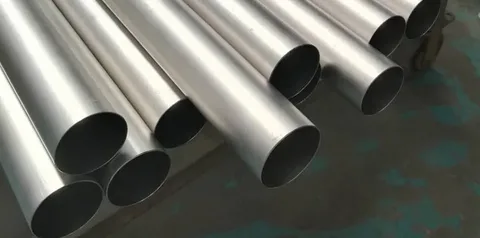
Hastelloy pipes resist aggressive chemical corrosion and high temperatures in industrial heat exchangers and process equipment. Hastelloy pipes, manufactured from nickel-based alloys with controlled additions of chromium, molybdenum, and other elements, address this limitation by providing corrosion resistance across a broader range of chemical environments and temperatures than conventional grades cover. Heat exchangers, reactors, scrubbers, and acid handling systems in chemical processing, petrochemical refining, oil and gas production, power generation, and pollution control may use Hastelloy Alloy Pipes where corrosion resistance is required.
What Are Hastelloy Pipes?
Hastelloy pipes are nickel-based tubular products within the broader category of Nickel Alloy Pipes. They are designed to resist corrosion in demanding chemical environments. Custom grades are available in seamless construction for high-pressure duty or in welded versions for dimensional flexibility. They are designed for some operational situations. The standard selection for mixed oxidizing/reducing acids is Hastelloy C276; however, for very oxidizing streams, C22 is the optimum choice. B2 provides particular protection against media such as hydrochloric acid in demanding processing applications.
Key Properties of Hastelloy Alloy Pipes
Hastelloy alloy pipes offer exceptional chemical resistance and mechanical dependability, important for crucial fluid handling applications in severe process conditions.
- Good resistance to strong chemical media like oxidizing acids, reducing acids, and chloride streams.
- Excellent resistance to localized pitting and crevice corrosion in aggressive chloride conditions.
- Absolute immunity of stress corrosion cracking with coupled tensile load and severe operating temperature.
- High mechanical strength to ensure safe containment of pressure at high operating temperatures.
- Oxidation stability at high temperature for long-term performance under harsh thermal conditions.
- Excellent weldability with matched nickel-base filler metals; no post-weld heat treatment needed.
- Longer service life means less unscheduled plant downtime and lower long-term maintenance expenses.
Role of Hastelloy Pipes in Heat Exchangers
Heat exchangers are among the most difficult applications for pipeline material because they are exposed to both process and secondary fluids. Corrosion on either surface lowers the heat transfer and may contaminate the stream. Hastelloy Steel Pipes are utilized for heat exchanger tubes as they are resistant to chemical assault by the process fluid during continuous heat transfer and are useful in chemical and petrochemical applications involving harsh acids, chloride solutions or mixed industrial chemicals.
Heat recovery and process heating systems require tube materials that will be ccorrosion-resistant and structurally sound at high temperatures, which ordinary stainless grades cannot deliver. That's why Hastelloy tube bundles are utilized in sshell-and-tubeheat exchangers in sulfuric acid, hydrochloric acid, chemical synthesis, and pharmaceutical processing. Instead of picking an off-the-shelf alloy grade, tailor it to the corrosive chemistry and operating temperature of the process fluid to minimize tube wall thinning, pitting and stress corrosion failure.
Applications in Process Equipment
When process settings transition from aggressive to extreme, Hastelloy piping is the best choice. Standard stainless alloys just break down when high temperatures, concentrated acids and high pressures are combined. These pipes are designed for heavy chemical service, ensuring the safe operation of key transfer loops and containment units without the risk of unexpected corrosion failure.
- Chemical reactors and process vessels: Dealing with concentrated acids, halogen compounds, and mixed oxidizing streams where the temperature and chemical activity are at their maximum concurrently.
- Process transfer piping: Transfer of highly reactive media and raw chemical feeds between unit activities without risk of pinhole leaks or deterioration.
- Flue gas scrubbing and pollution control: Persistent wet, acidic condensates and gas streams in desulfurization and waste gas treatment systems.
- Petrochemical and Sulfur Handling Units: Handling hydrotreating, reforming, and sour gas sections subjected to mixtures of H2S, organic acids, and chlorides.
- Industrial acid piping: used for feeding pickling lines, electroplating systems, and purpose-built acid handling facilities, all under the most severe corrosive conditions.
- Pharmaceutical and specialty chemical processing: Ultra-clean process streams that can withstand strong cleaning chemicals and do not leach metal ions.
- Sour oil and gas production: Protection of offshore and onshore collection lines transporting generated water and H2S content levels beyond the capabilities of duplex stainless.
Why Choose Hastelloy Pipes for High-Temperature Service?
Some Hastelloy alloys can provide beneficial corrosion resistance and mechanical strength at high temperatures where the combination of heat and chemical assault makes stainless steel and lower alloy alternatives unworkable. High Temperature Hastelloy Pipes can provide corrosion resistance and mechanical performance at elevated temperatures, depending on the specific grade, process chemistry, and applicable specification. B2 is not a high-temperature alloy in the same way as C276. C22 is not the same at increased temperatures in strongly oxidizing environments as C276 is in reducing environments. The applicable temperature capacity of the grade is dependent on the operating temperature, the composition of the process fluid, the fluid velocity, the exposure time, and the pressure. These factors must be examined in relation to the published corrosion data of the alloy for the actual service environment.
How to Select the Right Hastelloy Pipe
Grade selection is the most consequential decision for C276 for broad chemical resistance, including chloride environments; C22 for strongly oxidizing media and mixed acid streams; and B2 for reducing acid service, particularly hydrochloric acid. Process fluid chemistry, acid type, concentration, temperature, chloride content, and contaminants must be mapped against the selected grade's corrosion resistance data before specification is finalized.
Pressure design calculations under ASME B31.3 or a similar code use operating temperature and pressure to estimate wall thickness. Pipe schedule and outside diameter depend on flow and pressure class. Seamless is for pressure-critical and high-purity applications, while welded is for lower-pressure applications where inspection validates weld zone integrity. ASTM B622 covers seamless Hastelloy pipe and tube, and B619 welded pipes. Specifying the product standard at order avoids project handover documentation gaps. Instead of assuming filler metal selection, preheat, and post-weld inspection, use certified welding. Minimum pressure-service documentation is EN 10204 3.1 mill test certificates for composition, mechanical properties, and heat traceability.
Conclusion
There are applications for heat exchangers and industrial equipment that require great corrosion resistance and Hastelloy pipes are used for those applications. The chemistry of the process, the temperature, the pressure, the dimensions, the needed specifications and the certification criteria are significant in choosing a grade.
Tags : Hastelloy Pipes