Retrofit Emission Control Device (RECD) for DG Sets: Ensuring Environmental Compliance with CPCB Norms
By Aceget Private Limited 14-04-2026 401
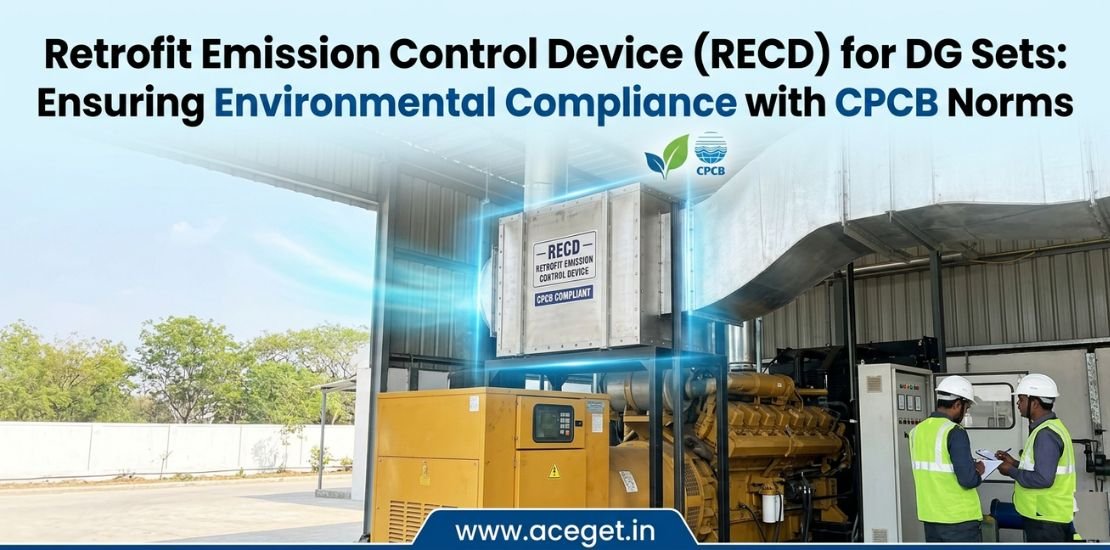
In today’s rapidly industrializing world, diesel generator (DG) sets remain a crucial source of backup and continuous power supply. However, their environmental impact is significant due to the emission of harmful pollutants such as particulate matter (PM), nitrogen oxides (NOx), carbon monoxide (CO), and hydrocarbons (HC). To address these concerns and align with stringent environmental regulations, Retrofit Emission Control Devices (RECDs) have emerged as an effective and mandatory solution in India.
What is RECD?
A Retrofit Emission Control Device (RECD) is an advanced pollution control system installed in the exhaust of an existing DG set. It is designed to reduce harmful emissions without requiring major modifications to the engine. RECDs function by converting toxic gases into less harmful substances through catalytic reactions and filtration processes.
These systems typically incorporate technologies such as Diesel Oxidation Catalysts (DOC), Diesel Particulate Filters (DPF), and Selective Catalytic Reduction (SCR), which collectively help in minimizing emissions. By trapping particulate matter and oxidizing pollutants, RECDs significantly improve air quality.
Need for RECD in Modern Environmental
Air pollution has become a critical environmental and public health issue, especially in urban and industrial regions. DG sets contribute substantially to air pollution due to incomplete combustion of diesel fuel. Studies and regulatory observations indicate that diesel generators emit high levels of PM and NOx, which are harmful to human health and the environment.
Recognizing this, regulatory authorities in India have enforced stricter emission standards. RECDs play a vital role in reducing emissions by up to 70–96%, depending on the technology and operating conditions. This makes them essential for sustainable operations and environmental protection.
CPCB Norms and Regulatory Framework
The Central Pollution Control Board (CPCB), along with the National Green Tribunal (NGT) and the Commission for Air Quality Management (CAQM), has laid down strict emission norms for DG sets. As per these guidelines:
- DG sets manufactured between July 2004 and June 2023 must be retrofitted with CPCB-approved RECDs.
- A minimum particulate matter reduction of around 70% is required to meet compliance standards.
- Only CPCB-certified or tested RECD systems should be installed.
- Proper documentation, testing, and vendor approval are essential for regulatory acceptance.
Additionally, compliance is not limited to installation alone. Regular monitoring, maintenance, and record-keeping are necessary to demonstrate adherence during inspections by pollution control authorities.
Working Principle of RECD
RECDs operate on a combination of physical and chemical processes:
- Filtration: Particulate matter is trapped using filters such as DPF.
- Oxidation: Catalysts convert CO and HC into carbon dioxide and water.
- Reduction: Advanced systems like SCR reduce NOx emissions into nitrogen and water.
- Regeneration: Accumulated soot is periodically burned off to maintain efficiency.
This integrated approach ensures effective emission reduction while maintaining the performance of the DG set.
Benefits of Installing RECD
- Regulatory Compliance: Helps DG set owners meet CPCB and NGT emission norms.
- Environmental Protection: Reduces harmful pollutants, contributing to cleaner air.
- Cost-Effective Solution: Retrofitting is more economical than replacing existing DG sets.
- Improved Efficiency: Cleaner exhaust systems can enhance engine performance and lifespan.
- Corporate Responsibility: Supports sustainability goals and improves organizational image.
Challenges and Considerations
While RECDs offer numerous benefits, certain challenges must be addressed:
- Initial Investment: Installation costs can be significant, especially for large DG sets.
- Vendor Selection: Choosing a CPCB-approved vendor is critical to ensure compliance.
- Maintenance Requirements: Periodic cleaning and monitoring are necessary for optimal performance.
- Operational Compatibility: The device must match the DG set capacity and usage pattern.
Failure to address these factors may lead to non-compliance, penalties, or operational inefficiencies.
Conclusion
Retrofit Emission Control Devices (RECDs) represent a practical and effective solution for reducing emissions from existing DG sets. By ensuring compliance with CPCB norms, they not only help industries avoid legal penalties but also contribute to environmental sustainability and public health.
In an era where environmental responsibility is paramount, adopting RECD technology is no longer optional but a necessity. Organizations that proactively implement these solutions will be better positioned to meet regulatory requirements, enhance operational efficiency, and contribute to a cleaner and greener future.
Ultimately, RECDs bridge the gap between industrial growth and environmental protection, making them an indispensable component of modern emission control strategies.
Tags : recd dg set diesel generator cpcb cpcb-norms