Restaurant owners usually spend a lot of time thinking about interiors, lighting, menu design, plating, and social media presentation.
But uniforms quietly shape customer experience too.
In fact, customers often notice restaurant staff before they notice food details. A clean, organized, professional-looking team immediately changes how people feel about service quality — even before the first order arrives.
The problem is many restaurants treat uniforms as an afterthought.
They either choose the cheapest option available or focus only on appearance without considering comfort, kitchen heat, fabric durability, or daily operational stress.
That usually creates problems later.
Across restaurants in Dubai and the UAE, the best-performing businesses are now choosing uniforms much more carefully. Not because they want “fashion.” Because they understand uniforms directly affect staff confidence, customer perception, hygiene standards, and daily operational efficiency.
And honestly, restaurant uniforms need to work much harder than people think.
Customers Notice Clean and Consistent Uniforms Immediately
Restaurants are visual businesses.
Customers may not consciously analyze uniform details, but they instantly notice when staff appearance feels inconsistent or unprofessional.
If servers wear different shades of black, wrinkled shirts, faded aprons, or poorly fitted uniforms, customers subconsciously associate that with poor organization.
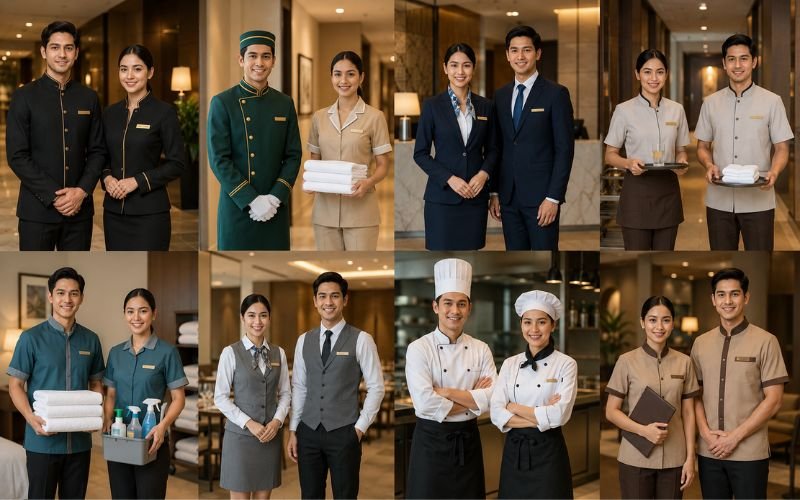
On the other hand, coordinated uniforms create a sense of structure and professionalism very quickly.
This becomes especially important in:
Casual dining restaurants
Fine dining venues
Hotel restaurants
Cafes
Fast-growing restaurant chains
Family restaurants
Consistency builds trust.
And in food service, trust matters more than most industries because customers directly connect cleanliness and presentation with food quality.
Comfortable Staff Usually Deliver Better Service
This part gets ignored far too often.
Restaurant staff work extremely demanding shifts. Long hours standing, constant movement, kitchen heat, carrying trays, rushing between tables, outdoor service areas — it adds up quickly.
Uncomfortable uniforms make everything worse.
In Dubai, UAE weather creates additional pressure because many restaurant teams move between hot outdoor environments and heavily air-conditioned interiors constantly.
Heavy fabric becomes exhausting during long shifts.
This is why modern restaurant uniform ideas are shifting toward:
Lightweight breathable fabrics
Stretch-friendly materials
Relaxed but professional fits
Moisture-managing fabrics
Easy-movement designs
Good restaurant uniforms should help employees work comfortably, not simply look formal for marketing photos.
Honestly, some restaurants still choose stiff formal uniforms that look impressive initially but become frustrating after two weeks of actual operations.
Employees notice immediately when management prioritizes appearance over practicality.
Aprons Are Becoming More Functional
Aprons used to be mostly decorative in many restaurants.
Now they are becoming more practical.
Modern restaurants increasingly choose aprons with:
Functional pockets
Adjustable straps
Durable stitching
Lightweight fabric
Easy stain resistance
Servers, baristas, and kitchen staff rely heavily on aprons during shifts, so functionality matters more than overly trendy designs.
Leather aprons became very popular for a while, especially in trendy cafes and grill restaurants. They look great in photos, but honestly, many employees dislike wearing them during long shifts in UAE conditions.
Heavy materials trap heat quickly.
Canvas and lightweight blended fabrics usually work better for day-to-day restaurant operations.
Different Restaurant Concepts Need Different Uniform Styles
One of the biggest mistakes restaurants make is copying uniform ideas from social media without considering their actual business environment.
A luxury steakhouse needs completely different uniforms compared to a beachside cafe or fast-casual restaurant.
For example:
Fine Dining Restaurants
Usually work best with:
Tailored shirts
Minimal branding
Neutral colors
Elegant aprons
Polished formal appearance
Casual Dining Restaurants
Often benefit from:
Relaxed modern fits
Comfortable fabrics
Softer branding
Practical footwear support
Fast Food or Quick Service Restaurants
Need:
High-durability fabrics
Easy maintenance
Frequent washing resistance
Heat management
Outdoor Restaurants and Cafes
Require:
Breathable lightweight materials
UV-resistant fabrics
Sweat management
Flexible layering options
Uniforms should match the operational reality of the restaurant — not just design trends online.
Branding Should Feel Natural, Not Forced
Some restaurants overload uniforms with branding.
Large logos. Bright color combinations. Too many design elements.
Usually, simpler creates a stronger customer impression.
Modern restaurant uniforms are moving toward cleaner designs with subtle branding details:
Small embroidered logos
Neutral tones
Consistent color palettes
Modern minimalist styling
This tends to look more premium and timeless.
Customers remember the overall experience more than oversized logos on every sleeve and apron.
Good branding supports the restaurant atmosphere quietly instead of dominating it.
Kitchen Uniforms Need Special Attention
Kitchen uniforms are completely different from front-of-house uniforms.
And honestly, this is where many restaurant owners make poor decisions.
Kitchen staff work under intense heat. Fabrics that feel comfortable in dining areas may become unbearable inside busy kitchens.
Good kitchen uniforms should focus on:
Heat management
Sweat control
Durability
Easy stain removal
Frequent washing resistance
Breathability
Chef jackets are also changing now.
Many restaurants are moving away from heavy traditional double-breasted jackets toward lighter modern alternatives that still maintain a professional look while improving comfort.
This shift is especially important in UAE kitchens where temperatures already run high.
Easy Maintenance Saves Restaurants Time and Money
Restaurants wash uniforms constantly.
That means maintenance matters just as much as design.
A uniform that wrinkles heavily, fades quickly, or loses shape after repeated washing becomes expensive very fast.
This is why experienced restaurant operators now prioritize:
Wrinkle resistance
Strong color retention
Fast drying fabrics
Easy stain removal
Industrial laundry compatibility
Cheap uniforms usually create hidden costs through constant replacements and poor appearance after a few months.
Many restaurants learn this lesson the hard way.
Working with an experienced Restaurant Uniform Supplier in Dubai often helps businesses avoid these operational mistakes because experienced suppliers understand how restaurant environments actually affect garments over time.
Footwear Is Becoming Part of Uniform Planning
This trend is growing quickly now.
Restaurants are paying more attention to staff footwear because slips, fatigue, and discomfort directly affect both safety and service quality.
Non-slip shoes are becoming standard in many restaurants, especially in kitchens and fast-moving service environments.
Comfortable footwear reduces fatigue significantly during long shifts.
And tired employees rarely deliver excellent customer service consistently.
Long-Term Value Is Finally Becoming More Important
Restaurants used to replace uniforms constantly because they purchased based mainly on price.
That mindset is changing slowly.
Businesses now realize durable, practical uniforms usually provide better long-term value than cheaper options requiring constant replacement.
A strong restaurant uniform program improves:
Customer perception
Employee confidence
Brand consistency
Hygiene presentation
Operational efficiency
Staff comfort
The smartest restaurants now view uniforms as part of daily operations, not just employee clothing.
Final Thoughts
Restaurant uniforms directly influence customer experience more than many businesses realize.
Customers notice professionalism, cleanliness, consistency, and staff confidence immediately. Employees notice comfort, practicality, and fabric quality even faster.
The best restaurant uniform ideas today focus less on fashion trends and more on real operational performance.
Comfort matters. Breathability matters. Durability matters. Maintenance matters.
And in Dubai’s restaurant industry, where teams work long demanding shifts under challenging conditions, thoughtful uniform planning can genuinely improve both employee satisfaction and customer perception.
Good uniforms quietly support better service.
That is what really matters.
FAQs
1. What fabric is best for restaurant uniforms in Dubai?
Breathable cotton blends and lightweight stretch fabrics usually perform best because they balance comfort, durability, and heat management during long shifts.
2. How often should restaurant uniforms be replaced?
Most restaurants replace uniforms every 6–18 months depending on washing frequency, fabric quality, and operational workload.
3. Are black uniforms better for restaurants?
Black uniforms hide stains well and maintain a professional appearance longer, which is why many restaurants prefer them. However, lighter breathable fabrics may feel cooler in hot environments.
4. Why do restaurant uniforms fade quickly sometimes?
Frequent industrial washing, harsh detergents, and poor-quality fabric dyes can cause fading faster than expected.
5. Should kitchen staff and service staff wear different uniforms?
Yes. Kitchen staff need heat-resistant, breathable, easy-clean uniforms, while front-of-house teams usually prioritize presentation and guest interaction.
6. What is the biggest mistake restaurants make when choosing uniforms?
Focusing only on appearance instead of comfort, durability, and maintenance performance during real restaurant operations.
7. Why is employee comfort important for customer experience?
Comfortable employees move more efficiently, stay less fa
Tags : Restaurant Uniform