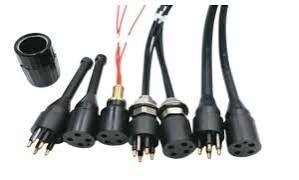
Reliable Gigabit Ethernet Watertight Cable Solutions
Underwater communication systems depend on more than fast electronics. Every connection between cameras, sensors, control equipment, and subsea instruments must continue working while exposed to water, pressure, movement, and challenging marine conditions.
Standard network cables aren't designed for these environments. Subsea systems need connections that protect electrical contacts while maintaining the data performance required by modern underwater equipment.
This becomes especially important with HD video feeds and large sensor networks. A weak connection can affect signal stability, making cable construction and connector design an important part of the complete underwater system.
A Gigabit Ethernet Series Watertight Cable Assembly combines high-speed Ethernet communication with a connection system built specifically for subsea use. HYSF's series supports transmission rates up to 1000 Mbps and is available in multiple configurations for different underwater equipment layouts.
What Makes Gigabit Ethernet Useful Underwater?
Modern subsea equipment can generate large amounts of information.
An underwater HD camera, for example, may need to send a continuous video stream back to monitoring or control equipment. ROV systems can also rely on multiple sensors and communication channels operating at the same time.
Gigabit Ethernet provides the bandwidth needed for these data-heavy applications.
HYSF lists underwater HD cameras, ROV remote control, seabed monitoring networks, and other real-time data systems among the intended applications for its Gigabit Ethernet cable assemblies.
How Does the Watertight Design Protect the Connection?
Water pressure creates a very different challenge from an ordinary industrial installation.
The connector interface, cable jacket, contacts, and enclosure entry all need to work together. HYSF uses molded connector bodies and subsea cables designed for marine conditions, along with bulkhead receptacles that provide protected enclosure connections.
The official specifications state a working pressure rating of up to 60 MPa, corresponding to applications at depths reaching approximately 6,000 metres.
Why Does Cable Shielding Matter?
Fast data transmission can be affected by electromagnetic interference and signal crosstalk.
The Gigabit Ethernet Series uses shielded twisted-pair cable construction to help protect signal integrity. This becomes particularly useful when communication cables are installed close to other electrical equipment inside a subsea system.
Which Connector Configurations Are Available?
Not every underwater project has the same enclosure size or electrical requirements.
The HYSF product range includes 8-pin, 10-pin, 12-pin, 13-pin, and 16-pin Gigabit Ethernet configurations. The company's product catalog also lists miniature and flat connector options.
This variety gives engineers more flexibility when designing compact cameras, sensor packages, ROV equipment, or larger subsea assemblies.
Selecting a Gigabit Ethernet Series Watertight Cable Assembly should therefore involve more than checking transmission speed. Pin configuration, connector dimensions, mounting arrangement, cable length, and electrical requirements should all be reviewed against the equipment design.
Where Are These Cable Assemblies Commonly Used?
Underwater imaging is one of the clearest examples.
High-definition network cameras need enough bandwidth to send detailed visual information without turning the cable connection into a bottleneck. Reliable sealing is equally important because these cameras may remain submerged for extended periods.
ROVs are another practical application. Video, sensor information, and control-related data may need to move between underwater equipment and other parts of the system.
Seabed monitoring networks can have similar requirements, particularly when several instruments are gathering information continuously. HYSF specifically identifies these types of high-bandwidth underwater applications for its Ethernet series.
What Should Engineers Check Before Selection?
Start with the actual operating environment.
Water depth and expected pressure are obvious factors, but temperature, cable routing, mechanical movement, available mounting space, and mating requirements also matter.
Electrical specifications deserve the same attention. HYSF lists a rated voltage of 550 V AC/DC for the series, along with an operating temperature range from -60°C to +80°C and a mechanical life of at least 500 mating cycles.
These figures should be compared with the requirements of the complete system rather than considered separately.
How Does HYSF Support Subsea Ethernet Projects?
Choosing a connector becomes easier when the available components belong to the same clearly defined product family.
https://hysfsubsea.com/hysf-products/gigabit-ethernet-series-watertight-cable-assembly/ offers Gigabit Ethernet watertight cable assemblies in multiple pin configurations for high-speed underwater communication. Its range includes cable plugs, bulkhead connection options, and related protective components, allowing engineers to select a connection setup around the physical and electrical needs of their subsea equipment.
That product-specific approach can be useful when a project requires both reliable sealing and high-bandwidth communication in one connection system.
Why Does Connector Compatibility Matter?
Subsea projects often contain equipment from different manufacturers or systems developed at different times.
HYSF states that its Gigabit Ethernet series is designed around international subsea interconnect dimensions and offers compatibility with established connector interfaces. Engineers should still verify the exact part number, pin arrangement, dimensions, and mating requirements before treating two components as interchangeable.
Checking the technical drawing before ordering can prevent an expensive mismatch later.
Conclusion
Fast underwater communication depends on the entire connection path, not simply the Ethernet protocol. Pressure resistance, sealing, shielding, connector configuration, cable construction, and installation conditions all influence real-world performance.
A Gigabit Ethernet Series Watertight Cable Assembly is designed to bring high-speed data transmission into demanding subsea environments. By matching the correct pin configuration and technical specifications to the application, engineers can build a more suitable connection for cameras, ROVs, sensors, and underwater monitoring systems.
Frequently Asked Questions
What data speed does the HYSF Gigabit Ethernet series support?
According to HYSF's technical information, the series supports Ethernet data transmission up to 1000 Mbps, or 1 Gbps.
What pin configurations are available?
The product range includes 8-pin, 10-pin, 12-pin, 13-pin, and 16-pin configurations, with different connector formats available across the series.
Can these assemblies be used with underwater cameras?
Yes. HYSF identifies underwater HD cameras as one of the intended applications, alongside ROV control and seabed monitoring systems that require high-speed data communication.
Tags : industrial hysfsubsea