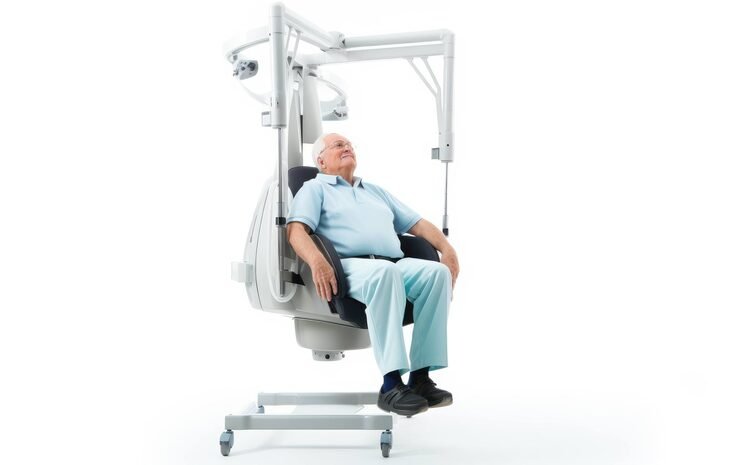
A patient hoist requires regular inspection and preventive maintenance to remain safe and operational. Key checks include examining sling integrity, testing load limits, lubricating moving parts, inspecting the braking system, and verifying battery or hydraulic function. A structured maintenance schedule reduces equipment failure, extends service life, and ensures compliance with safety standards.
For facility managers and hospital equipment teams, missed maintenance is not just a compliance risk, it’s a patient safety issue. A failure of the hoist during transfer may result in catastrophic harm to patient and caregiver. Here’s a realistic, actionable checklist to keep all the units in your facility functioning reliably.
Why Patient Hoist Maintenance Cannot Be an Afterthought
In Singapore, the Workplace Safety and Health Act (WSH Act) places the legal responsibility on employers and operators of sites to ensure that lifting equipment is safe to use. Under the Ministry of Manpower (MOM) standards, lifting machinery utilized in workplaces such as healthcare facilities must be routinely examined by a competent person. Not complying can result in incidents that could have been prevented and the consequence for non-compliance could be severe.
The financial case is plain. It’s beyond regulation. A good hoist can last 8-12 years, but a neglected unit could require a complete replacement in 3-4 years. Reactive repair or legal action is usually more expensive than preventative equipment maintenance.
Daily Hoist Inspection Checklist
Before every use, staff should run through a quick visual and functional check. This does not replace scheduled servicing — it is the first line of defence.
- Sling condition: Check for fraying, tears, worn stitching, or damaged loops. Never use a sling with visible damage.
- Attachment points: Confirm that hooks, clips, and spreader bars are locked securely before lifting.
- Battery indicator (powered hoists): Ensure the unit is adequately charged. A low-battery warning mid-transfer is a serious risk.
- Emergency stop function: Test the stop button or manual lowering function on every shift.
- Chassis and wheels: Inspect for cracks, bent frames, or wheel resistance. A hoist should move smoothly on all surfaces.
- Leg spread mechanism: Confirm it opens and locks correctly to allow clearance around furniture.
Weekly Hoist Inspection Tasks
Weekly checks build on the daily routine and involve closer examination of mechanical components.
- Boom and mast joints: Look for visible wear, corrosion, or looseness at pivot points.
- Cable and strap integrity (hydraulic and electric models): Inspect lifting straps or steel cables for signs of kinking, fraying, or stretching.
- Hydraulic fluid level: For manually operated hydraulic hoists, check fluid levels and look for any visible leaks around seals.
- Control handset: Test all buttons for responsiveness. Inspect the cord or wireless signal for faults.
- Manufacturer label visibility: Confirm the safe working load (SWL) label is still legible. Replace if faded or missing.
Monthly and Quarterly Equipment Care Routine
Monthly checks go deeper into mechanical wear. Quarterly reviews should involve a documented audit that can be produced for facility accreditation or regulatory inspection.
Monthly Tasks
- Lubricate all pivot points and moving joints with an appropriate lubricant (check the manufacturer's specifications).
- Tighten all visible bolts and fasteners.
- Test the hoist at full rated load using a test weight — not a patient — to verify braking and stability.
- Inspect all slings against the manufacturer's recommended replacement cycle, usually every 6–12 months depending on usage frequency.
Quarterly Tasks
- Conduct a documented inspection by a trained, competent person as required under Singapore's WSH (Operation of Cranes) Regulations and relevant healthcare equipment guidelines.
- Review the maintenance logbook to identify recurring faults or components showing wear patterns.
- Check battery health and capacity for powered models — replace batteries that no longer hold a full charge.
- Assess whether the hoist still meets the needs of your current patient load profile, particularly if patient weights or transfer volumes have changed.
Common Hoist Faults and What They Signal
Sling Maintenance: The Most Overlooked Part of Hoist Safety
Many facilities focus their maintenance attention on the mechanical hoist unit and overlook slings entirely. This is a critical gap. Slings are consumable components that degrade with every wash, every transfer, and every contact with sharp furniture edges.
Key sling care practices include:
- Following the manufacturer's maximum wash temperature — typically 40–60°C for most polyester slings.
- Air-drying slings fully before storage to prevent mildew and fibre degradation.
- Storing slings away from direct sunlight and chemical exposure.
- Retiring slings after a fixed number of washes as specified by the manufacturer, regardless of visual appearance.
Each sling should have a tracking tag or log card that records its first use date, wash count, and last inspection result. Without this, facilities are relying on guesswork.
Building a Maintenance Schedule That Actually Gets Followed
Checklists only work when they are embedded into routine operations. Here are practical implementation tips for facility managers:
- Assign ownership: Name a specific staff member responsible for each inspection tier — daily checks should not rely on every user remembering.
- Use a logbook at point of use: Keep a maintenance record card attached to or near each hoist unit. Staff can sign off checks on the spot.
- Tag equipment clearly: Use colour-coded inspection tags (e.g., green = cleared for use, red = out of service) visible to all staff at a glance.
- Integrate with your CMMS: If your facility uses a computerised maintenance management system, schedule hoist inspections as recurring tasks with automated reminders.
- Set a clear out-of-service protocol: Every staff member must know what to do — and what not to do — when a fault is suspected. A hoist with a fault should be tagged out immediately and not returned to service until cleared by a technician.
When to Call a Professional Service Technician
Some maintenance tasks go beyond what in-house staff should attempt. Call a qualified technician when:
- Any structural component — mast, boom, or base frame — shows cracking or deformation.
- The hoist fails a load test or behaves unpredictably under load.
- The annual thorough examination is due, as required under applicable safety regulations in Singapore.
- The unit has been involved in an incident, even if no visible damage is apparent.
Attempting in-house repairs on hydraulic or electrical systems without proper training increases liability and can void the manufacturer's warranty.
Conclusion
A consistent maintenance routine is the difference between a patient hoist that functions safely for over a decade and one that creates risk every time it is used. Daily checks, weekly inspections, monthly lubrication, and documented quarterly reviews are not administrative burdens — they are clinical safety tools.
If your facility is reviewing its equipment care programme or sourcing compliant lifting solutions, Asiateck offers a range of Medicare equipment and professional support to help healthcare providers in Singapore maintain safe, reliable patient handling systems.
Tags : .....