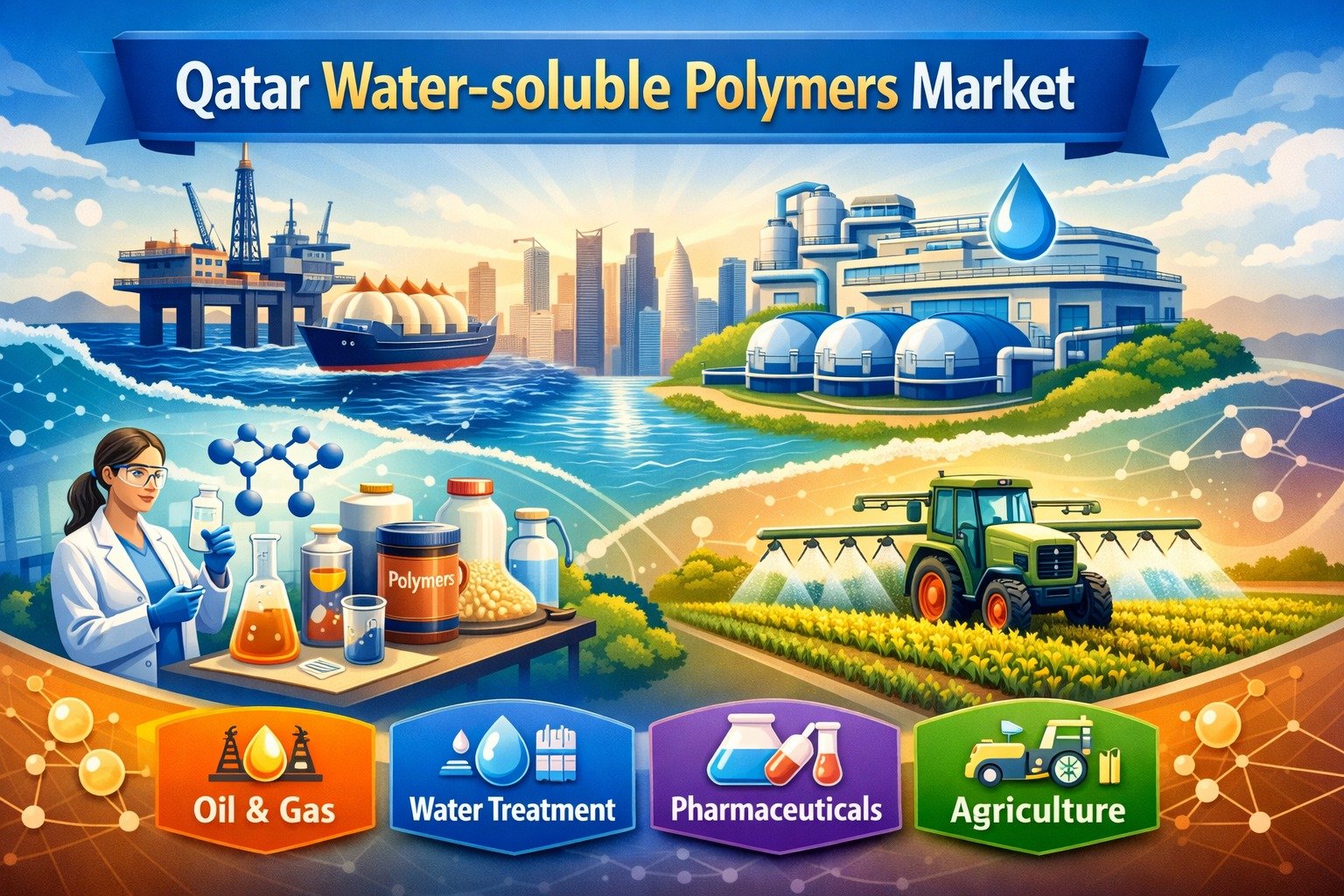
The Qatar Water-Soluble Polymers Market is steadily gaining importance as the country prioritizes water security, industrial efficiency, and sustainable resource utilization. Water-soluble polymers, which dissolve or disperse in aqueous systems, are increasingly being adopted across key industries such as wastewater treatment, oil and gas, construction chemicals, and specialty manufacturing. Their ability to enhance viscosity control, flocculation efficiency, and binding properties positions them as essential materials supporting Qatar’s evolving industrial framework.
As industrial activity expands and regulatory standards become more stringent, the demand for advanced polymer solutions continues to rise. Industry assessments indicate that the market is expected to grow at a CAGR of around 8.50% during the forecast period of 2025–2030, reflecting consistent demand from both public infrastructure projects and private industrial operations. Insights published by Markntel Advisors highlight that this growth is closely tied to investments in water treatment facilities and energy-sector optimization initiatives.
Role of Water Management in Market Expansion
Water scarcity remains one of the most influential factors shaping the demand for water-soluble polymers in Qatar. With limited freshwater resources and rising water consumption, the country has placed strong emphasis on wastewater treatment, recycling, and reuse. Water-soluble polymers play a critical role in treatment processes by improving coagulation and flocculation efficiency, enabling faster sedimentation and improved sludge dewatering.
Municipal wastewater treatment plants increasingly rely on polymer-based solutions to achieve higher treatment efficiency while controlling operating costs. At the same time, industrial wastewater treatment has emerged as a significant contributor to polymer demand. Manufacturing units and petrochemical facilities use these polymers to manage complex effluents and comply with environmental discharge regulations, reinforcing their importance in Qatar’s industrial sustainability efforts.
Oil and Gas Sector Influence on Polymer Demand
Despite diversification initiatives, the oil and gas sector remains a major pillar of Qatar’s economy and a key consumer of water-soluble polymers. In upstream operations, these polymers are widely used in drilling fluids and enhanced oil recovery processes, where they help regulate fluid behavior and improve hydrocarbon recovery from mature reservoirs.
Energy operators such as Qatar Energy continue to adopt advanced polymer formulations to maximize production efficiency while optimizing water usage. As reservoirs mature and efficiency becomes a priority, the role of high-performance polymers in oilfield applications is expected to remain significant throughout the forecast period.
Growing Importance of Construction and Infrastructure Projects
Qatar’s ongoing infrastructure development has created sustained demand for water-soluble polymers in construction-related applications. These polymers are commonly used in cement admixtures and construction chemicals to improve workability, enhance strength, and control setting characteristics. Their ability to reduce water consumption in concrete mixtures aligns well with the country’s sustainability goals.
As construction practices shift toward higher efficiency and durability standards, polymer-modified materials are gaining broader acceptance. This trend is particularly evident in large commercial developments, industrial facilities, and infrastructure projects where performance consistency and long-term durability are critical considerations.
Competitive Landscape and Industry Participation
The Qatar Water-Soluble Polymers Market is characterized by the presence of established global chemical manufacturers that bring technical expertise and diversified product portfolios. Companies such as BASF, SNF Group, Kemira, and Arkema actively serve the market through regional distribution networks and partnerships.
Competition in the market increasingly revolves around innovation, customization, and regulatory compliance. Suppliers are focusing on developing polymer solutions tailored to local water conditions, industrial requirements, and environmental standards, which is reshaping competitive dynamics within the sector.
Sustainability Trends Shaping Market Evolution
Environmental considerations are playing an increasingly central role in shaping demand for water-soluble polymers in Qatar. Industries are under growing pressure to adopt low-toxicity and environmentally responsible materials that support waste reduction and water conservation. This shift is driving interest in biodegradable polymers and formulations that deliver high performance at lower dosages.
According to analysis from Markntel Advisors, sustainability-led innovation is expected to be a defining factor for market participants in the coming years. Companies that align their product development strategies with environmental regulations and long-term water management goals are likely to gain a competitive edge.
Future Outlook and Market Potential
Looking ahead, the Qatar Water-Soluble Polymers Market is well-positioned for steady growth, supported by investments in wastewater recycling, industrial expansion, and energy optimization. As water security and operational efficiency remain national priorities, demand for advanced polymer solutions is expected to remain resilient.
Water-soluble polymers will continue to evolve from being auxiliary chemical inputs to becoming strategic enablers of industrial performance and sustainability. Their expanding role across water treatment, oil and gas, and construction sectors underscores their long-term importance in supporting Qatar’s vision for sustainable industrial development.