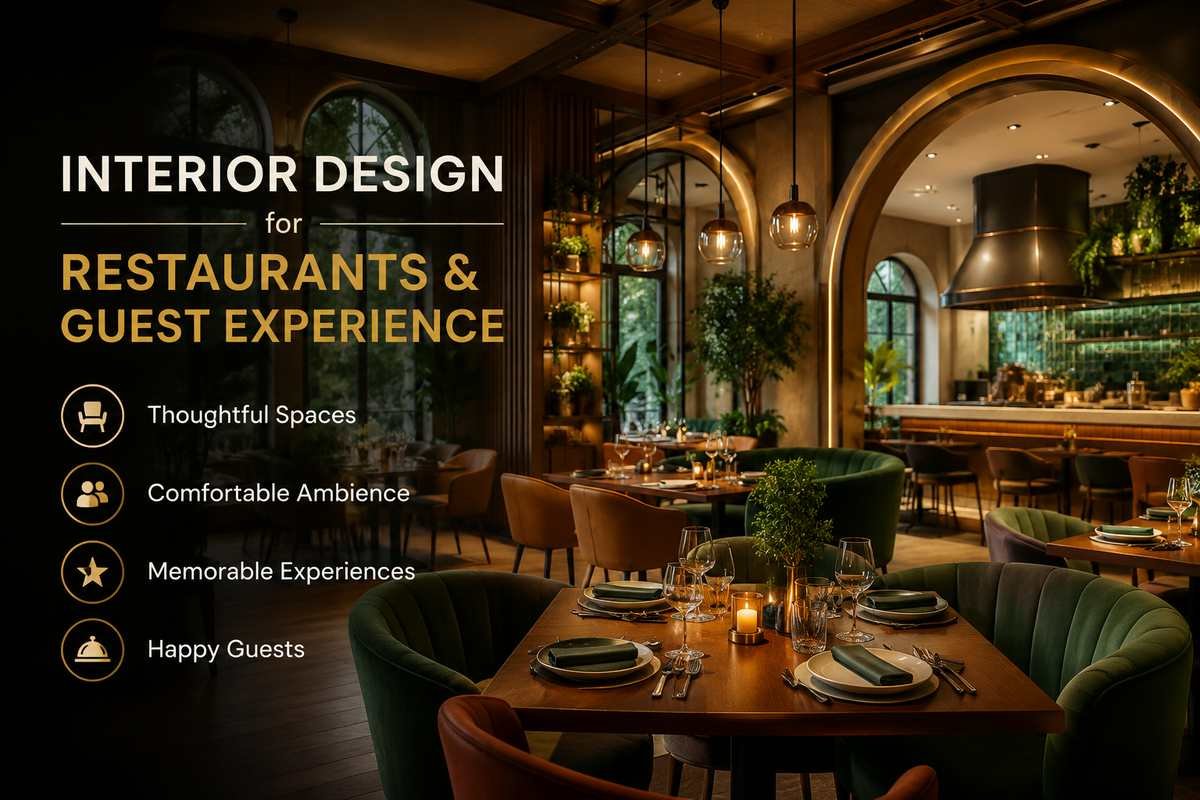
Dubai and Abu Dhabi’s dining scene is crowded enough that a restaurant has to make an impression before the food reaches the table. Interior design for restaurants plays a direct role in shaping that first impression. It can influence how comfortably guests move through the space and how long they choose to stay. In the UAE’s highly visual F&B market, details such as seating density, lighting, and layout can shape how a concept is perceived.
Good design is about more than making a restaurant look attractive. The right layout can improve table turnover, while lighting and materials shape the dining mood and reinforce the brand. That’s why UAE restaurant owners increasingly see design as a business decision, not a finishing touch.
Why Interior Design for Restaurants Shapes the Guest Experience
Guests often form an opinion about a restaurant within seconds of entering. Before they even open the menu, they notice the lighting, noise levels, scent, seating, and overall sense of space. These details can shape how comfortable they feel and how they experience the meal.
Research into dining behaviour shows that factors such as lighting, music, and layout can influence satisfaction, spending, and dwell time. A cramped layout or uncomfortable acoustics may encourage guests to leave sooner, even when the food is good.
This makes restaurant interior design more than a visual exercise. It needs to support smooth service, comfortable seating, a clear brand identity, and an environment that encourages guests to stay and return.
The Core Elements Restaurant Interior Designers Focus On
A restaurant can look impressive in photos but still feel uncomfortable in person. Restaurant interior designers therefore focus on practical details that shape movement, mood, durability, and overall guest comfort. Four areas are especially important.
Restaurant Floor Planning
The layout determines how easily staff serve tables and how comfortably guests move through the space. Effective floor planning balances:
Table density with comfortable spacing
Clear routes between kitchen and service areas
Smooth movement from entrance to seating
Staff paths that avoid guest traffic
Poor planning can create queues, blocked walkways, and service delays during busy periods.
Lighting and Restaurant Atmosphere
Lighting can change how a restaurant feels without requiring major structural work. A layered approach combines ambient, task, and accent lighting to create depth and guide attention. Dimmable lights and focused illumination can make dining areas feel warmer while highlighting artwork, counters, or architectural features.
Interior Material Selection
Materials need to work as hard as the restaurant itself. Dining floors deal with spills, heavy foot traffic, and frequent cleaning, so finishes must balance durability with visual appeal. In UAE projects, materials such as natural stone, engineered wood, and performance fabrics can provide that balance while also creating a strong visual identity.
Acoustics, Comfort and Sensory Design
Noise is an often-overlooked part of the dining experience. Large open spaces with hard surfaces can make conversations difficult, particularly during peak hours. Acoustic panels, upholstered seating, and softer flooring can help control sound while making the restaurant more comfortable for longer visits.
How Interior Design Influences Restaurant Customer Experience
Restaurant design influences the guest experience from the moment someone walks through the door. The transition from a busy exterior to a well-planned dining space can immediately change how guests perceive the restaurant. Lighting, temperature, layout, and the first view of the dining area all help set expectations before the meal begins.
Sensory details can also make a restaurant more memorable. A consistent scent, comfortable seating, appropriate color choices, and enough space between tables can affect how relaxed guests feel. When these details work together, they can encourage guests to stay longer, enjoy the experience, and remember the restaurant after they leave.
Modern Restaurant Interior Design Trends for Commercial Spaces in the UAE
The UAE’s restaurant market changes quickly, and interior trends are increasingly shaped by how people dine, share, and interact with spaces. Across Dubai, Abu Dhabi, and Sharjah, current commercial restaurant interior design projects are focusing on features that combine function with a stronger sense of identity.
Biophilic design: Wood, stone, and greenery make the space feel calm and natural.
Flexible layouts: The same space can work as a café during the day and a dining area at night.
Cultural storytelling: Local designs and Emirati touches give the restaurant a unique identity.
Sustainable materials: Durable and eco-friendly materials are becoming more common.
Social-media-ready features: Art walls, statement lights, and open kitchens create photo-worthy spots.
Restaurant Interior Design Ideas for Fine Dining Concepts
Fine dining restaurants need a different design approach from casual dining spaces. They usually offer more space per table, softer lighting, and carefully selected materials. The aim is to create a comfortable and refined setting without making the space feel overly formal
Common design choices include:
Lower guest density: More space allows guests to dine comfortably and privately.
Warm lighting: Soft lighting creates a calm and elegant atmosphere.
Better acoustics: Sound control helps keep conversations private and comfortable.
Custom furniture: Bespoke pieces add a sense of quality and exclusivity.
Thoughtful entrances: The entrance sets the mood before guests reach the dining area.
These details need to work together with the restaurant’s service style and operational needs. This is why many operators work with a restaurant design specialists company from the early planning stages.
Why Restaurants Turn to Professional Restaurant Design Services
Restaurant design involves more than selecting colours, furniture, and finishes. The space must also support kitchen placement, staff movement, service flow, safety requirements, and the restaurant’s brand. That is why many UAE operators choose professional restaurant design services rather than relying solely on general contractors.
Specialists such as Finisya Hospitality Solutions help restaurant owners consider both the concept and its daily operations. This approach ensures that design choices support efficient service while creating a comfortable experience for guests. In a competitive UAE dining market, combining aesthetics with functionality can make a restaurant more practical and memorable.
Conclusion
Interior design for restaurants is no longer just about creating an attractive space. Layout, lighting, materials, and acoustics can influence guest comfort, dining time, and service efficiency. In the UAE’s competitive restaurant market, these details can shape both the customer experience and day-to-day operations.
When design is planned around how staff and guests actually use the space, a restaurant can become more efficient and comfortable. A well-designed interior can also strengthen the brand and give customers a reason to return.
Frequently Asked Questions
1. How can restaurant design improve staff efficiency?
A logical layout keeps kitchen, service stations, and tables connected, reducing unnecessary staff movement during busy periods.
2. What materials work well in UAE restaurants?
Durable stone, engineered wood, and performance fabrics can handle heavy use, frequent cleaning, and demanding commercial conditions.
3. How can a small restaurant feel less crowded?
Clear sightlines, compact furniture, and better circulation can create a more open feel without sacrificing too many tables.
4. Why does restaurant acoustics matter?
Excessive noise makes conversation difficult. Acoustic panels, upholstered seating, and softer finishes can make longer dining more comfortable.