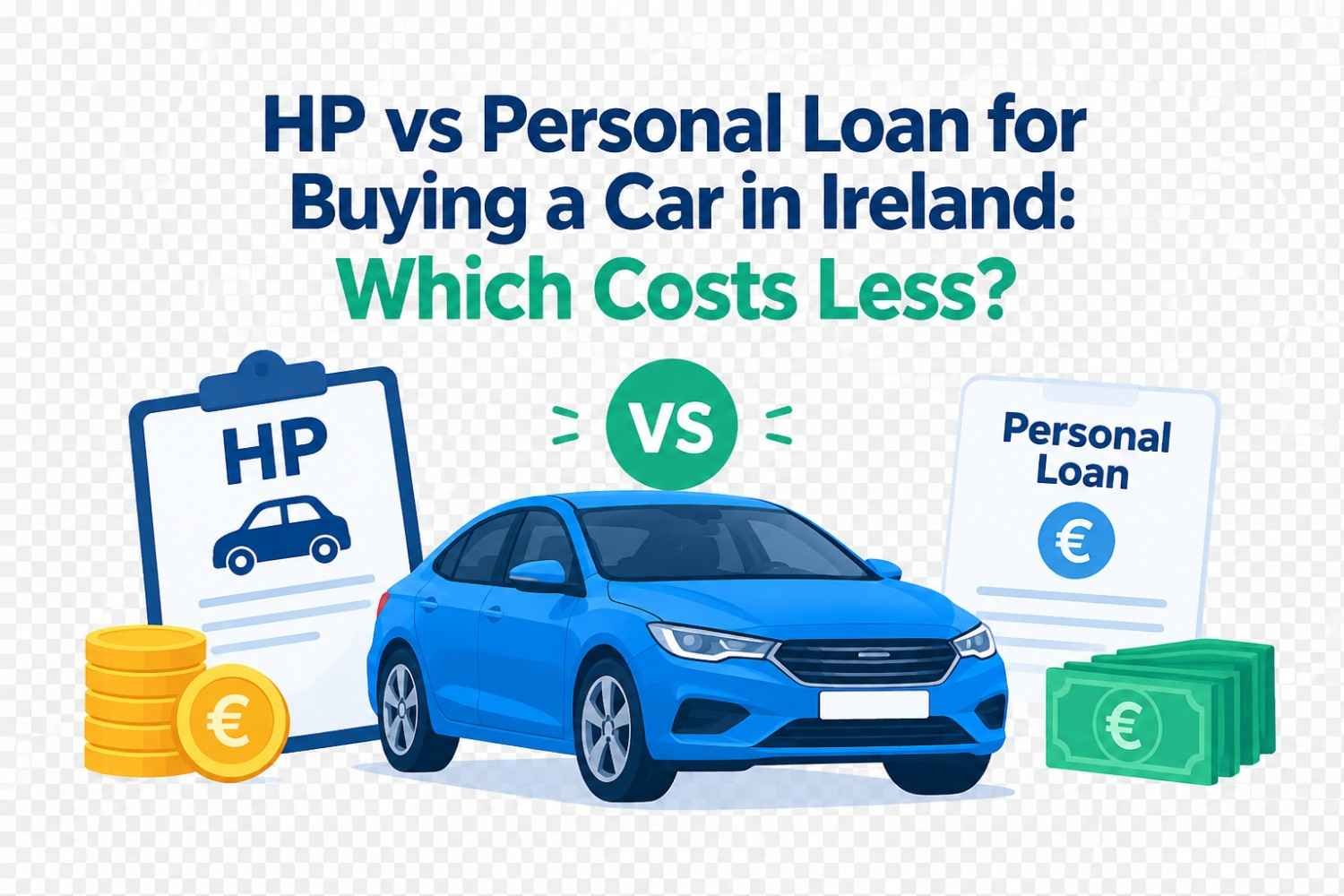
Both hire purchase and personal loans are used to finance a car. They both spread the cost of the car when you cannot pay for it outright. Although they both aim to spread the cost of a vehicle, they work differently, and therefore the overall cost of the car may differ. While comparing the two options, borrowers usually emphasise the cost-saving financing solution, but there are multiple factors you need to consider to choose the most affordable deal.
Irrespective of the financing solution you choose, the total cost largely depends on the interest rate, down payment, loan amount, repayment term, and fees. Knowing the difference between both financing solutions will help you choose the one that fits your budget. You should focus on the total amount payable rather than monthly repayments.
What is hire purchase (HP)?
Hire purchase is dealership financing available from car dealers. It is similar to personal loans that enable you to borrow a lump sum to be paid off in fixed monthly instalments. The minimum amount of down payment is about 10% of the total value of the car. You will pay down the borrowed sum over an extended period. The ownership of the car is transferred to you at the end of the contract.
Key features of hire purchase:
• You will need to make a down payment upfront.
• Monthly instalments will remain fixed throughout the repayment term.
• Ownership is offered only at the end of the contract.
• Overpayments might attract early repayment charges.
The pros and cons of hire purchase:
Upsides | Downsides |
| Easy to arrange funds. Dealers may approve your application despite a bad credit rating. | Hire purchase charges higher interest rates than personal loans. |
| Monthly payments are predictable, so you can easily budget around payments. | You do not own the car until the full payment is made. |
| There are no restrictions about mileage. You do not have to bear extra costs unlike PCP. | There is less flexibility if you want to sell your car before discharging the whole debt. |
What is a personal loan?
A personal loan is an unsecured loan provided by online lenders and banks. They are also called car loans. You borrow a lump sum of money that you pay down over a period of time. The repayment length of auto loans could be up to 5 years depending on the loan size. As is the case with HP, car loans from direct lenders also require a down payment. The minimum size of a down payment in this case is also 10%.
Here are the key features of car loans:
• A down payment is not mandatory. Some lenders might approve a car loan with zero down payment.
• APRs are generally lower than hire purchase.
• You become the owner of the car immediately.
• Repayment terms are flexible. There are no limitations on mileage.
• Some lenders may charge early repayment fees for overpayments.
The pros and cons of car loans:
Pros | Cons |
| The total cost of the loan will be much lower than dealership financing. | You must have a good credit score to qualify for better interest rates. |
| You have the freedom to sell your car at any time. However, you will need to clear the whole debt when you sell your car. | Monthly payments might be higher because personal loans charge slightly higher interest rates. |
| Interest rates for electric cars are lower. | There are chances that APRs are similar to HP deals. |
HP vs personal loan
The following table shows a clear distinction between HP and personal loans:
HP vs personal loan
Features | Hire Purchase | Personal Loan |
| Ownership | Only at the end of the contract | You become owner as soon as you purchase it |
| Deposit | Often required, at least 10% | Few lenders do not require one |
| Monthly payments | Remain fixed throughout the term | Remain fixed throughout the term |
| Arrangements | Arranged through a dealer | Arranged through a lender or bank |
| Early settlement | Chargeable | Might be chargeable |
| Collateral | Your vehicle will serve the purpose of collateral | No collateral is required |
HP vs bank loan
If you are looking to take out a car loan from a bank, you will most likely find different deals. A car loan from a bank may or may not be cheaper than a car loan from a lender.
HP vs bank loan
Features | Hire Purchase | Bank Loan |
| Ownership | You own the car at the end of the contract | You own the car from day one |
| Deposit | Often required, at least 10% | Banks also require a deposit |
| Monthly payments | Remain fixed throughout the term | Remain fixed throughout the term |
| APR | Fixed APR | Fixed APR, but it can be high |
| Early settlement | Penalties will apply | Overpayments are chargeable |
| Flexibility | You cannot sell your car before the contract ends | You have the flexibility to sell it any time |
Which is cheaper: a car loan or HP?
There is no straightforward answer to whether HP or a personal loan for a car is cheaper.
Monthly payments alone cannot tell you which financing solution is cheaper. Consider the following factors while making a decision:
• The borrowed sum
• The deposit size
• APRs
• Additional fees
• Repayment terms
• Repayment structure
• Total payable amount
In order to compare a car loan vs HP in Ireland, it is essential to consider the aforementioned factors. Your preferences also influence your decision. For instance, if you want to own a car from day one or you have no deposit at all, personal loans from lenders will be a better option than hire purchase.
HP or personal loan – which one should you choose?
Neither of them is the universally cheapest option. The right choice depends on your financial circumstances and needs. For instance, personal loans will be a better choice if you want to own the car right away and the flexibility to sell it.
Compare APRs. Consider the repayable amount, the size of the deposit and other charges in order to decide which one is a more favourable option. Consult an expert if you cannot decide on your own.