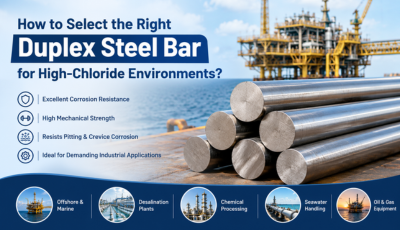
Carbon steels are sensitive to corrosion in chloride environments due to their ability to corrode on the surface and form pits in the metal. However, duplex stainless steel overcomes this problem with a combination of the austenitic and ferritic microstructures for greater durability. A Duplex steel bar is specified for demanding marine, offshore, chemical processing and desalination operations by engineers. The choice of the right grade depends on the evaluation of chloride concentration, operating temperatures, mechanical loads and corrosion mechanisms.
Why Are Chloride Environments Challenging for Steel Bars?
Chlorides attack metal surfaces aggressively and create distinct failure paths. You must understand these degradation methods to specify the correct material for your specific operation.
Pitting Corrosion
Chlorides actively initiate small localized pits on the surface of susceptible stainless steels. This specific pitting resistance remains absolutely essential for components directly exposed to raw seawater and concentrated brine.
Crevice Corrosion
The highest risk often surrounds mechanical joints, tight contact areas, and other restricted-flow locations. Proper material selection and intelligent component design prevent fluid stagnation and stop this hidden corrosion completely.
Chloride Stress Corrosion Cracking
Chlorides combine with tensile stress and elevated temperatures to accelerate dangerous stress corrosion cracking. You must evaluate all service conditions together rather than considering only the initial chloride concentration levels.
What Makes Duplex Steel Suitable for High-Chloride Service?
The peculiar duplex structure consists of a mixture of austenitic and ferritic phases, approximately equal in quantity. This particular structure directly links strong corrosion resistance with high mechanical strength. The yield strength of a standard Duplex Steel Bar is significantly higher than that of conventional austenitic stainless steels because of the higher yield strength of the ferritic steel. This higher strength enables engineers to design more challenging components while minimizing material use. Localized pitting and crevice corrosion resistance is enhanced by high concentrations of chromium, molybdenum and nitrogen. The field performance is very dependent on the type of duplex grade selected for the specific field.
Which Duplex Steel Grade Should You Consider?
Selecting the correct material requires matching the alloy directly to the environment. Different grades offer varying levels of strength and protection for different industrial operations.
Duplex 2205
Engineers utilize 2205 as one of the most widely used duplex stainless steel grades. It delivers a strong combination of corrosion resistance and mechanical strength. Common applications involve seawater, chemical processing, offshore equipment, and desalination plants.
Super Duplex 2507
Super duplex provides higher alloy content and enhanced resistance to aggressive chloride environments. It fits severe seawater, brine, offshore, and desalination applications perfectly. You should consider this grade when the standard duplex 2205 lacks sufficient corrosion performance.
Match the Grade to the Environment
You must compare chloride concentration, temperature, pressure, and exact chemical exposure together. Never select a material grade based solely on the general term duplex. The specific service conditions dictate the exact alloy composition required for safety.
What Factors Should You Check Before Selecting a Duplex Steel Bar?
Proper specification prevents catastrophic material failures. You must review these specific technical factors to ensure the selected steel can survive your exact industrial operating conditions.
- Evaluate expected chloride levels together with the operating temperature since heat accelerates material corrosion.
- Check the tensile strength, yield strength, and hardness to confirm load-bearing component capacity.
- Check the required diameter, length, and dimensional tolerance to ensure suitability for factory machining.
- Verify whether the supplier provides the bar hot-finished or cold-finished upon delivery.
- Verify the applicable project specification and check all chemical and mechanical testing material certificates.
Where Are Duplex Steel Bars Used in High-Chloride Applications?
Heavy industries rely heavily on these strong materials for critical components. The specific application usually dictates which exact grade you must specify for the project.
Offshore and Marine Equipment
Builders use these sturdy bars to fabricate essential marine hardware and structural supports. The harsh saltwater environment requires material that resists aggressive localized pitting over long periods of active time.
Desalination Plants
Operators install these solid bars inside high-pressure reverse osmosis systems. The highly concentrated brine solutions demand superior corrosion resistance to prevent sudden equipment failure during continuous daily fresh water production.
Chemical Processing Equipment
Engineers specify these bars for reactors and storage tanks handling aggressive chemical mixtures. The strong microstructural stability prevents rapid material degradation when chloride levels fluctuate during the daily manufacturing process.
Seawater Handling Systems
Facilities utilize these dense bars for intake structures and piping networks. The required steel grade strictly depends on the actual operating environment and the local water temperature at the site.
Oil and Gas Equipment
Extractors require these reliable bars for tough downhole tooling and subsea connectors. The metal must withstand immense pressure and high temperatures while resisting the corrosive nature of deep underground fluids.
Pumps, Shafts, and Valves
Manufacturers machine these thick solid bars into critical moving components. The high mechanical strength handles severe rotational stress, while the alloy composition stops rapid corrosion inside aggressive fluid transfer systems.
Common Mistakes When Selecting Duplex Steel Bars
Errors in material specification often lead to costly component failures. Buyers must avoid these frequent mistakes to ensure long-term reliability in aggressive high-chloride industrial environments.
- Choosing a grade based only on chloride exposure without considering the operating temperature causes failures.
- Assuming every available duplex grade provides the exact same corrosion resistance leads to rapid degradation.
- Ignoring the specific mechanical loading requirements causes structural issues in the final machined metal parts.
- Not checking the applicable material specification allows incorrect alloys to enter the heavy manufacturing process.
- Selecting incorrect bar dimensions or loose tolerances creates severe machining problems on the factory floor.
- Accepting delivered material without proper certification removes your ability to verify the exact chemical composition.
Conclusion
Selecting a Duplex Steel Bar for high-chloride environments demands careful attention to several factors. You must evaluate the grade, chloride concentration, temperature, mechanical requirements, physical dimensions, standards, and certification. Duplex 2205 suits many chloride-exposed applications, while super duplex grades manage more aggressive conditions. Base your final selection on the complete service environment rather than corrosion resistance alone.
Tags : .....