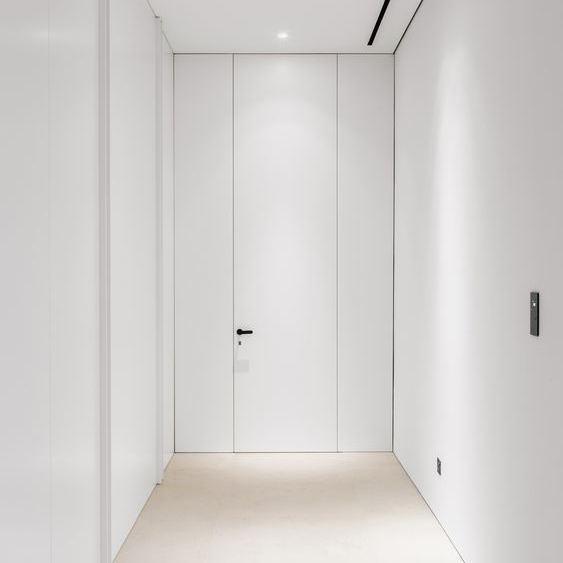
Maintaining a concealed door requires routinely cleaning the pivot points and hinges, lubricating moving parts every six months, checking alignment following seasonal temperature fluctuations, and checking the latch mechanism for smooth operation. Visible gaps are avoided by keeping the door surface flat with the surrounding wall. For many years, silent, smooth operation is ensured by regular maintenance.
One of the most elegant design decisions you can make for your house is a concealed door. It blends in with the wall to create a smooth, continuous surface, and that aesthetic beauty is precisely why upkeep is important. The illusion is completely destroyed if it sticks, squeaks, or moves out of alignment. The good news? It doesn't require much technical expertise or time to keep in excellent condition.
Why Concealed Door Maintenance Is Worth Your Attention
Hidden doors depend on precise engineering, in contrast to conventional doors with obvious frames and hardware. There are more stringent tolerances. Alignment might be thrown off by a slight change in the wall or floor. Unlubricated hinges might become resistant, giving the door an uneven or stiff feel.
Ignoring minor faults frequently results in larger ones, such as warped panels, damaged wall finishes, or worn latch systems that no longer catch smoothly. Both the door's functionality and your aesthetic investment are protected with a little regular maintenance.
Step-by-Step: How to Maintain a Concealed Door
Step 1: Inspect the Door Every Three to Six Months
Start with a visual check. Open and close the door slowly and look for any of the following:
- Gaps between the door edge and the surrounding wall
- Dragging along the floor or wall surface
- Any visible misalignment in the flush finish
- Stiffness or resistance when opening
Catching these early makes correction straightforward. Left unaddressed, they compound quickly — especially in homes where humidity levels fluctuate with the seasons.
Step 2: Clean Hinges and Pivot Points
Over time, dust and debris build up in hinge recesses. To remove any accumulation around the pivot housing and hinge plates, use a soft brush or dry cloth. A cotton swab dipped in isopropyl alcohol works well on metal components for deeper cleaning without causing damage to the surrounding surface.
Water-based cleansers should not be used directly on metal hardware. Oxidation brought on by moisture stiffens movement and drastically reduces the lifespan of your hardware.
Step 3: Lubricate Moving Parts Twice a Year
This is the single most effective thing you can do for long-term performance. Apply a dry PTFE (polytetrafluoroethylene) lubricant or a silicone-based spray to:
- Hinge pins and pivot points
- The latch bolt and strike plate
- Any roller or magnetic catch mechanisms
Avoid using WD-40 as a long-term lubricant — it's a degreaser, not a lubricant, and it attracts dust over time. A proper silicone or PTFE product keeps components moving freely without residue buildup.
Step 4: Check and Adjust Alignment
The hinge or pivot mechanism of the majority of high-quality concealed door systems allows for precise adjustment. Examine the adjustment screws on the hinge body if you observe the door being slanted, high, or low. Three-axis adjustment is possible with many contemporary European-style concealed hinges without removing the door.
In households, seasonal relocation is common. Temperature and humidity cause floor coverings, concrete substrates, and timber framing to expand and contract. The door remains flush all year round with a brief alignment check in the summer and winter.
Step 5: Inspect the Wall Surface Around the Door
The door's panel — whether it's plastered, tiled, or painted to match the surrounding wall — needs the same care as the rest of your wall finish. Check for:
- Paint cracking along the door edge
- Grout lines shifting if the door is tiled
- Small chips or impact marks near the push point
Touching up surface finishes promptly prevents them from spreading. If the door is painted, keep a small amount of matching paint on hand for quick repairs.
Step 6: Test the Latch or Magnetic Catch
Whether your concealed door uses a push-to-open mechanism, a magnetic catch, or a finger pull, test it every few months. The latch should engage firmly without forcing. If it's loose or the catch doesn't hold the door flush, the strike plate may need repositioning or the magnet may need replacing.
Most latch systems are adjustable. Refer to the manufacturer's installation guide for the specific adjustment method for your hardware.
Common Mistakes Homeowners Make With Hidden Door Care
How Long Should a Concealed Door Last?
A well-maintained concealed door system can last 20 to 30 years or more. The hardware — particularly the hinges and latch mechanism — is typically the first component to show wear. High-quality European concealed hinge systems are rated for 100,000 or more open/close cycles, which in a residential setting translates to decades of daily use.
The finish on the door panel depends entirely on what material was used. Painted surfaces typically need a refresh every five to seven years, while tiled or stone-clad panels require only grout maintenance to stay looking sharp.
When to Call a Professional
Most maintenance tasks are straightforward DIY work. But there are times when professional help is the better call:
- The door has significantly dropped and adjustment screws are maxed out
- The frame has shifted due to structural movement
- The wall finish around the door needs full reapplication
- A push-to-open mechanism has failed internally and needs replacement
A joiner or specialist installer can re-hang, re-level, and re-finish a concealed door without compromising the wall. Attempting structural fixes without experience often leads to visible seams or damage that's harder to correct later.
If you're looking to upgrade or replace your current setup, the team at Overit offers expertly engineered flush door systems built for both residential aesthetics and long-term durability — worth exploring when it's time to invest in a quality solution.
Frequently Asked Questions
How often should I lubricate a concealed door?
Lubricate hinge pins, pivot points, and latch mechanisms every six months using a silicone-based or PTFE dry lubricant. In high-traffic areas or homes with significant seasonal humidity changes, quarterly lubrication will keep the door operating smoothly and reduce long-term wear on the hardware.
Why is my concealed door no longer flush with the wall?
Seasonal movement in the building structure — caused by temperature and humidity changes — is the most common reason. Most concealed door hinges allow three-axis adjustment to correct this. Check and re-adjust alignment in summer and winter to keep the door sitting flush with the surrounding wall surface.
Can I paint over a concealed door without affecting its function?
Yes, but use thin coats and avoid painting over the hinge recesses, latch, or edge gaps. Thick paint buildup along the door edge can cause it to bind against the frame. Always open the door fully before painting to ensure the edges are coated evenly and don't stick when closed.
Tags : .....