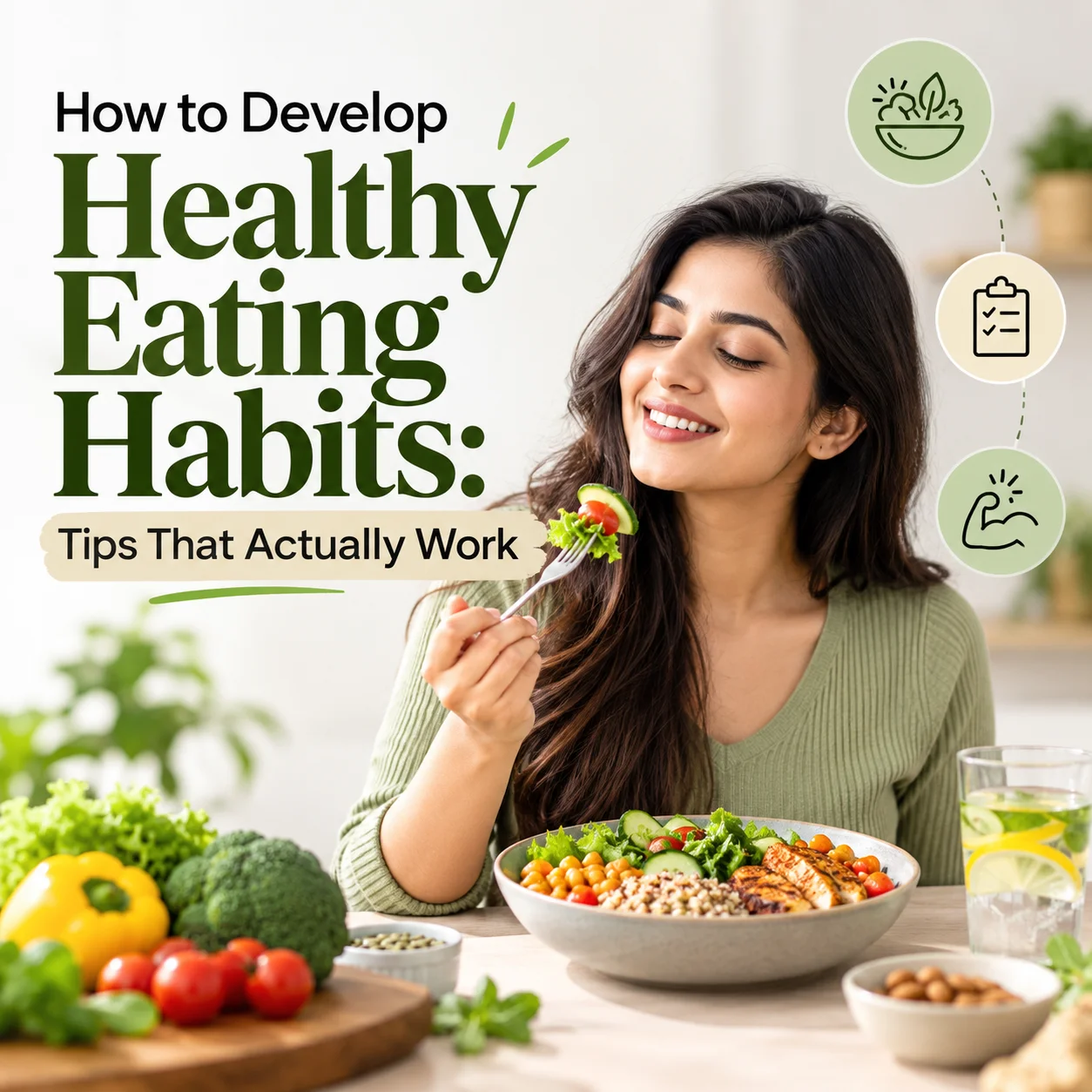
Healthy eating does not mean following a strict diet or giving up all your favorite foods. In reality, developing healthy eating habits is about making small, practical changes that you can continue for a long time. The way you eat every day can influence your energy levels, mood, digestion, and overall well-being.
If you often skip meals, rely on processed foods, eat when you are stressed, or struggle to maintain a balanced routine, you do not need to change everything overnight. Start with simple habits and gradually build a healthier relationship with food.
What Does Healthy Eating Really Mean?
Healthy eating means giving your body a variety of nutrients through balanced and nourishing foods. A healthy eating pattern can include vegetables, fruits, whole grains, protein-rich foods, healthy fats, and enough fluids.
It is also about balance rather than perfection. Having your favorite dessert or enjoying a meal outside does not automatically make your diet unhealthy. What matters most is your overall eating pattern and the choices you make consistently.
How Can You Start Building Better Eating Habits?
The easiest way to develop healthier habits is to focus on small changes instead of trying to completely transform your diet in a few days. Small adjustments are usually easier to maintain and can become part of your normal routine.
Start with regular meals
Skipping meals can leave you extremely hungry later in the day, which may make it harder to make mindful food choices. Try to maintain a regular eating schedule that works with your lifestyle.
A balanced meal can include a source of protein, vegetables or fruit, whole grains or other carbohydrate sources, and healthy fats. Eating satisfying meals can also help reduce unnecessary snacking between meals.
Add more variety to your plate
Instead of focusing only on what you should remove from your diet, think about what you can add. Include different colorful vegetables and fruits, whole grains, pulses, nuts, seeds, and protein sources throughout the week.
Eating a variety of foods can make meals more interesting while helping you get a broader range of nutrients.
Why Is Portion Awareness Important?
Healthy eating is not only about choosing nutritious foods. The amount you eat also matters. Even foods considered healthy can contribute to overeating when consumed in very large portions.
You do not necessarily need to weigh every ingredient or count every calorie. Instead, learn to recognize your hunger and fullness signals and pay attention while eating.
Eat slowly and mindfully
Eating quickly can make it harder to notice when you are comfortably full. Try slowing down, putting your phone away during meals, and paying attention to the taste and texture of your food.
Mindful eating can help you become more aware of your body's signals and reduce distracted eating.
Avoid unnecessary food restrictions
Completely banning certain foods can sometimes make you want them even more. Instead of labeling foods as completely “good” or “bad,” focus on moderation and overall balance.
You can enjoy treats while still maintaining healthy eating habits. The goal is to create a routine that feels realistic rather than restrictive.
How Can You Make Healthy Food Choices Easier?
Your environment has a significant influence on your eating habits. If nutritious foods are easily available, you are more likely to choose them when you are hungry.
Keep simple options such as fruits, yogurt, nuts, seeds, vegetables, and other nutritious snacks available at home or work. Preparing some ingredients in advance can also make healthy meals easier when you are busy.
Plan your meals ahead
You do not need to prepare every meal for the entire week. Even planning a few meals in advance can reduce the temptation to rely on fast food or highly processed snacks.
Before grocery shopping, make a basic list of the foods you need. This can help you stay organized and make it easier to prepare balanced meals at home.
Stay hydrated
Drinking enough fluids throughout the day is another important part of a healthy routine. Water is generally the best choice for staying hydrated.
Sometimes, thirst may be mistaken for hunger. Having water regularly can help you stay hydrated while supporting your overall daily routine.
What Role Does a Dietitian Play in Healthy Eating?
Everyone has different nutritional needs, food preferences, lifestyles, and health goals. This is why a diet that works well for one person may not be suitable for another.
If you find it difficult to improve your eating habits on your own, consulting a qualified dietitian in Punjab can provide personalized guidance. A dietitian can help you understand your nutritional needs and develop practical eating strategies that fit your lifestyle.
Professional guidance can be particularly useful when you feel confused about what to eat, struggle with consistency, or need a structured approach to your nutrition.
How Can You Make Healthy Eating Habits Last?
Consistency is more important than perfection. You may have days when you eat differently than planned, and that is completely normal. One less-balanced meal does not undo your overall progress.
Instead of giving up after a setback, simply return to your usual routine with your next meal.
Focus on progress
Try changing one or two habits at a time. For example, you could start by eating breakfast regularly, adding vegetables to lunch and dinner, or replacing sugary drinks with water.
Once a habit becomes comfortable, introduce another small change. Over time, these small improvements can create a sustainable eating routine.
Listen to your body
Pay attention to hunger, fullness, energy levels, and how different foods make you feel. This awareness can help you make more informed choices without becoming overly restrictive.
Healthy eating should support your lifestyle rather than make you feel stressed about food.
Conclusion
Developing healthy eating habits does not require a perfect diet or extreme restrictions. It is about making realistic choices consistently and creating a routine that works for your lifestyle.
Start with regular balanced meals, include a variety of nutritious foods, practice mindful eating, stay hydrated, plan ahead, and avoid unnecessary restrictions. Most importantly, give yourself time to develop new habits.
Small changes made consistently can become lasting habits and help you build a healthier, more balanced relationship with food.