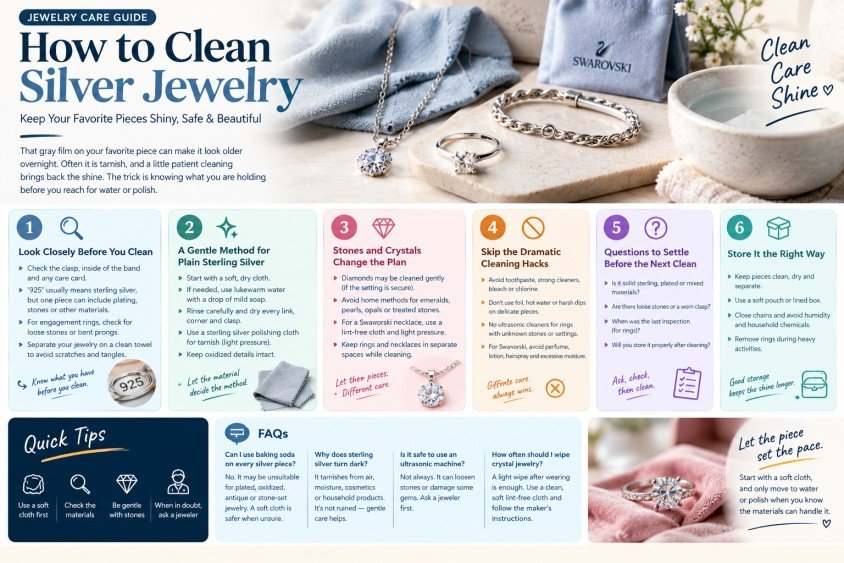
That gray film on a favorite piece can make it look older overnight. Often it is tarnish, and a little patient cleaning brings back the shine. The trick is knowing what you are holding before you reach for water or polish. A plain sterling silver chain, a crystal-studded pendant, and a ring with a loose stone should not all go into the same bowl. Start with the gentlest method, dry the piece completely, and stop if anything moves or changes color. Cleaning should make a piece easier to wear, not turn a small dull patch into a repair.
Look closely before you clean
Check the clasp, the inside of a band, and any care card you kept. A “925” mark commonly indicates sterling silver, but a single piece can combine silver with plating, stones, adhesive, or other materials. If you cannot tell what a surface is made of, a soft, dry cloth is a safer first move than a homemade solution.
This matters especially for engagement rings. Some have sterling silver bands, but many use other metals; the stone and its setting also determine what cleaning is safe. Run a fingertip gently around the prongs without pushing them. If a stone rattles or looks crooked, put the ring down and ask a jeweler to check it.
A Swarovski necklace is another piece to identify carefully. The bright parts may be crystals and the metal may have a plated finish rather than being plain sterling silver. Swarovski recommends a soft, lint-free cloth for routine care. Treat the crystals and chain gently instead of scrubbing until they sparkle.
Separate your jewelry on a clean towel before you begin. Chains tangle, and engagement rings can scratch other pieces in the same dish. Lay a Swarovski necklace flat with its clasp closed. A minute spent sorting now is better than trying to undo a knot with wet fingers later.
A gentle method for plain sterling silver
For a plain sterling silver piece with no stones, pearls, plating, or intentionally darkened detail, begin with a soft cloth. Wipe away skin oils and surface dust. If it still feels grimy and its maker permits washing, briefly clean it in lukewarm water with a drop of mild soap. Use your fingers or a very soft cloth; rinse carefully and dry every link, corner, and clasp.
Tarnish can remain after dirt is gone. A cloth intended for sterling silver can help polish the metal, following its instructions and using light pressure. Do not chase every dark line: some designs have a deliberate oxidized finish in the recesses. Vigorous polishing can erase that contrast.
Keep engagement rings out of this plain-metal routine until you know the band, stone, and setting. A diamond may be durable, but a loose prong is still a problem. If the ring has an unfamiliar gem or an antique setting, ask its seller or a jeweler for the appropriate method.
A Swarovski necklace also does not belong in a silver-polish session just because its chain looks silver. Wipe its crystals gently, then the chain, with a clean lint-free cloth. Save the sterling silver cloth for confirmed, suitable sterling surfaces, away from delicate finishes.
The easy rule: let the material decide the method. Treating engagement rings and a Swarovski necklace as if they were bare silver can leave you with a shiny band and a damaged setting or finish. When in doubt, stop after the dry wipe.
Stones and crystals change the plan
If a ring has a secure diamond set in a suitable metal, gentle cleaning with mild soapy water may be appropriate. Check the maker’s care instructions first, and work over a bowl rather than an open sink. Dry the setting carefully. If you notice a loose stone, a bent prong, or a cracked gem, skip home cleaning and seek a professional inspection.
Not all engagement rings contain diamonds. Emeralds, pearls, opals, and treated stones can have different sensitivities, and a mixed-stone design needs care suitable for its most delicate part. Never assume that a method shown for one ring will suit another. Even an ultrasonic machine can loosen stones in their settings.
For a Swarovski necklace, the simplest routine is usually enough: clean, dry hands; a soft lint-free cloth; light pressure on each crystal; and a separate gentle pass along the chain. Avoid tugging the pendant while wiping. If there is stubborn debris, consult the brand’s instructions for that particular piece before trying a deeper clean.
This is why engagement rings and a Swarovski necklace deserve different cleaning spaces on your table. One has a stone held by a setting; the other may have delicate crystals and a plated surface. Neither benefits from being tossed into a bowl with a pile of metal jewelry.
Skip the dramatic cleaning hacks
Toothpaste sounds handy, but its abrasives can scratch or wear delicate surfaces. Strong household cleaners, bleach, and chlorine are poor choices for silver. A fast online trick involving foil, hot water, or a harsh dip may not account for stones, plating, or an intentional dark finish.
That caution applies to engagement rings with unknown stones or older settings. Do not put them in an ultrasonic cleaner simply because a video made it look satisfying. A jeweler can examine the setting first. If a ring has meaningful wear, professional care costs less than losing a stone.
It also applies to a Swarovski necklace. Perfume, lotion, hairspray, household cleaners, and excessive moisture can affect its appearance. Put it on after getting ready and remove it before swimming, exercising, or showering. For routine cleaning, skip the silver dip and use the soft cloth.
If engagement rings are worn daily, they collect soap and skin oils quickly. A gentle, appropriate clean may help, but frequent aggressive polishing is not an upgrade. Likewise, a Swarovski necklace does not need a deep wash after every wear. A quick wipe before storage is often the more useful habit.
Questions to settle before the next clean
Is the piece solid sterling, plated, or a mix of materials? Does it have a care card? Are there loose stones, a worn clasp, or dark details that were part of the design? Those answers matter more than the color you see at first glance.
For engagement rings, ask when the settings were last inspected and whether you know every stone in the design. For a Swarovski necklace, ask whether you are cleaning fingerprints or trying to fix a change in the finish. A cloth can remove the first problem; it may not repair the second.
Where will the piece go afterward? Store clean, dry jewelry separately in a soft pouch or lined box, away from humidity and household chemicals. Close chains before putting them away. Engagement rings should not rub against other jewelry, and a Swarovski necklace is less likely to tangle when it has its own space.
Finally, decide when to stop. If wiping and the maker-approved method do not help, more force is rarely the answer. Rings with loose settings need a jeweler; a crystal necklace with a damaged finish may need advice from the brand or seller. The best cleaning decision sometimes is leaving the piece alone.
FAQs
Can I use baking soda on every silver piece?
No. A method that appears to work on plain metal may be unsuitable for plated, oxidized, antique, or stone-set jewelry. Identify the materials and check the maker’s guidance first. A soft cloth is the safer starting point when you are uncertain.
Why does sterling silver turn dark?
Sterling silver can tarnish through exposure to substances in the air and contact with moisture, cosmetics, or household products. Darkening does not necessarily mean the piece is ruined. Gentle care and dry storage can help reduce how often it needs polishing.
Is it safe to clean a ring in an ultrasonic machine?
Do not assume so. Ultrasonic cleaning can loosen stones or damage some gems and treatments. Ask a jeweler to inspect the setting and identify the stones before using a machine, particularly on an older or delicate ring.
How often should I wipe crystal jewelry?
A light wipe after wearing is a practical routine. It removes fingerprints and residue before storage without repeated deep cleaning. Use a clean, soft lint-free cloth and follow the maker’s instructions for the specific piece.
Let the piece set the pace
Start with a soft cloth, and only move to water or polish when you know the materials can handle it. The prettiest result is a clean piece with its finish, stones, and small details still intact.
Tags : .....