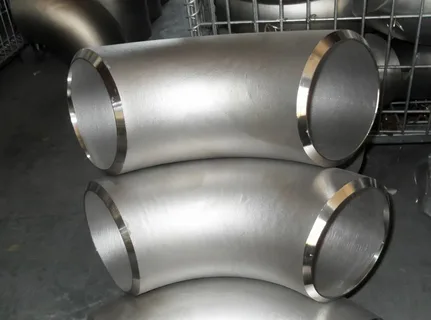
Super duplex pipe fittings are used to connect, redirect, branch, or control flow in industrial piping systems. The steel has a mixed structure of austenite and ferrite, which gives it high strength and good corrosion resistance. It is common in oil and gas, offshore platforms, chemical processing, marine work, desalination plants, and petrochemical facilities. Many buyers only look at the grade name. The super duplex pipe fitting has to suit the full operating environment.
What Are Super Duplex Pipe Fittings?
These are the joints and direction-change pieces in a piping system. Typical types are elbows, tees, reducers, crosses, caps, stub ends, and couplings. Both seamless and welded versions are available, depending on the type. The grades you will see most often are UNS S32750 and UNS S32760. The fitting should match the pipe material so the system stays consistent. If the materials do not match, the connection point can fail quickly.
Factors to Consider When Choosing Super Duplex Fittings
1. Material Grade
Select the grade depending on the process environment and the mechanical properties you require. Compare grades, for example UNS S32750, and check the chemical composition and the material specification.
2. Pressure Rating
First, determine the operating conditions and design the system. The pressure class of the fitting should be identical. Provide for pressure swings and any safety margin required for your project.
3. Temperature Range
Check the minimum and maximum operating temperatures. Temperature changes both the mechanical properties and the corrosion behaviour, so confirm the fitting suits the real service conditions.
4. Fitting Type and Dimensions
Choose the right elbow angle, tee layout, or reducer size. Nominal pipe size, outside diameter, and connection dimensions all need to match the adjoining pipe, and the alignment should be correct.
5. Corrosive Environment
Look at what the fitting will be exposed to: seawater, chlorides, acids, or sour service. Fluid concentration and temperature matter here. Not every super duplex grade performs the same way in every environment.
Key Properties of Super Duplex Steel Pipe Fittings
- High mechanical strength, so the fittings handle high internal pressure in large process lines.
- Good resistance to chloride corrosion, which matters in coastal sites and high-salinity plants.
- Strong resistance to pitting and crevice corrosion, even with long exposure to aggressive chemicals.
- Good resistance to stress corrosion cracking under suitable conditions, including higher process temperatures.
- Good toughness and a long service life, with little maintenance in normal use.
- Suitable for marine and offshore work where there is constant saltwater and rough weather.
- Good resistance to erosion-corrosion in services with abrasive fluids or high flow velocity.
Applications of High-Strength Super Duplex Pipe Fittings
- Offshore oil and gas platforms, for fluid extraction and bulk transport.
- Subsea and marine piping, where pressure is high, and failure is costly.
- Desalination plants, for concentrated brine and raw seawater.
- Chemical processing plants, for transferring reactive acids and corrosive chemicals.
- Petrochemical facilities, where temperatures are extreme and fluid mixtures are aggressive.
- Power generation stations, mainly in cooling systems.
- Water and wastewater treatment, where chemicals and organic waste cause long-term damage.
- Heat exchangers and process equipment, where joints see constant expansion and contraction.
- Seawater handling systems, to avoid rapid rusting from salt exposure.
Standards and Specifications to Check
Review the relevant ASTM and ASME specifications before you buy. Check ASME B16.9 for butt-weld fittings, so the sizing is standard. Check ASME B16.5 for flanged components. Check the exact size and wall thickness, and make the pressure class has the ability to do what the system needs.
Read the heat treatment requirements too. The metal has to be heated correctly to get the right structure. Look at the testing and inspection requirements in the purchase order. Always ask for a Material Test Certificate (MTC). It shows the material meets the stated physical and chemical requirements. Keep these documents for project audits.
Quality Checks Before Buying Super Duplex Fittings
Every batch needs checking. Start with chemical composition to confirm the element levels. PMI testing is a quick way to confirm the alloy type. The manufacturer should give you mechanical test results. Where applicable, ask for hardness testing, since high hardness can point to brittle material.
Do a full dimensional inspection before accepting delivery. Add a visual and surface check for cracks. Ask for non-destructive testing where it is specified. Go through the heat-treatment records to confirm the processing was correct. Material traceability should be clear. If needed, ask for corrosion or qualification test documents that support field performance. Skipping tests usually costs more later.
How to Choose a Reliable Super Duplex Fittings Supplier
Look for a supplier with documented experience in duplex and super duplex materials. They should have the grades and sizes you need, in stock, on a regular basis. Make sure they conform to international standards and have the right certifications. If you can, inspect their testing facilities.
A good supplier keeps traceability from raw billet to finished product and sends inspection documents without delay. Ask if they can make custom dimensions when needed. Ask about packaging and handling as well, because poor packaging can damage fittings in transit. A reliable supplier answers technical questions clearly and backs up claims with actual test data.
Conclusion
Look at what your project actually needs. Grade, dimensions, pressure, temperature, corrosion exposure, and standards all affect the choice. Correct selection and proper quality checks help the piping system perform reliably over time. One failed fitting can shut down a whole system. Review your project specifications and service conditions before you finalise the fittings. This avoids costly replacements and safety problems. Speak to technical experts if you are unsure, and put exact specifications ahead of low prices.
Tags : Super Duplex Pipe Fittings