How SQF Certified Food Processing Floors Handle the Toughest Manufacturing Demands
By Villium Wilson 11-06-2026 72

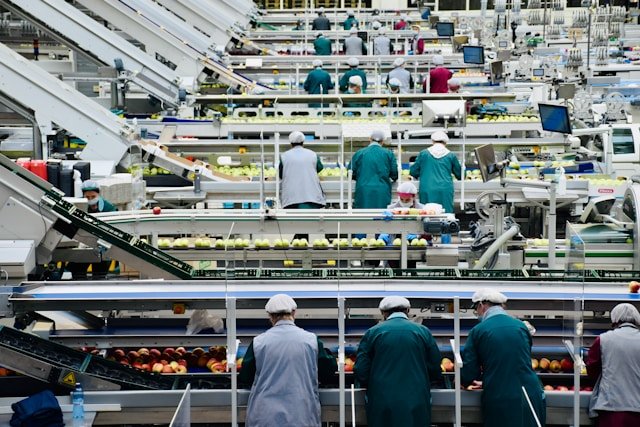
Food manufacturing floors work harder than almost any other type of commercial or industrial flooring. They endure forklift traffic, steam cleaning, harsh chemical sanitization, heavy mechanical impact, and thermal cycling, often simultaneously and continuously for extended production runs. Standard flooring materials are simply not built for this environment. SQF Certified Food Processing Floors are engineered from the ground up to handle every one of these demands without compromising the seamless, non-porous surface character that food safety compliance requires.
The Forklift Problem
Let us start with one of the most mechanically demanding realities of large scale food manufacturing: forklift traffic. Forklifts are heavy. A loaded industrial forklift can weigh ten tons or more, and that weight concentrates on small rubber tire contact patches that impose enormous point loads on the floor surface. Over thousands of daily passes, these loads create surface stress that most conventional floor materials cannot sustain.
Standard epoxy coatings are particularly vulnerable to forklift traffic in food processing environments. The combination of heavy point loads and thermal cycling stress causes these coatings to crack, delaminate, and chip, creating exactly the surface deterioration that generates audit findings and bacterial harborage risks.
High build cementitious urethane systems used for SQF certified food processing floors are formulated and installed at thicknesses that provide the structural capacity to handle sustained forklift and heavy equipment traffic without surface degradation. The strong mechanical bond to the profiled concrete substrate ensures that even high shear loads from turning forklifts cannot overcome the adhesion of the system.
Steam Cleaning and High Pressure Washdown
Many food manufacturing facilities use steam cleaning and high pressure hot water washdown systems to sanitize production areas between runs. These systems deliver thermal and mechanical stress to the floor surface simultaneously, with hot water at high velocity impacting the floor at temperatures that would cause standard epoxy systems to blister and soften.
Cementitious urethane systems handle this thermal and mechanical washdown stress because of their formulation characteristics. The polymer matrix maintains its structural integrity at the temperatures generated by steam cleaning equipment, and the mechanical bond to the prepared concrete substrate resists the shear forces created by high pressure water impact. This capability is a defining performance characteristic that makes these systems appropriate for SQF certified food processing floors in steam cleaning environments.
Chemical Resistance at Industrial Concentrations
Beyond Restaurant Level Chemical Exposure
The cleaning chemicals used in food manufacturing environments are significantly more aggressive than those found in restaurant or commercial kitchen settings. Industrial concentrations of chlorine compounds, caustic cleaners, and acid sanitizers are applied on frequent schedules to maintain the microbial control standards that SQF certification requires. The floor surface endures these chemicals at concentrations and frequencies that would rapidly degrade materials rated only for commercial kitchen chemical exposure.
Resinous systems specified for SQF certified food processing floors are formulated for industrial level chemical resistance, with performance ratings that reflect actual manufacturing facility chemical exposure rather than laboratory test conditions with dilute solutions. This industrial grade chemical resistance is what allows the floor to maintain its compliant surface character through years of aggressive sanitation program exposure.
Organic Acid Exposure in Food Processing
A specific chemical challenge in food processing that is sometimes overlooked in floor specification discussions is organic acid exposure. Many food products, including dairy, fruit, and fermented products, contain organic acids that can be highly aggressive to flooring materials. Lactic acid, acetic acid, citric acid, and fatty acids all attack flooring surfaces, and their combination with cleaning chemicals creates a particularly challenging chemical environment.
Properly specified SQF certified food processing floors account for the organic acid exposure profile of the specific food products being processed. This requires knowledge of the specific acids present in the facility's product mix and selection of resinous formulations with demonstrated resistance to these compounds at realistic exposure concentrations.
Drainage Design for Large Production Areas
In large manufacturing facilities, floor drainage design has a major impact on both food safety and operational efficiency. Production processes generate significant liquid volumes that must be directed efficiently to floor drains without pooling on the production floor surface. Standing water is a bacterial growth environment, a slip hazard, and an SQF audit concern.
Slope to drain design, integrated within the resinous floor system, creates efficient liquid drainage across large floor areas. The slope is typically specified at a minimum of 1 to 2 percent toward drain locations, with the resinous overlay applied to achieve this slope where the underlying concrete substrate does not already provide it. This drainage engineering is an integral part of what makes a complete SQF certified food processing floors installation rather than just a floor coating.
Color Zoning for Production Control
An often appreciated functional benefit of resinous flooring systems in large manufacturing facilities is the ability to use floor color to designate different production zones, traffic paths, and hazard areas. Color coded zones can indicate raw material handling areas, processed product areas, allergen controlled zones, and pedestrian traffic paths in forklift operating areas.
This visual management system, built directly into the floor surface, supports both food safety protocols and workplace safety programs. It creates a permanent, high visibility communication system that requires no maintenance and reinforces production zone controls through every shift and every audit cycle.
Conclusion
The manufacturing environment imposes demands on its floor surface that require specifically engineered solutions. Forklift traffic capacity, steam and high pressure washdown resistance, industrial chemical compatibility, organic acid resistance, and large area drainage design are all performance requirements that distinguish food processing floor engineering from commercial kitchen flooring. SQF certified food processing floors that deliver on all of these requirements provide the physical foundation for compliant, safe, and efficient food manufacturing operations.