How Smart Vehicle Entry Systems Improve Efficiency and User Experience
By flap barrier 24-04-2026 237
The Impact of Entry Experience on Operations
In modern facilities, the experience at entry and exit points plays a critical role in overall operational efficiency. Whether it is a corporate campus, industrial facility, or commercial complex, delays at entry points can create frustration, reduce productivity, and disrupt workflow.
Delays at entry points not only waste time but can significantly impact productivity and user satisfaction in high-traffic environments. Even minor inefficiencies, when repeated daily, can lead to measurable operational disruptions.
This is why improving entry point efficiency is no longer just about speed—it is about delivering a smooth, reliable, and consistent experience.
The Problem with Traditional Entry Systems
Many facilities still rely on manual or outdated entry systems that struggle to meet modern traffic demands. These systems often result in:
- Long waiting times during peak hours
- Inconsistent verification processes
- Limited visibility into vehicle movement
- Increased dependency on manual operations
Operational insights show that inefficient entry systems are a common cause of congestion and workflow disruption in large facilities.
How Smart Entry Systems Transform Operations
Smart vehicle entry systems are designed to streamline access control while improving both efficiency and user experience. By integrating automation and intelligent technologies, these systems enable faster and more reliable vehicle processing.
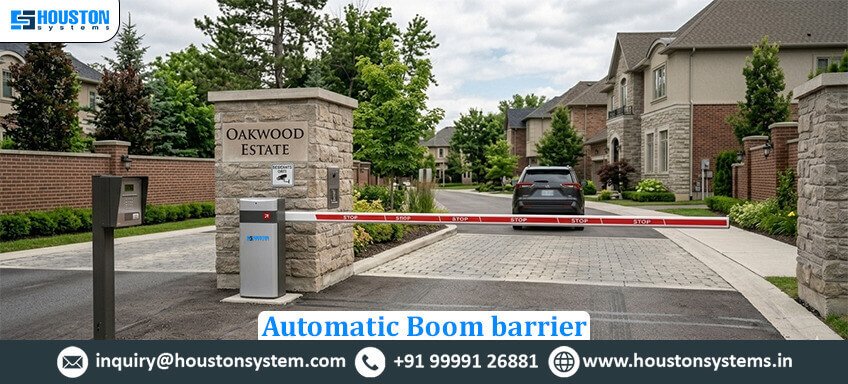
A key component of these systems is the use of smart boom barrier entry systems for efficient access, which combine automation with controlled physical access.
These systems provide:
- Instant vehicle authentication
- Reduced waiting time at entry points
- Consistent and reliable access control
- Improved traffic flow management
- Enhanced user convenience
Automation ensures that entry processes are smooth, predictable, and efficient.
Enhancing User Experience Through Automation
In modern infrastructure, user experience at entry points directly influences operational efficiency and overall perception of the facility.
Smart systems enhance user experience by:
- Eliminating unnecessary delays
- Providing seamless access without manual intervention
- Ensuring consistent entry procedures
- Reducing congestion and frustration
A well-managed entry experience reflects professionalism and improves satisfaction among employees, visitors, and service providers.
Real-World Scenario: Improving Entry Flow in a Corporate Campus
Consider a corporate campus experiencing heavy entry congestion during peak hours. Employees frequently faced delays due to manual verification processes.
Before implementation:
- Long queues during peak times
- Delays of 10–15 minutes
- Inconsistent entry procedures
After implementing a smart boom barrier system integrated with access control:
- Entry time reduced to under 2–3 minutes
- Traffic flow became smooth and predictable
- Employee satisfaction improved significantly
- Overall operational efficiency increased
This transformation highlights how optimized entry systems can directly enhance both performance and experience.
Key Features of High-Performance Entry Systems
To achieve optimal efficiency and user experience, organizations should consider:
- High-speed barrier operation for busy entry points
- Integration with RFID or smart access technologies
- Real-time monitoring and centralized control
- Reliable performance under continuous usage
- Scalable systems for future expansion
Selecting the right solution ensures long-term efficiency and adaptability.
The Link Between Efficiency and Business Performance
Efficient entry systems have a direct impact on business performance. Reduced delays contribute to better time management, improved productivity, and smoother daily operations.
Organizations that invest in smart entry solutions benefit from:
- Improved workflow efficiency
- Better resource utilization
- Enhanced employee and visitor satisfaction
- Stronger operational control
Efficiency at entry points may seem minor, but its cumulative impact across the organization is significant.
Conclusion
Entry points are more than access control zones—they are critical touchpoints that influence operational efficiency and user experience. Traditional systems often fall short in meeting modern demands.
Smart vehicle entry systems, supported by automated boom barrier solutions, provide a reliable and scalable way to improve both efficiency and user satisfaction.
For organizations aiming to deliver seamless operations and a superior user experience, upgrading entry systems is no longer optional—it is essential.