ERP implementation can be a long and difficult process for businesses. It involves moving data, setting up systems, changing workflows and helping employees learn new ways of working. If the process is not managed well, it can lead to delays, extra costs and problems for daily operations.
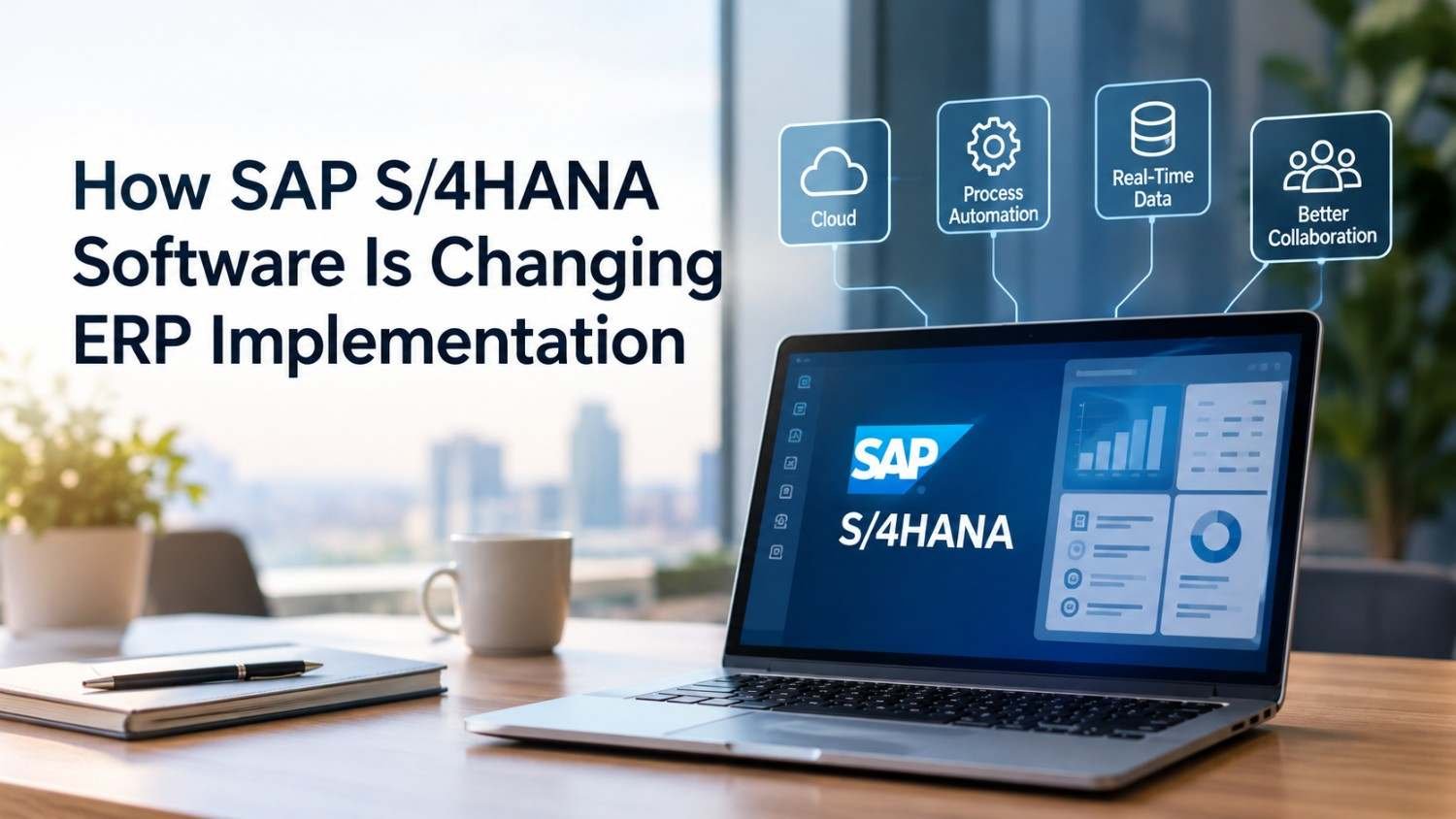
SAP S/4HANA software is changing how businesses approach ERP implementation. It gives companies a way to manage their main business activities in one system, with access to up-to-date information and tools that support everyday work.
For businesses planning to move from older SAP systems or replace outdated software, SAP S/4HANA offers new options. However, getting the most from it takes careful planning, the right technical skills and people who understand how the business operates.
What Is SAP S/4HANA Software?
SAP S/4HANA is an enterprise resource planning (ERP) system developed by SAP. It helps businesses manage areas such as finance, sales, purchasing, stock, production and supply chain operations.
It uses the SAP HANA in-memory database, which allows businesses to process large amounts of data quickly. This can help teams access information without relying on separate reports from different systems.
Businesses can use SAP S/4HANA in different ways, depending on their needs. Some choose a cloud-based setup, while others use a private cloud or on-premise system.
The main aim is to bring business information together and make everyday tasks easier to manage.
How SAP S/4HANA Software Is Changing ERP Implementation?
1. Businesses Can Access Information More Quickly
With older ERP systems, employees may need to run several reports or combine information from different sources before making a decision. This can take time, especially when different departments use separate systems.
SAP S/4HANA can help reduce this problem by bringing important business data together.
For example, a finance team can review current financial information, while a supply chain team can check stock levels and purchasing needs. Having access to more recent data helps teams understand what is happening across the business.
During implementation, this means companies need to think carefully about which information employees need and how the system should be set up to support their work.
2. ERP Projects Need Better Planning
Moving to SAP S/4HANA is not simply a case of installing new software. Businesses need to review their existing processes, check their data and decide how the new system should work.
This is particularly important for companies moving from older SAP ERP systems. Some existing processes may no longer be needed, while others may need to be changed.
Before starting the project, businesses should identify their main goals, set a realistic budget and agree on a clear timeline.
It is also important to involve the people who will use the system. Their feedback can help identify problems early and reduce the risk of making changes that do not suit the business.
3. Data Migration Has Become a Major Part of the Process
Data migration is one of the most important parts of an SAP S/4HANA implementation.
Businesses often hold years of information about customers, suppliers, products, transactions and financial records. Moving this information to a new system requires careful checks.
Old or incorrect data can cause problems after the new ERP system goes live. For example, duplicate customer records or incorrect stock figures may affect daily operations.
A good migration plan should include cleaning existing data, mapping fields between systems, testing the transfer and checking the results before the final move.
Companies should also decide which historical records need to be moved and which can be stored separately.
4. Cloud Options Give Businesses More Choice
SAP S/4HANA provides different deployment options, giving businesses more choice over how they run their ERP system.
Some companies prefer a cloud-based setup because it can reduce the need to manage their own infrastructure. Others may need more control over their environment because of business requirements, existing systems or internal policies.
The right choice depends on the size of the business, its budget, technical needs and plans for future growth.
This decision also affects implementation. Cloud projects may have different responsibilities and timelines from on-premise projects, so businesses need to understand what their chosen option includes before work begins.
5. Employees Need More Support During the Change
Even when an ERP system is set up correctly, employees may find it difficult to adjust to new processes.
SAP S/4HANA can change how people complete tasks, find information and work with other departments. Without proper training, employees may struggle to use the system effectively.
Businesses should provide training based on the needs of each team. Finance employees, for example, may need different guidance from warehouse staff or procurement teams.
It also helps to give employees time to practise before the system goes live. Support should continue after launch so that users can ask questions and resolve problems.
A successful implementation depends on people understanding how to use the new system, not just on the technology itself.
Common Challenges During SAP S/4HANA Implementation
Although SAP S/4HANA can support better business processes, implementation still comes with challenges.
Poor Data Quality
Incorrect, incomplete or duplicate records can affect the new system. Businesses should check their data before migration rather than trying to fix every problem after launch.
Unclear Business Requirements
If teams do not agree on what the new system needs to do, changes can become expensive and cause delays. Clear requirements help everyone work towards the same goals.
Too Much Customisation
Some businesses try to recreate every feature of their old ERP system. However, unnecessary customisation can make implementation more complicated and increase the work needed for future updates.
Companies should review which changes are essential and where standard SAP functionality can meet their needs.
A Lack of Skilled Staff
An implementation may slow down if the project team does not have the right experience. Businesses should identify skill gaps early and plan recruitment or training before the project reaches critical stages.
Limited Employee Training
Employees who are not prepared for the new system may make mistakes or continue using old processes. Training should be part of the implementation plan from the beginning.
How Businesses Can Prepare for SAP S/4HANA Implementation?
A few practical steps can help businesses manage the move more effectively.
Start with a clear plan. Set out what the business wants to achieve, which departments are involved and how success will be measured.
Review existing systems. Identify problems with current processes, integrations and data before deciding how the new system should work.
Choose the right implementation team. Make sure the project has the functional, technical and management skills it needs.
Test before going live. Check key business processes, data accuracy, reports and integrations. Give employees enough time to test the system as well.
Prepare employees for the change. Explain what will change, provide practical training and make support available after launch.
Plan for ongoing support. Implementation does not end when the system goes live. Businesses should allow time to resolve issues, improve processes and help employees adjust.
These steps can help reduce avoidable problems and make the transition easier for the people using the system every day.
Final Thoughts
SAP S/4HANA software is changing ERP implementation by giving businesses more ways to manage data, review processes and connect different parts of their operations. However, the software alone cannot guarantee a successful project.
Businesses still need a clear plan, accurate data, proper testing and employees who understand the new system. Having the right consultants and project team is just as important as choosing the right technology.
For companies preparing to move to SAP S/4HANA, taking time to plan the project and identify skill gaps can help avoid unnecessary delays and costs. A well-prepared team gives the business a better chance of making the most of its new ERP system.
Frequently Asked Questions
How is SAP S/4HANA different from older SAP ERP systems?
SAP S/4HANA uses the SAP HANA database and has a different data model and application design from older SAP ERP systems. It can support faster data processing and more direct access to business information, although the benefits depend on how the system is configured and used.
How long does SAP S/4HANA implementation take?
The timeline depends on the size of the business, the complexity of its existing systems, data quality and the scope of the project. A smaller project may take several months, while a large transformation can take a year or longer.
What skills are needed for SAP S/4HANA implementation?
Common skills include SAP functional consulting, technical development, data migration, system integration, testing and project management. The exact requirements depend on the business and the implementation approach.
Is SAP S/4HANA available in the cloud?
Yes. SAP S/4HANA offers cloud deployment options as well as on-premise deployment. Businesses should compare the available options based on their operational needs, costs and level of control required.
Tags : .....