How Refrigerated Transportation Protects Perishable Products During Long-Distance Delivery
By Monzone Group 17-08-2026 87
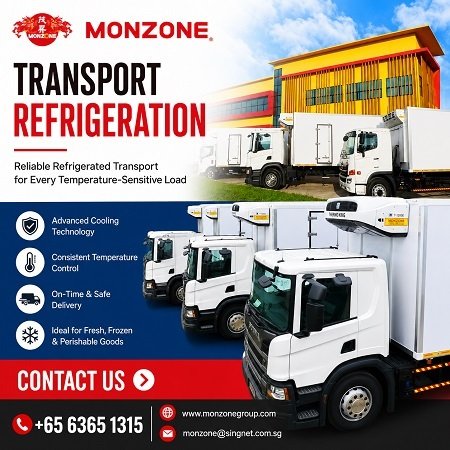
Refrigerated transportation protects perishable products by maintaining a controlled temperature environment throughout the entire delivery journey. Whether goods travel across a single state or multiple regions, temperature-controlled units prevent spoilage, bacterial growth, and product degradation. Properly managed cold chains reduce waste, preserve product integrity, and ensure that food and pharmaceutical items arrive in compliant, sellable condition.
Transport refrigeration is no longer optional for businesses moving temperature-sensitive products across long distances. In Malaysia, where high ambient temperatures regularly exceed 32°C, maintaining a stable cold chain from warehouse to end customer is a serious operational and regulatory challenge — one that directly affects product safety, compliance, and profitability.
Why Long-Distance Delivery Poses Greater Risk to Perishables
Short local deliveries are relatively forgiving. Long-distance routes are not. The longer a product spends in transit, the more opportunities there are for temperature excursions — even brief ones — to cause irreversible damage.
Consider what happens during a cross-state delivery in Malaysia. A truck traveling from Johor Bahru to Kuala Lumpur may face multiple loading stops, traffic delays, and high outdoor humidity. Each variable introduces risk to the cargo inside.
Key risks in long-haul perishable transport include:
- Temperature fluctuations during loading and unloading
- Equipment failure or inconsistent refrigeration performance
- Driver handling errors that break cold chain protocol
- Extended delivery windows caused by traffic or route changes
- Humidity buildup leading to condensation and mould growth
According to the Malaysian Food Safety and Quality Division under the Ministry of Health, improper temperature management during transport is one of the primary causes of foodborne contamination in the supply chain. This makes cold chain transport not just a logistics concern — it is a public health issue.
How Modern Transport Refrigeration Systems Work
Today's refrigerated vehicles are considerably more advanced than simple insulated boxes. Modern transport refrigeration systems use dedicated refrigeration units mounted to the vehicle — independent of the truck's engine — to maintain precise temperature ranges regardless of external conditions.
Temperature Zoning for Mixed Cargo
Many refrigerated trucks now offer multi-temperature compartments. This allows a single vehicle to carry frozen goods at -18°C in one section while simultaneously transporting chilled produce at 2°C to 4°C in another. For distributors handling diverse product lines, this is a significant operational advantage.
Real-Time Temperature Monitoring
Advanced refrigerated delivery units are equipped with digital data loggers and GPS-linked temperature sensors. These systems record temperature at regular intervals throughout the journey and alert fleet managers if a threshold is breached. This data is often required for regulatory compliance in pharmaceutical and food-grade deliveries in Malaysia.
Pre-Cooling and Load Management
Before loading, the cargo compartment must be pre-cooled to the target temperature. Loading warm products into an already-cold environment causes thermal shock and accelerates spoilage. Proper pre-cooling, combined with correct stacking — ensuring airflow around all cargo — is fundamental to effective cold chain execution.
Temperature Requirements by Product Type
Not all perishables have the same needs. Matching the right temperature to the right product is a basic but critical discipline in temperature-controlled transport.
Understanding these ranges helps businesses select the right vehicle configuration and set accurate parameters before each delivery run. Cutting corners on temperature settings — even by a few degrees — can result in entire shipment rejections.
Compliance and Regulations for Perishable Goods Transport in Malaysia
In Malaysia, businesses involved in perishable goods transport are expected to comply with guidelines set by agencies including the Department of Veterinary Services (DVS), the Malaysian Food Safety and Quality Division, and the National Pharmaceutical Regulatory Agency (NPRA) for pharmaceutical cold chain logistics.
NPRA's Good Distribution Practice (GDP) guidelines require pharmaceutical distributors to maintain documented temperature records throughout transit. Non-compliance can result in product seizure, licence revocation, and significant financial penalties. For food manufacturers, compliance with HACCP principles — including cold chain documentation — is increasingly demanded by major retailers and export markets.
Choosing a transport refrigeration services provider that understands these requirements is not just a quality decision — it is a legal one.
What to Look for in a Refrigerated Transport Provider
Not every provider offering refrigerated delivery has the fleet capability or standard operating procedures to handle high-value, compliance-sensitive cargo. Here is what businesses in Malaysia should evaluate before committing to a cold chain logistics partner:
- Fleet condition and age: Older units are more prone to inconsistent cooling and unexpected breakdowns during long-haul routes.
- Temperature monitoring capability: Does the provider offer real-time tracking with automated alerts and downloadable temperature logs?
- Multi-temperature capacity: Especially important for food and beverage companies moving mixed SKUs in a single delivery run.
- Driver training: Drivers must understand cold chain protocols — not just how to operate the vehicle, but how to manage loading, unloading, and breakdown procedures.
- Compliance knowledge: Providers should be familiar with Malaysian food safety and pharmaceutical distribution regulations relevant to your industry.
The Direct Business Impact of Getting Cold Chain Right
The cost of cold chain failure goes well beyond a single spoiled shipment. Businesses that experience repeated temperature excursions face customer attrition, damaged brand reputation, and potential legal liability — particularly in the pharmaceutical segment.
On the other hand, companies with a reliable cold chain gain a measurable competitive edge. They can extend their delivery radius, enter new markets with confidence, and meet the quality commitments that major retail and hospital clients demand. In a market as competitive as Malaysia's food and pharmaceutical distribution sector, cold chain reliability is a differentiator — not just a baseline expectation.
Monzone Group offers transport refrigeration solutions designed around the specific demands of Malaysian food and beverage companies and pharmaceutical distributors. With a focus on route reliability, regulatory compliance, and consistent temperature control across long-distance deliveries, their cold chain services are built to protect your product from origin to destination. Visit Monzone Group to learn more about their full range of logistics services.
Frequently Asked Questions
What is transport refrigeration and why does it matter for long-distance delivery?
Transport refrigeration refers to the use of temperature-controlled vehicles and systems to preserve perishable goods during transit. For long-distance delivery, it matters because extended travel time increases exposure to temperature variability, which can spoil products, trigger regulatory non-compliance, and lead to significant financial losses for food and pharmaceutical businesses.
What temperature should refrigerated transport maintain for pharmaceutical products in Malaysia?
Pharmaceutical products in Malaysia typically require a temperature range of 2°C to 8°C during transport, in line with NPRA's Good Distribution Practice guidelines. Cold chain documentation, including continuous temperature logs, is mandatory for licensed pharmaceutical distributors to prove compliance throughout the entire delivery journey.
How do refrigerated trucks maintain temperature during stops and loading?
Modern refrigerated trucks use engine-independent refrigeration units that continue operating even when the vehicle is stationary. Pre-cooling the cargo compartment before loading and minimising door-open time during stops are standard protocols that prevent temperature spikes from compromising perishable goods during multi-drop delivery routes.
What is the difference between chilled and frozen transport refrigeration?
Chilled transport maintains temperatures between 0°C and 8°C, suitable for fresh produce, dairy, and certain pharmaceuticals. Frozen transport operates at -18°C or below for meat, seafood, and ice cream. Some vehicles offer dual-zone configurations, allowing both temperature ranges to be maintained simultaneously within separate cargo compartments.
How can food companies in Malaysia verify cold chain compliance during delivery?
Food companies should require their transport refrigeration services provider to supply digital temperature logs for each delivery. These records, generated by onboard data loggers, confirm that products stayed within the required temperature range throughout transit and serve as documentation for HACCP audits and retailer compliance requirements.
What happens if the refrigeration unit fails during a long-haul delivery?
If a refrigeration unit fails mid-route, the driver should follow the provider's cold chain breakdown protocol — which typically includes notifying the fleet manager immediately, limiting cargo exposure, and arranging an emergency vehicle transfer. Reputable transport providers have contingency procedures in place to minimise product loss during equipment failures.